
Posted by TJ Hopkins on Apr 26th 2026
Best Soil for Vegetable Gardens
Healthy soil is the foundation of every successful vegetable garden. If your soil is rich, loose, and well-balanced, your plants will grow faster, produce more, and resist pests and disease better. Whether you're planting tomatoes, carrots, lettuce, or peppers, getting your soil right is the most important step you can take.
What Makes the Best Soil for Vegetables?
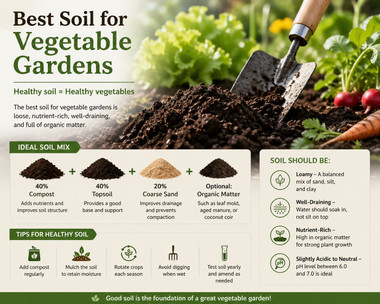
The ideal soil for vegetable gardens is loamy, meaning it’s a balanced mix of sand, silt, and clay. This combination allows water to drain properly while still holding enough moisture and nutrients for plant roots.
Great vegetable garden soil should be:
- Loose and crumbly – easy for roots to grow through
- Well-draining – water soaks in without pooling
- Nutrient-rich – full of organic matter
- Slightly acidic to neutral – pH between 6.0 and 7.0
The Ideal Soil Mix
If you're building or improving your garden soil, a simple mix works extremely well:
- 40% Compost – Adds nutrients and improves soil structure
- 40% Topsoil – Provides a solid base for root growth
- 20% Coarse Sand – Enhances drainage and prevents compaction
- Optional Organic Matter – Such as leaf mold, aged manure, or coconut coir for extra fertility
This blend creates a light, fluffy texture that vegetables thrive in.
Why Compost is Essential
Compost is the secret ingredient in any productive garden. It feeds your plants naturally and improves soil over time. Adding compost regularly helps:
- Increase beneficial microbes
- Improve moisture retention
- Boost nutrient availability
Even if your soil is already decent, compost will make it better.
Tips for Maintaining Healthy Soil
Building good soil is one thing—keeping it healthy is ongoing. Here are simple habits that make a big difference:
- Add compost regularly to replenish nutrients
- Mulch your soil to retain moisture and reduce weeds
- Rotate crops each season to prevent nutrient depletion
- Avoid working soil when wet to prevent compaction
- Test your soil yearly and adjust as needed
Raised Beds vs. In-Ground Soil
If your native soil is poor (too sandy, clay-heavy, or rocky), raised beds are a great option. They allow you to fully control your soil mix and often lead to better yields, especially for beginners.
Final Thoughts
The best soil for vegetable gardens doesn’t happen by accident—it’s built over time with the right ingredients and care. Focus on creating a loose, nutrient-rich, well-draining soil, and your vegetables will reward you with strong growth and abundant harvests.
Good soil truly is the foundation of a great vegetable garden.