
Posted by TJ Hopkins on Aug 9th 2026
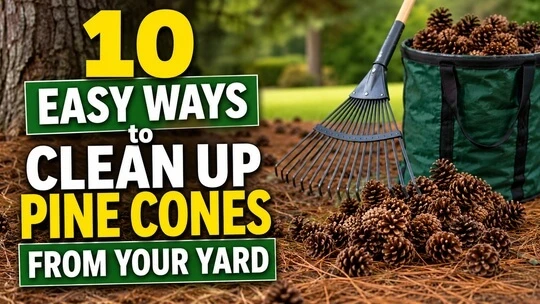
10 Easy Ways to Clean Up Pine Cones From Your Yard
Pine trees add year-round greenery, shade, and natural beauty to a landscape, but they can also leave behind a surprising amount of debris. During certain times of the year, pine cones can cover lawns, garden beds, driveways, and walkways almost overnight.
While a few pine cones aren't a problem, large numbers can make mowing difficult, create tripping hazards, and leave a yard looking messy. Fortunately, cleaning them up doesn't have to become an all-day project.
Here are 10 easy ways to clean up pine cones from your yard, including options for small properties and yards with several mature pine trees.
1. Use a Leaf Rake
A basic leaf rake is one of the easiest tools for collecting pine cones from a lawn.
Use a wide plastic or metal rake to pull the cones into several small piles. Once you've gathered them together, scoop them into a garden cart, wheelbarrow, bucket, or yard-waste bag.
For the best results, rake when the lawn is relatively dry. Wet pine cones and pine needles can become considerably heavier and harder to move.
Best for: Small to medium yards with moderate amounts of pine cones.
2. Try a Garden or Landscape Rake
If pine cones are mixed with thick layers of pine needles, leaves, and small branches, a sturdier garden rake may work better than a lightweight leaf rake.
The stronger tines can move heavier debris without bending as easily.
Be careful when using a metal rake around exposed tree roots or delicate landscaping, as aggressive raking can damage plants and shallow roots.
Best for: Heavy pine-cone accumulation and areas covered with pine needles.
3. Pick Them Up With a Lawn Sweeper
For larger properties, a lawn sweeper can dramatically reduce cleanup time.
Lawn sweepers use rotating brushes to collect debris and deposit it into an attached hopper. Depending on the design, they may collect pine cones along with leaves, grass clippings, and small twigs.
Push lawn sweepers are useful for medium-sized lawns, while tow-behind models can be practical for larger properties.
Keep in mind that performance varies depending on the size and shape of the pine cones, so not every sweeper will collect every cone.
Best for: Large lawns and properties with numerous pine trees.
4. Use a Pine Cone or Nut Roller
A rolling nut-gathering tool can be surprisingly effective for picking up individual pine cones without constantly bending over.
These tools usually have a flexible wire basket that rolls across the ground. Objects are pushed between the wires and trapped inside the basket.
Models designed for larger nuts and objects generally work better for pine cones than rollers with very narrow wire spacing.
Best for: People who want to avoid repeatedly bending down to pick up pine cones.
5. Use a Grabber Tool
Sometimes the simplest solution is a long-handled grabber.
A reaching or pickup tool lets you grab pine cones while standing upright. It won't be the fastest method for cleaning hundreds of cones, but it's convenient when only a handful have fallen.
It's also useful for reaching pine cones beneath shrubs, decks, fences, and other difficult-to-access areas.
Best for: Small cleanups and hard-to-reach areas.
6. Collect Them With a Tarp
If you're dealing with a large pile of pine cones, a tarp can make transporting them much easier.
Rake the cones onto a heavy-duty tarp, gather the corners, and drag the load to your compost area, brush pile, trailer, or designated disposal location.
This method can save you from making repeated trips with buckets or small yard-waste bags.
Avoid overloading the tarp, especially when pine cones and needles are wet.
Best for: Moving large quantities of pine cones across the yard.
7. Use a Leaf Blower
A powerful leaf blower can help move smaller, lightweight pine cones across relatively smooth surfaces.
Blowers are particularly convenient for clearing:
- Driveways
- Patios
- Sidewalks
- Decks
- Walkways
Rather than trying to blow everything across the property, direct the pine cones into one concentrated area and finish the job with a rake or shovel.
Large, heavy, or wet cones may be difficult to move with a blower.
Best for: Hard surfaces and dry pine cones.
8. Use a Shop Vacuum on Patios and Small Areas
A heavy-duty wet/dry shop vacuum may be useful for collecting small pine cones and pieces of cones from patios, garages, decks, and other hard surfaces.
Check the vacuum hose opening before attempting this. Large cones can easily become lodged in narrow hoses.
This method isn't practical for cleaning an entire lawn, but it can work well for smaller spaces where you want a particularly clean finish.
Best for: Garages, patios, decks, and small hard-surface areas.
9. Pick Them Up Before Mowing
One of the most important pine-cone cleanup habits is removing larger cones before mowing the lawn.
Running over pine cones with a mower can break them into pieces and scatter debris around the yard. Large or hard cones can also interfere with mowing and potentially become projectiles.
Walk around the lawn before mowing and collect the most noticeable cones. A bucket or garden cart makes this quick and easy.
If you have several pine trees, adding a five-minute pine-cone check to your mowing routine can prevent bigger cleanup jobs later.
Best for: Routine lawn maintenance.
10. Clean Them Up Regularly Instead of All at Once
The easiest pine-cone cleanup strategy may simply be doing it more frequently.
Instead of allowing hundreds of cones to accumulate, spend a few minutes collecting them whenever you perform other yard chores.
During periods of heavy cone drop, you might need to clean beneath your pine trees once or twice a week. At other times, occasional cleanup may be enough.
Regular removal also prevents pine cones from becoming buried beneath leaves, needles, grass, or snow.
Best for: Anyone with mature pine trees that regularly produce large quantities of cones.
What Should You Do With Collected Pine Cones?
Don't automatically throw pine cones away. They can have several useful purposes around the home and garden.
Dry pine cones can be used for seasonal decorations, wreaths, natural crafts, and other projects. They can also be added gradually to compost piles, although their woody structure means they break down relatively slowly.
Pine cones can also be used in rustic landscaping or added to natural areas of a property where appearance isn't a concern.
If you're disposing of large quantities, check your local yard-waste rules because accepted materials and collection requirements vary by community.
Can You Prevent Pine Cones From Falling?
There isn't a practical way to completely stop a healthy mature pine tree from producing cones. Cone production is part of the tree's natural reproductive cycle.
The amount produced can also vary considerably from year to year. Some years may bring relatively few cones, while heavier cone crops can make cleanup seem endless.
For most homeowners, regular cleanup is easier and safer than trying to prevent cone production.
What's the Fastest Way to Pick Up Lots of Pine Cones?
For a small lawn, raking the cones into piles and moving them with a tarp or wheelbarrow is usually simple and inexpensive.
For a large property with numerous pine trees, a lawn sweeper may save considerable time. A properly sized nut or pine-cone roller is another convenient option when the cones are scattered rather than concentrated.
The best method ultimately depends on your lawn size, the number of pine trees, and how heavily they are producing cones.
Final Thoughts
Pine cones are a normal part of having pine trees in your landscape, but you don't have to let them take over your lawn.
Rakes, lawn sweepers, rolling pickup tools, leaf blowers, tarps, and even simple grabbers can make the job much easier. The biggest trick is staying ahead of the mess. A few minutes of regular cleanup is usually much easier than tackling an entire season's worth of pine cones at once.
With the right method, you can spend less time picking up pine cones and more time enjoying a clean, attractive yard.