
Posted by TJ Hopkins on Aug 24th 2026
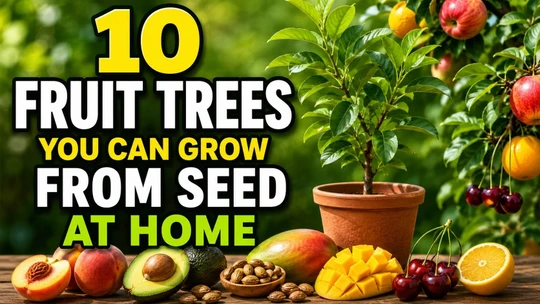
10 Fruit Trees You Can Grow From Seed at Home
Growing fruit trees from seed is one of the most rewarding ways to add trees to your home, garden, or backyard. Instead of purchasing an established tree from a nursery, you can start with something as simple as a seed from a favorite fruit and watch it develop into a tree over the years.
Growing from seed does require patience. Many fruit trees take several years before they are mature enough to produce fruit, and seedlings do not always produce fruit identical to the parent tree. However, seed-grown trees can still make beautiful landscape plants and provide an inexpensive and interesting gardening project.
Here are 10 fruit trees you can grow from seed at home.
1. Apple Trees
Apple trees are among the most popular fruit trees to experiment with from seed. Seeds can be collected from ripe apples, cleaned, and prepared for planting.
Apple seeds generally need a period of cold, moist stratification before they will germinate. This mimics the winter conditions the seeds would experience naturally. Seeds can be placed in a slightly damp growing medium in the refrigerator for several weeks before planting.
Keep in mind that apples do not usually grow true from seed. A seed taken from a particular apple variety may eventually produce fruit that looks and tastes quite different from the original apple.
Seed-grown apple trees can nevertheless become attractive, long-lived trees and are especially fun for gardeners interested in seeing what kind of fruit they eventually produce.
2. Peach Trees
Peaches contain large pits that hold the actual seed inside. Peach seeds typically require cold stratification to break dormancy.
The entire cleaned pit can be stratified, or experienced growers may carefully remove the hard outer shell and work with the seed inside.
After stratification, plant the seed in a well-draining growing medium and keep it consistently moist but not waterlogged. Once the seedling begins growing, provide plenty of sunlight.
Peach seedlings can grow surprisingly quickly under favorable conditions.
3. Lemon Trees
Lemon trees are excellent candidates for gardeners who want to try growing citrus from seed.
Fresh lemon seeds generally provide the best results. Remove the seeds from a ripe lemon, rinse away any remaining fruit pulp, and plant them while they are still fresh.
Lemon seedlings prefer warmth, moisture, and bright light. Maintaining consistently warm conditions can help encourage germination.
In colder climates, lemon trees can be grown in containers and moved indoors before freezing weather arrives. Their glossy green foliage alone makes them attractive houseplants.
4. Orange Trees
Orange trees can also be started using seeds collected from fresh fruit.
Clean the seeds thoroughly and plant them in a moist, well-draining seed-starting mix. Warm temperatures and consistent moisture are important during germination.
Young orange seedlings need plenty of light once they emerge. Gardeners in warm climates may eventually grow them outdoors, while those in colder regions can maintain them as container plants.
Like many seed-grown fruit trees, the fruit produced by a mature seedling may not be identical to the orange from which the seed was collected.
5. Cherry Trees
Cherry trees are another interesting fruit tree to grow from seed, although they require more patience.
Remove the pits from ripe cherries and thoroughly clean away the fruit. Many cherry seeds require an extended period of cold, moist stratification before they are capable of germinating.
Once stratification is complete, plant the seeds in containers with well-draining soil.
Cherry seedlings should gradually be introduced to outdoor growing conditions before being transplanted permanently into the landscape. Choose a location with good sunlight and enough room for the tree's mature size.
6. Avocado Trees
Avocado seeds are famous for being easy and entertaining to sprout at home.
Many people start avocado pits suspended partially in water using toothpicks, although they can also be planted directly into a moist growing medium.
Once roots and shoots develop, the young avocado can be transferred to a container with well-draining soil.
Avocado trees prefer warmth and bright light and cannot tolerate significant freezing temperatures. In cooler climates, they are usually grown as indoor or patio container plants.
Although a seed-grown avocado may take many years to produce fruit—and may never fruit successfully indoors—the trees make attractive foliage plants.
7. Mango Trees
If you regularly eat fresh mangoes, consider saving one of the seeds.
The large husk inside the mango contains the seed. Carefully cleaning away the fruit and opening the outer husk can expose the seed inside.
Mango seeds should generally be planted while fresh because their viability decreases as they dry.
Plant the seed in a well-draining growing medium and place the container somewhere warm. Mango seedlings appreciate warmth, bright light, and consistent moisture.
Because mango trees are tropical, gardeners in regions with cold winters will need to grow them in containers that can be protected indoors.
8. Pear Trees
Pear trees can be grown from the seeds found inside ripe pears.
Similar to apple seeds, pear seeds usually benefit from cold, moist stratification before planting. After this chilling period, seeds can be planted in containers and kept in bright conditions.
Once seedlings become established, they can eventually be transplanted outdoors in suitable climates.
Seed-grown pears are genetically different from their parent trees, so their eventual fruit can vary considerably in size, appearance, texture, and flavor.
For adventurous gardeners, that uncertainty can be part of the fun.
9. Apricot Trees
The pit inside an apricot contains a seed capable of producing a new tree.
After removing and cleaning the pit, it generally needs a period of cold stratification to help overcome dormancy.
Once the seed is ready to grow, plant it in a well-draining medium and provide adequate moisture and sunlight.
Apricot trees generally perform best in locations receiving full sun. As the seedling grows, make sure it has sufficient room for root development.
Growing an apricot tree from seed requires patience, but watching a small seedling develop into a flowering tree can make the wait worthwhile.
10. Pomegranate Trees
Pomegranates are another fruit that gardeners can easily experiment with from seed.
Each fruit contains numerous seeds surrounded by juicy pulp. Remove the pulp thoroughly before planting because leftover fruit material can encourage mold.
Plant cleaned seeds in a lightweight, well-draining growing medium. Keep the soil warm and slightly moist until germination occurs.
Pomegranate seedlings appreciate plenty of sunlight as they develop. In warmer climates, established plants can eventually be grown outdoors, while container growing provides an option in colder regions.
Tips for Growing Fruit Trees From Seed
Regardless of which fruit tree you choose, a few basic practices can improve your chances of success.
Start with healthy seeds. Whenever possible, use seeds from fully mature, healthy fruit. Damaged, shriveled, or moldy seeds should be discarded.
Research dormancy requirements. Temperate fruit trees such as apples, pears, cherries, peaches, and apricots commonly require cold stratification. Tropical and subtropical fruits often need warm conditions instead.
Use well-draining soil. Excessively wet growing media can cause seeds and young roots to rot.
Keep moisture consistent. Seed-starting soil should generally remain slightly moist rather than saturated.
Provide plenty of light. Once seedlings emerge, sufficient light helps encourage sturdy stems and healthy foliage.
Use appropriately sized containers. Fruit tree seedlings can develop substantial root systems. Transplant seedlings into larger containers before they become severely root-bound.
Be patient. Tree seeds can germinate much more slowly than common vegetable and flower seeds. Some may emerge quickly, while others can take weeks or months.
Will Fruit Trees Grown From Seed Produce the Same Fruit?
Not necessarily.
Many commercially grown fruit varieties are propagated through grafting or other vegetative methods specifically because these techniques preserve the characteristics of a particular cultivar.
A seed represents a new genetic combination. Consequently, an apple seed collected from a delicious apple will not necessarily produce a tree bearing exactly the same apples.
The resulting fruit could be sweeter, more tart, smaller, larger, or otherwise noticeably different.
This genetic variation is one of the most interesting aspects of growing fruit trees from seed. Every seedling has the potential to be slightly different.
How Long Does It Take a Fruit Tree Grown From Seed to Produce Fruit?
Growing fruit trees from seed is usually a long-term project.
Depending on the species, climate, growing conditions, and individual tree, it can take several years or considerably longer before a seed-grown tree reaches fruiting maturity.
Some tropical seedlings grow rapidly but still require years before flowering. Temperate trees such as apples, cherries, and pears can also require considerable time before producing their first crop.
Gardeners primarily interested in obtaining predictable fruit as quickly as possible will generally have better results purchasing grafted trees.
If your goal is enjoying the process of growing a tree from its very beginning, however, starting from seed can be much more rewarding.
Growing Fruit Trees in Containers
Several fruit trees can spend their early years growing in containers.
Containers are especially useful for tropical species such as lemons, oranges, mangoes, and avocados in areas where winter temperatures become too cold for them outdoors.
Choose containers with drainage holes and use a well-draining potting mix. As the tree grows, gradually move it into larger containers rather than immediately planting a tiny seedling in an oversized pot.
Container-grown trees also require closer attention to watering because pots can dry out faster than garden soil.
Final Thoughts
Growing fruit trees from seed combines gardening with patience, experimentation, and a little unpredictability. Apples, peaches, lemons, oranges, cherries, avocados, mangoes, pears, apricots, and pomegranates can all provide interesting seed-growing projects.
Some may eventually become productive backyard fruit trees, while others may simply become beautiful ornamental plants. Either way, there is something satisfying about looking at a young tree and knowing that you started it yourself from a single seed.
If you have seeds available, start a few rather than just one. Not every seed will germinate, and not every seedling will survive, but growing several gives you a better opportunity to select the strongest trees as they develop.