
Posted by TJ Hopkins on May 28th 2026
10 Heat Tolerant Trees to Grow in New Mexico Now
New Mexico’s hot summers, dry air, and rocky soils can make gardening a challenge, but many beautiful and resilient trees thrive in these conditions. Whether you live in Albuquerque, Las Cruces, Santa Fe, or another desert or high-desert region, choosing heat tolerant trees can help create shade, attract pollinators, and add year-round beauty to your landscape.
Here are 10 heat tolerant trees that grow well in New Mexico’s sunny climate.
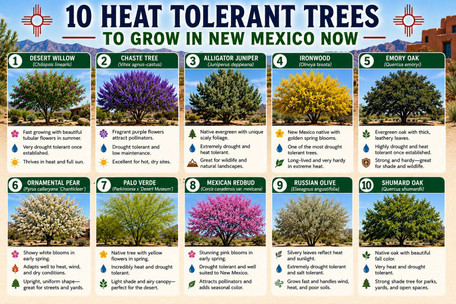
1. Desert Willow (Chilopsis linearis)
Desert Willow is one of the best ornamental trees for hot, dry climates. Despite its name, it is not a true willow, but it features long, narrow leaves and trumpet-shaped flowers in shades of pink, lavender, and white.
This fast-growing tree blooms heavily during summer and attracts hummingbirds, butterflies, and bees. Once established, Desert Willow requires very little water and thrives in full sun.
Why it grows well in New Mexico:
- Excellent drought tolerance
- Handles intense summer heat
- Perfect for xeriscaping and desert gardens
2. Chaste Tree (Vitex agnus-castus)
The Chaste Tree is known for its fragrant purple flower spikes and long blooming season. It performs especially well in dry, sunny landscapes and can be grown as a large shrub or small tree.
Pollinators love the flowers, making this a great option for wildlife-friendly yards.
Best features:
- Low maintenance
- Drought tolerant once established
- Adds vibrant summer color
3. Alligator Juniper (Juniperus deppeana)
Named for its unique bark that resembles alligator skin, Alligator Juniper is a rugged evergreen native to the Southwest.
This tree thrives in rocky soils and dry mountain regions while providing shelter and food for birds and wildlife.
Why gardeners love it:
- Extremely drought tolerant
- Evergreen color year-round
- Great for natural landscapes and wind protection
4. Ironwood (Olneya tesota)
Ironwood is one of the toughest desert trees you can grow. Native to the Sonoran Desert, it thrives in scorching heat and poor soils.
Its yellow spring flowers brighten desert landscapes, while the dense wood and sturdy structure make it highly resilient.
Growing advantages:
- Exceptional heat tolerance
- Long lifespan
- Minimal watering needs
5. Emory Oak (Quercus emoryi)
Emory Oak is an evergreen oak native to the Southwest. It develops a broad canopy that provides excellent shade in hot climates.
This oak handles drought well once mature and is valued for both wildlife habitat and landscaping.
Top benefits:
- Strong shade tree
- Evergreen foliage
- Adapted to desert conditions
6. Ornamental Pear (Pyrus calleryana ‘Chanticleer’)
This upright ornamental tree produces beautiful white blooms in early spring and develops attractive fall color later in the season.
Although it appreciates occasional watering during extreme drought, it tolerates heat surprisingly well in many parts of New Mexico.
Why it stands out:
- Attractive seasonal color
- Compact growth habit
- Works well in yards and streetscapes
7. Palo Verde (Parkinsonia × ‘Desert Museum’)
Palo Verde is famous for its green bark and bright yellow spring flowers. This hybrid variety is especially popular in Southwestern landscaping due to its beauty and toughness.
Its airy canopy creates filtered shade without making the landscape feel too dense.
Perfect for desert landscapes because:
- Thrives in extreme heat
- Requires little water
- Fast-growing and visually striking
8. Mexican Redbud (Cercis canadensis var. mexicana)
Mexican Redbud produces brilliant pink flowers in spring before its leaves emerge, creating a stunning display.
This small ornamental tree performs well in dry climates and rocky soils while attracting pollinators to the garden.
Great reasons to plant it:
- Drought tolerant
- Excellent spring color
- Compact size for smaller yards
9. Russian Olive (Elaeagnus angustifolia)
Russian Olive is known for its silvery foliage that reflects sunlight and helps the tree withstand heat and drought.
It grows quickly and adapts to poor soils, wind, and dry conditions. However, gardeners should check local recommendations before planting, as it can become invasive in some regions.
Benefits include:
- Fast growth
- Heat and wind tolerance
- Attractive silver foliage
10. Shumard Oak (Quercus shumardii)
Shumard Oak is a large shade tree that tolerates summer heat better than many other oak species. It develops a broad canopy and beautiful fall color.
Once established, it becomes a dependable landscape tree for parks, yards, and larger properties.
Highlights:
- Strong shade tree
- Good drought tolerance
- Excellent fall foliage
Tips for Growing Trees in New Mexico
Growing trees successfully in New Mexico starts with choosing species adapted to heat, drought, and alkaline soils. Here are a few helpful tips:
- Water deeply but infrequently to encourage deep root growth.
- Add mulch around the base to retain soil moisture.
- Plant during spring or fall to reduce transplant stress.
- Avoid overwatering desert-adapted species.
- Use drip irrigation for efficient watering.
Final Thoughts
Planting heat tolerant trees is one of the best ways to create shade, improve curb appeal, and support wildlife in New Mexico’s challenging climate. Whether you prefer colorful flowering trees like Desert Willow and Mexican Redbud or rugged native species like Alligator Juniper and Emory Oak, there are many excellent options for hot, dry landscapes.
Choosing trees adapted to the Southwest will help you build a beautiful, low-maintenance yard that thrives for years to come.