
Posted by TJ Hopkins on Jul 25th 2026
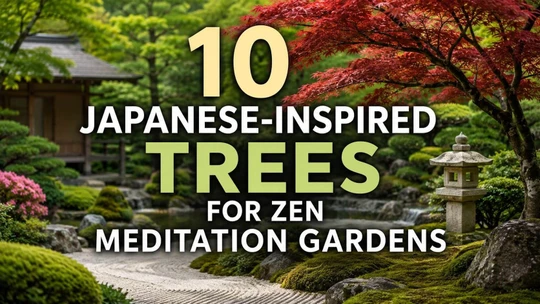
10 Japanese-Inspired Trees for Zen Meditation Gardens
A Japanese-inspired garden is designed to create a sense of peace, balance, and harmony with nature. Carefully selected trees provide year-round beauty through graceful forms, colorful foliage, fragrant blooms, and elegant bark. Whether you're building a traditional Zen meditation garden or simply creating a quiet backyard retreat, these beautiful trees can transform your landscape into a calming sanctuary.
1. Japanese Maple (Acer palmatum)
The Japanese Maple is the signature tree of Japanese gardens. Its finely cut leaves, graceful branching, and stunning seasonal color make it the centerpiece of countless meditation spaces.
Why you'll love it:
- Brilliant red, orange, or green foliage
- Excellent focal point
- Perfect for small gardens
- Thrives in partial shade
2. Japanese Black Pine (Pinus thunbergii)
A symbol of strength and longevity, Japanese Black Pine is often shaped through careful pruning to create artistic forms. It provides year-round structure and evergreen beauty.
Best features:
- Evergreen interest
- Excellent for bonsai or cloud pruning
- Wind tolerant
- Adds timeless character
3. Weeping Cherry (Prunus subhirtella 'Pendula')
Few trees create a more peaceful atmosphere than a flowering Weeping Cherry. Cascading branches covered in delicate blossoms signal the arrival of spring.
Highlights:
- Stunning spring flowers
- Elegant cascading form
- Attracts pollinators
- Beautiful reflected near ponds
4. Japanese Stewartia (Stewartia pseudocamellia)
This underrated ornamental tree offers beauty throughout every season. Summer flowers resemble camellias, while peeling bark provides exceptional winter interest.
Why it's special:
- White camellia-like blooms
- Gorgeous exfoliating bark
- Excellent fall color
- Four-season appeal
5. Ginkgo (Ginkgo biloba)
One of the world's oldest tree species, Ginkgo represents resilience, endurance, and peace. Its fan-shaped leaves turn a spectacular golden yellow in autumn.
Benefits:
- Unique foliage
- Long-lived tree
- Brilliant fall display
- Low maintenance
6. Japanese Snowbell (Styrax japonicus)
This charming ornamental tree produces hundreds of delicate white bell-shaped flowers that hang beneath the branches in late spring.
Garden advantages:
- Fragrant blooms
- Graceful branching
- Attracts bees
- Ideal for smaller landscapes
7. Hinoki Cypress (Chamaecyparis obtusa)
Highly prized in Japanese landscaping, Hinoki Cypress has dense evergreen foliage with a naturally elegant shape. It creates a soothing backdrop for meditation gardens.
Reasons to plant:
- Soft evergreen texture
- Slow-growing
- Excellent specimen tree
- Wonderful fragrance
8. Japanese Tree Lilac (Syringa reticulata)
While technically a lilac, this small tree produces large clusters of creamy white flowers during early summer when many other trees have finished blooming.
Features include:
- Fragrant flower clusters
- Pollinator friendly
- Attractive bark
- Easy to maintain
9. Paperbark Maple (Acer griseum)
Paperbark Maple offers outstanding bark that peels into beautiful cinnamon-colored layers. Combined with brilliant fall foliage, it provides beauty in every season.
Standout qualities:
- Decorative peeling bark
- Outstanding autumn colors
- Moderate size
- Excellent winter interest
10. Japanese Cedar (Cryptomeria japonica)
Known as Sugi in Japan, Japanese Cedar is a majestic evergreen often planted around temples and shrines. Dwarf varieties also work beautifully in residential meditation gardens.
Why choose it:
- Evergreen privacy
- Soft feathery foliage
- Symbolic cultural significance
- Creates a peaceful backdrop
Designing a Relaxing Zen Garden
The trees are only one part of creating a tranquil meditation space. Combine them with natural elements such as:
- Moss-covered stones
- Raked gravel or sand
- Stone lanterns
- Bamboo fencing
- Quiet water features
- Curved pathways
- Simple wooden benches
Keeping the design uncluttered allows each element to stand out while promoting mindfulness and relaxation.
Growing Tips
- Choose trees suited to your USDA hardiness zone.
- Allow enough room for mature growth.
- Use mulch to maintain consistent soil moisture.
- Prune selectively to preserve each tree's natural form.
- Avoid overcrowding—simplicity is key to authentic Japanese garden design.
Final Thoughts
A Japanese-inspired meditation garden is more than beautiful landscaping—it's a place to unwind, reflect, and reconnect with nature. By choosing graceful trees like Japanese Maple, Hinoki Cypress, Ginkgo, and Weeping Cherry, you can create a peaceful outdoor retreat that offers beauty in every season. Whether your garden is large or small, these timeless trees provide the perfect foundation for a serene Zen-inspired landscape.