
Posted by TJ Hopkins on Jul 21st 2026
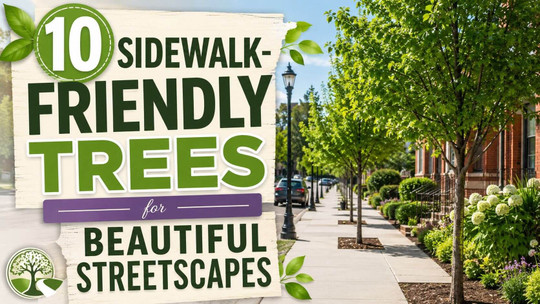
10 Sidewalk-Friendly Trees for Beautiful Streetscapes
A well-planned streetscape does more than beautify a neighborhood—it creates cooler sidewalks, improves air quality, provides shade, and increases property values. However, not every tree is suitable for planting along sidewalks. The best sidewalk trees have non-invasive root systems, manageable mature sizes, strong branching habits, and tolerance to urban conditions such as compacted soil, road salt, heat, and pollution.
Here are ten excellent trees that thrive along sidewalks while helping create attractive, pedestrian-friendly streets.
1. Japanese Tree Lilac (Syringa reticulata)
Japanese Tree Lilac is one of the best ornamental trees for urban landscapes. Its fragrant white flower clusters appear in early summer when many other trees have finished blooming.
Why it's sidewalk-friendly:
- Non-invasive root system
- Compact size (20–30 feet)
- Excellent tolerance to pollution
- Minimal litter
USDA Zones: 3–7
2. Serviceberry (Amelanchier spp.)
Serviceberries provide year-round beauty with spring flowers, edible berries, colorful fall foliage, and attractive gray bark during winter.
Benefits:
- Native to North America
- Supports birds and pollinators
- Fits narrow planting strips
- Gentle root system
USDA Zones: 4–9
3. American Hornbeam (Carpinus caroliniana)
Also known as Musclewood, this slow-growing native tree develops a dense canopy and exceptional orange-red fall color.
Highlights:
- Strong wood resists storm damage
- Handles pruning well
- Excellent for residential sidewalks
- Compact mature size
USDA Zones: 3–9
4. Hedge Maple (Acer campestre)
Unlike many larger maple species, Hedge Maple develops a smaller canopy with roots that are less likely to damage pavement.
Advantages:
- Heat tolerant
- Urban pollution resistant
- Adaptable to many soils
- Dense shade
USDA Zones: 5–8
5. Kentucky Coffeetree (Gymnocladus dioicus)
This unique native tree offers an open branching habit that allows sunlight to filter through while providing ample shade.
Why homeowners love it:
- Extremely drought tolerant
- Handles compacted soil
- Pest resistant
- Minimal maintenance
USDA Zones: 3–8
6. Thornless Honey Locust (Gleditsia triacanthos var. inermis)
A favorite among city planners, thornless Honey Locust provides filtered shade that allows grass and flowers to grow beneath it.
Key features:
- Fine-textured foliage
- Excellent urban tolerance
- Deep root system
- Fast-growing
USDA Zones: 3–9
7. American Yellowwood (Cladrastis kentukea)
Yellowwood produces stunning cascades of fragrant white flowers in late spring and develops smooth gray bark with age.
Perfect for sidewalks because:
- Moderate mature size
- Beautiful ornamental appearance
- Low root interference
- Disease resistant
USDA Zones: 4–8
8. Chinese Pistache (Pistacia chinensis)
One of the finest shade trees for warmer climates, Chinese Pistache delivers brilliant shades of orange, red, and scarlet each autumn.
Benefits:
- Exceptional drought tolerance
- Handles city pollution
- Strong branch structure
- Attractive rounded canopy
USDA Zones: 6–9
9. Eastern Redbud (Cercis canadensis)
Eastern Redbud is famous for its spectacular pink-purple blossoms that appear before the leaves emerge in spring.
Why it works:
- Small footprint
- Ideal beneath utility lines
- Pollinator friendly
- Outstanding spring color
USDA Zones: 4–9
10. Lacebark Elm (Ulmus parvifolia)
Lacebark Elm has become one of the best replacements for larger elm species thanks to its disease resistance and beautiful exfoliating bark.
Excellent qualities:
- Tough urban performer
- Attractive bark year-round
- Strong resistance to Dutch elm disease
- Adaptable to difficult growing conditions
USDA Zones: 5–9
Tips for Planting Trees Along Sidewalks
To keep sidewalks safe and trees healthy:
- Choose species with non-aggressive root systems.
- Plant at least 3–5 feet from sidewalks whenever possible.
- Use structural soils or root barriers in narrow planting areas.
- Water regularly during the first two to three growing seasons.
- Apply 2–3 inches of mulch, keeping it away from the trunk.
- Prune young trees to establish strong branch structure and adequate pedestrian clearance.
Final Thoughts
Choosing the right tree can transform ordinary sidewalks into inviting, shaded streets that benefit both people and wildlife. Whether you're planting along a residential street, downtown business district, neighborhood park, or new development, selecting species with manageable roots and excellent urban tolerance helps prevent costly sidewalk damage while creating beautiful streetscapes that last for generations.
With thoughtful planning and proper care, these sidewalk-friendly trees will provide cooling shade, seasonal beauty, cleaner air, and lasting curb appeal for decades to come.