
Posted by TJ Hopkins on Aug 13th 2026
10 Tips for Growing Cool-Season Grass Seed Successfully
Growing a thick, healthy lawn from seed can be surprisingly rewarding, especially when you choose grass varieties suited to your climate. Cool-season grasses such as Kentucky bluegrass, perennial ryegrass, and fescue perform best where temperatures are moderate and summers are not excessively hot.
Whether you are starting a brand-new lawn, repairing bare spots, or over-seeding an existing yard, good preparation can make a major difference. Follow these 10 tips to give your cool-season grass seed the best possible start.
1. Choose the Right Cool-Season Grass
Not all cool-season grasses perform the same way. Selecting a species or mixture that matches your growing conditions is one of the most important steps toward establishing a successful lawn.
Popular choices include:
- Kentucky Bluegrass: Produces a dense, attractive lawn and can spread to repair damaged areas.
- Perennial Ryegrass: Germinates quickly and establishes rapidly.
- Tall Fescue: Develops deep roots and generally handles heat and drought better than many other cool-season grasses.
- Fine Fescue: Performs well in areas with partial shade and relatively low fertility.
Grass seed mixtures containing several compatible varieties can provide better adaptability across different areas of your lawn.
2. Plant at the Right Time
Timing plays a major role in successful germination. For most cool-season grasses, late summer through early fall is generally the best planting period.
During this period, soil is still warm enough to encourage germination while cooler air temperatures reduce stress on young seedlings. There is also less competition from many warm-season weeds.
Spring is another option, particularly when repairing winter damage or bare areas. However, newly planted spring grass may have less time to develop strong roots before summer heat arrives.
3. Prepare the Soil Before Seeding
Grass seed needs good contact with the soil to absorb moisture and establish roots.
Remove rocks, sticks, weeds, dead vegetation, and other debris from the planting area. Loosen compacted soil and rake the surface to create a relatively smooth seedbed.
For an existing lawn, dethatching or core aerating may improve seed-to-soil contact before overseeding.
Avoid simply scattering seed over thick thatch or existing vegetation where much of it may never reach the soil.
4. Test Your Soil
A soil test can help identify problems before you invest time and money in establishing your lawn.
Cool-season grasses generally grow best in slightly acidic to near-neutral soil, although the preferred range varies somewhat by grass species.
A soil test can provide information about:
- Soil pH
- Phosphorus
- Potassium
- Organic matter
- Nutrient deficiencies
Instead of guessing which amendments or fertilizers your lawn needs, use soil-test recommendations whenever possible.
5. Spread Grass Seed Evenly
Uneven seeding can result in thick patches in some areas and thin or bare areas in others.
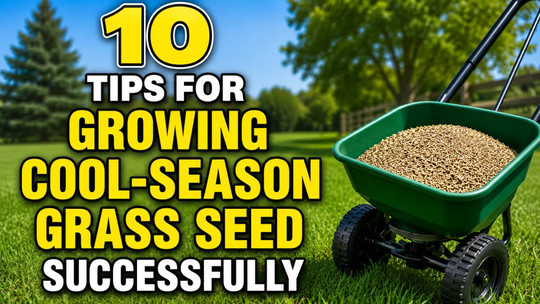
For larger lawns, a broadcast or drop spreader makes distributing seed easier. When possible, divide the seed into two portions. Spread one portion in one direction and the second portion perpendicular to the first.
For small bare spots, seed can be distributed carefully by hand.
Always check the recommended seeding rate for the particular grass species or seed mixture you are planting. Applying excessive seed can cause seedlings to compete with one another for light, water, and nutrients.
6. Make Sure the Seed Contacts the Soil
After spreading your grass seed, gently rake the area so the seed settles against the soil surface.
Grass seed should not be buried deeply. Seeds planted too far below the surface may struggle to emerge.
A light rolling can also improve seed-to-soil contact, particularly when establishing a new lawn.
The goal is simple: keep the seeds close enough to the soil to remain moist while still allowing emerging seedlings to reach sunlight easily.
7. Keep the Seedbed Consistently Moist
Water is critical during germination.
Freshly planted grass seed should be kept consistently moist without becoming waterlogged. Light watering several times during the day may initially be necessary during warm, dry, or windy weather.
Avoid heavy watering that causes puddles, runoff, or seed movement.
As seedlings emerge and develop roots, gradually transition from frequent light watering to less frequent, deeper watering. This encourages roots to grow farther into the soil.
8. Give Different Grasses Enough Time to Germinate
One of the biggest mistakes homeowners make is assuming their seed has failed because grass does not appear immediately.
Germination speed varies considerably among cool-season grasses.
Perennial ryegrass is typically one of the fastest to germinate, while Kentucky bluegrass usually takes considerably longer. Fescues generally fall somewhere between these extremes, depending on the species and growing conditions.
Temperature, moisture, soil conditions, planting depth, and seed quality can all affect germination.
Continue providing proper moisture and give slower-germinating varieties enough time before deciding whether reseeding is necessary.
9. Protect Newly Seeded Areas
Young grass seedlings are delicate. Heavy foot traffic can damage them before their root systems become established.
Keep people and pets off newly seeded areas whenever possible.
If heavy rain is expected or you are planting on a slope, a light seed-starting mulch or appropriate erosion-control material can help prevent soil and seed from washing away.
Avoid applying thick layers of material that block sunlight or interfere with emerging grass.
10. Wait Before the First Mowing
Seeing a newly seeded lawn turn green is exciting, but mowing too early can damage tender seedlings.
Allow the grass to become established and reach an appropriate mowing height for the variety you planted before mowing for the first time.
Make sure your mower blade is sharp. A dull blade can pull young plants from the soil instead of cutting them cleanly.
For subsequent mowing, avoid removing more than roughly one-third of the grass blade at a time. Maintaining adequate grass height helps support deeper roots and a healthier lawn.
Extra Tips for Overseeding an Existing Lawn
Overseeding is an effective way to improve a lawn that has become thin without completely starting over.
Before overseeding:
- Mow the existing grass somewhat shorter than usual.
- Remove excessive thatch and debris.
- Aerate compacted soil when necessary.
- Make sure seed reaches exposed soil.
- Water consistently during germination.
- Limit traffic until seedlings become established.
Good seed-to-soil contact remains just as important when overseeding as it is when establishing a new lawn.
Which Cool-Season Grass Should You Grow?
Your best choice depends on your climate and the conditions in your yard.
Kentucky bluegrass is an excellent option for homeowners who want a dense, traditional-looking lawn and are willing to provide appropriate maintenance.
Perennial ryegrass is useful when rapid establishment is a priority and is frequently included in grass seed mixtures.
Tall fescue is popular for its deeper root system and ability to tolerate a wider range of conditions.
Fine fescues can be especially valuable in partially shaded areas where other lawn grasses may struggle.
Many lawns benefit from a carefully selected mixture rather than relying on a single grass variety.
Final Thoughts
Successful cool-season grass establishment begins long before the first seedlings appear. Choosing suitable seed, planting at the right time, preparing the soil, distributing seed evenly, and maintaining consistent moisture can dramatically improve your results.
Late summer and early fall offer excellent conditions for establishing many cool-season grasses, but proper care remains essential throughout the germination and establishment period.
Give your new lawn time to develop strong roots, avoid unnecessary traffic, and resist mowing too soon. With careful preparation and patience, those tiny grass seeds can develop into a thick, healthy lawn that returns year after year.