
Posted by TJ Hopkins on May 8th 2026
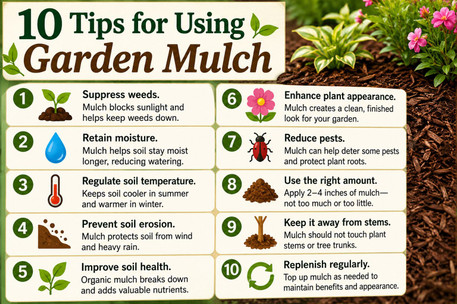
10 Tips for Using Garden Mulch Effectively
Mulch is one of the easiest and most effective ways to improve the health and appearance of your garden. Whether you grow vegetables, flowers, shrubs, or trees, adding mulch around your plants can help conserve moisture, reduce weeds, and protect your soil throughout the growing season. Organic mulches like bark, straw, leaves, and wood chips also break down over time, adding nutrients back into the soil.
If you want healthier plants and less garden maintenance, these 10 mulch tips can help you get the most from your garden beds.
1. Suppress Weeds Naturally
One of the biggest benefits of mulch is weed control. A thick layer of mulch blocks sunlight from reaching weed seeds, making it harder for unwanted plants to grow. This helps reduce the time spent pulling weeds and keeps your garden looking clean and tidy.
For best results, apply mulch after removing existing weeds from the area.
2. Help Soil Retain Moisture
Mulch acts like a protective blanket over the soil, slowing down water evaporation. This helps the ground stay moist longer, especially during hot summer weather.
Gardens with mulch often require less frequent watering, which can save both time and water while helping plants thrive during dry conditions.
3. Regulate Soil Temperature
Mulch helps stabilize soil temperatures throughout the year. During summer, it keeps soil cooler and protects plant roots from extreme heat. In colder months, mulch helps insulate the soil and reduce sudden temperature changes.
This temperature protection is especially useful for vegetable gardens, flower beds, and young trees.
4. Prevent Soil Erosion
Heavy rain and strong winds can wash away valuable topsoil. Mulch helps protect the soil surface by reducing water runoff and limiting erosion.
Sloped gardens and exposed planting areas especially benefit from a thick mulch layer.
5. Improve Soil Health
Organic mulch slowly breaks down over time and adds valuable nutrients back into the soil. This improves soil structure, supports beneficial organisms, and increases long-term fertility.
Materials such as compost, shredded leaves, pine bark, and straw are excellent organic mulch choices for many gardens.
6. Enhance Garden Appearance
Fresh mulch gives flower beds, pathways, and landscaping a neat and finished appearance. Dark mulch colors can make flowers and green foliage stand out while creating a professional-looking landscape.
Many gardeners use mulch not only for plant health but also for curb appeal.
7. Help Reduce Certain Pests
Some mulch materials can discourage pests by creating a barrier around plants. Mulch can also help protect roots from damage and reduce soil splashing that may spread plant diseases.
However, avoid piling mulch too thickly, as overly damp conditions can sometimes attract insects or slugs.
8. Use the Right Amount of Mulch
Applying the proper depth is important. In most gardens, 2 to 4 inches of mulch is ideal. Too little mulch may not block weeds effectively, while too much mulch can trap excess moisture and reduce airflow to plant roots.
Spread mulch evenly around plants for the best results.
9. Keep Mulch Away From Plant Stems and Tree Trunks
Never pile mulch directly against plant stems or tree trunks. This can trap moisture and lead to rot, fungal problems, and pest issues.
Instead, leave a small gap around the base of plants and trees to allow proper airflow.
10. Replenish Mulch Regularly
Over time, mulch naturally breaks down and becomes thinner. Refresh mulch as needed throughout the season to maintain its benefits and appearance.
Adding a fresh layer each year helps keep your garden healthy, attractive, and easier to maintain.
Final Thoughts
Using garden mulch properly can make a major difference in the health and productivity of your plants. From retaining moisture and improving soil health to reducing weeds and enhancing appearance, mulch offers benefits for nearly every type of garden.
Whether you grow vegetables, flowers, herbs, or trees, adding mulch is a simple gardening practice that delivers long-lasting results.