
Posted by TJ Hopkins on Jul 8th 2026
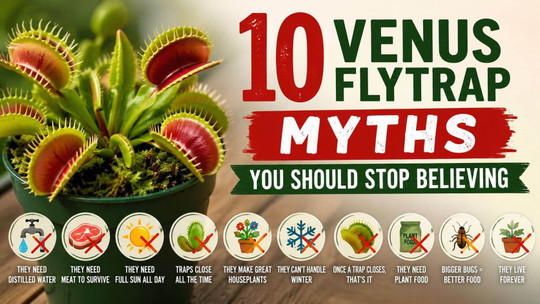
10 Venus Flytrap Myths You Should Stop Believing
Venus flytraps are among the most fascinating plants in the world, but they're also surrounded by myths and misinformation. Many new growers accidentally damage their plants simply because they've followed bad advice they've read online or heard from friends.
If you want a healthy, thriving Venus flytrap, it's time to separate fact from fiction. Here are 10 common Venus flytrap myths you should stop believing.
1. Myth: Venus Flytraps Need Constant Feeding
One of the biggest misconceptions is that Venus flytraps must be fed insects every week.
Truth: Healthy outdoor plants usually catch plenty of insects on their own. Indoor plants may only need an occasional small insect every few weeks. Overfeeding wastes energy and can actually weaken the plant.
2. Myth: Tap Water Is Fine
Many people water their Venus flytrap just like any other houseplant.
Truth: Tap water often contains minerals and salts that slowly build up in the soil, eventually harming or killing the plant. Always use:
- Rainwater
- Distilled water
- Reverse osmosis (RO) water
3. Myth: They Can Live in Low Light
Since they're sold as houseplants, many people place them on a shelf away from sunlight.
Truth: Venus flytraps need at least 6 hours of direct sunlight, with 8–12 hours being ideal. Insufficient light leads to weak growth and poor trap production.
4. Myth: Feed Them Hamburger or Meat
People often think any protein is suitable.
Truth: Never feed:
- Hamburger
- Chicken
- Bacon
- Cheese
- Processed meats
These foods rot inside the trap because the plant cannot digest them properly.
5. Myth: Every Trap Lasts Forever
Many growers panic when traps turn black.
Truth: Each trap naturally dies after catching several insects or after a few months. The plant constantly produces new traps to replace old ones.
6. Myth: They Need Terrariums
Because Venus flytraps like humidity, people assume they should live inside glass containers.
Truth: Terrariums often reduce airflow and encourage mold and fungal diseases. Venus flytraps actually perform much better outdoors or in open containers with good air circulation.
7. Myth: Triggering the Traps Is Harmless
Closing the traps with your finger may seem entertaining.
Truth: Every trap closure uses energy. Repeatedly triggering traps without food weakens the plant and shortens the trap's lifespan.
8. Myth: They Don't Need Winter Dormancy
Many people try to keep Venus flytraps growing year-round indoors.
Truth: Venus flytraps require a winter dormancy period lasting about 3–4 months. During dormancy, growth slows dramatically, allowing the plant to rest and prepare for vigorous spring growth.
9. Myth: Bigger Insects Are Better
Some owners try feeding large beetles or oversized insects.
Truth: Prey should be no larger than about one-third the size of the trap. Oversized insects may prevent the trap from sealing completely, causing the leaf to die prematurely.
10. Myth: Black Traps Mean the Plant Is Dying
A few black leaves often cause unnecessary concern.
Truth: It's perfectly normal for older traps to turn black and die. As long as the center of the plant continues producing healthy new leaves, your Venus flytrap is likely doing just fine.
Bonus Tips for Healthy Venus Flytraps
For the best results:
- Grow in full sun whenever possible.
- Water only with rainwater, distilled water, or reverse osmosis water.
- Use a nutrient-poor growing mix such as sphagnum peat moss and perlite.
- Never fertilize the soil.
- Allow the plant to experience winter dormancy.
- Resist the temptation to constantly feed or trigger the traps.
Final Thoughts
Venus flytraps have earned a reputation as difficult plants, but most problems come from following outdated or incorrect advice. By avoiding these common myths and providing the right conditions, your Venus flytrap can thrive for many years, producing colorful traps and catching insects naturally.
With plenty of sunlight, pure water, and a proper winter rest, you'll discover that Venus flytraps are much easier to grow than their reputation suggests.