
Posted by TJ Hopkins on Jul 10th 2026
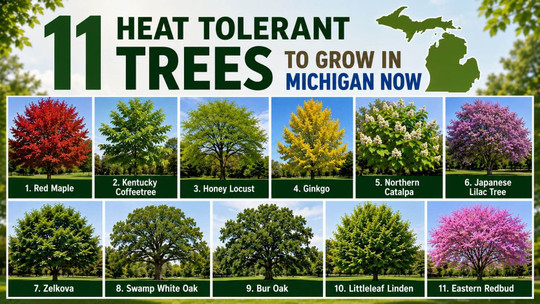
11 Heat Tolerant Trees to Grow in Michigan Now
Michigan has long been known for its cool summers and abundant forests, but recent years have brought hotter temperatures, longer dry spells, and more unpredictable weather. Choosing trees that can tolerate heat while still thriving in Michigan's climate is becoming increasingly important for homeowners and landscapers alike.
The good news is that many attractive shade and ornamental trees are well-suited to handle these changing conditions. Whether you're planting for shade, colorful fall foliage, wildlife, or curb appeal, these heat-tolerant trees are excellent choices.
1. Red Maple (Acer rubrum)
Red Maple is one of Michigan's most popular native trees thanks to its brilliant red fall foliage and adaptability. It tolerates a wide range of soils and handles occasional summer heat surprisingly well once established.
Why Grow It:
- Spectacular red fall color
- Fast-growing shade tree
- Adaptable to many soil types
- Native to Michigan
USDA Zones: 3–9
2. Kentucky Coffeetree (Gymnocladus dioicus)
This unique native tree thrives in heat, drought, and urban environments. Its large leaves create filtered shade, while its rugged appearance adds character to landscapes.
Why Grow It:
- Highly drought tolerant
- Handles poor soils
- Low maintenance
- Excellent street tree
USDA Zones: 3–8
3. Honey Locust (Gleditsia triacanthos var. inermis)
Honey Locust is prized for its light, airy canopy that allows grass to grow underneath. Modern thornless varieties are especially popular and tolerate both heat and dry conditions exceptionally well.
Why Grow It:
- Excellent shade without dense darkness
- Heat and drought resistant
- Fast-growing
- Great for lawns
USDA Zones: 3–8
4. Ginkgo (Ginkgo biloba)
One of the oldest tree species on Earth, Ginkgo is famous for its fan-shaped leaves and brilliant golden fall color. It is remarkably resistant to heat, pests, pollution, and disease.
Why Grow It:
- Extremely long-lived
- Outstanding yellow autumn foliage
- Disease resistant
- Excellent urban tree
USDA Zones: 3–8
5. Northern Catalpa (Catalpa speciosa)
Northern Catalpa produces huge heart-shaped leaves, fragrant white flowers, and long seed pods. It grows quickly and performs well during hot summers.
Why Grow It:
- Large showy blooms
- Fast-growing
- Excellent shade
- Tolerates heat and drought
USDA Zones: 4–8
6. Japanese Lilac Tree (Syringa reticulata)
Unlike traditional lilacs, this ornamental tree blooms in early summer with fragrant creamy-white flower clusters. It performs well during hot weather and remains relatively compact.
Why Grow It:
- Beautiful summer flowers
- Compact size
- Excellent for smaller yards
- Disease resistant
USDA Zones: 3–7
7. Zelkova (Zelkova serrata)
Often planted as an alternative to American elm, Zelkova develops an attractive vase-shaped canopy and provides excellent shade while standing up to heat and drought.
Why Grow It:
- Graceful branching
- Attractive fall colors
- Heat tolerant
- Strong urban performer
USDA Zones: 5–8
8. Swamp White Oak (Quercus bicolor)
Despite its name, Swamp White Oak adapts well to both moist and moderately dry conditions. Once established, it tolerates hot summers while providing excellent wildlife habitat.
Why Grow It:
- Native oak species
- Excellent shade
- Supports birds and wildlife
- Long lifespan
USDA Zones: 3–8
9. Bur Oak (Quercus macrocarpa)
Bur Oak is one of the toughest native trees available. It thrives in heat, drought, wind, and harsh conditions while living for centuries.
Why Grow It:
- Extremely hardy
- Massive shade tree
- Highly drought tolerant
- Valuable wildlife tree
USDA Zones: 3–8
10. Littleleaf Linden (Tilia cordata)
Littleleaf Linden forms a dense, symmetrical canopy and produces fragrant yellow flowers that attract bees and other pollinators. It tolerates urban heat well with proper watering during establishment.
Why Grow It:
- Beautiful pyramidal shape
- Fragrant flowers
- Excellent shade tree
- Pollinator friendly
USDA Zones: 3–7
11. Eastern Redbud (Cercis canadensis)
Eastern Redbud is among the first trees to bloom each spring, covering its branches with vivid pink flowers before the leaves emerge. It tolerates summer heat well and adds outstanding ornamental value.
Why Grow It:
- Early spring blossoms
- Compact landscape tree
- Supports pollinators
- Excellent accent tree
USDA Zones: 4–9
Tips for Growing Heat-Tolerant Trees in Michigan
Even heat-tolerant trees benefit from proper care during their first few years.
- Water deeply once or twice each week during dry periods.
- Apply 2–4 inches of mulch around the base to conserve moisture.
- Avoid planting too deeply—keep the root flare visible.
- Water regularly during the first two growing seasons.
- Choose locations with enough room for mature growth.
- Prune only damaged or crossing branches while trees are dormant.
Final Thoughts
As Michigan experiences warmer summers and more frequent dry spells, selecting trees that can handle heat is a smart investment. These 11 species combine beauty, resilience, and long-term performance, making them excellent choices for home landscapes, parks, and streetscapes. With proper planting and care, they'll provide shade, wildlife habitat, and seasonal beauty for decades to come.