
Posted by TJ Hopkins on Aug 13th 2026
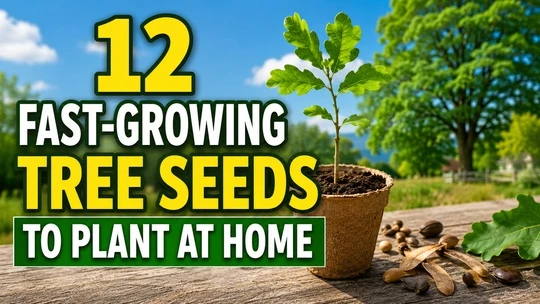
12 Fast-Growing Tree Seeds to Plant at Home
Growing trees from seed is an affordable and rewarding way to add shade, beauty, privacy, and wildlife habitat to your property. While some trees can take years to become established, others are known for vigorous growth once their seedlings get going.
Starting with seeds also lets you watch the entire life cycle of a tree—from the first tiny root to a seedling that may eventually tower over your home. The key is choosing species suited to your climate and giving their seeds the correct treatment before planting.
Here are 12 fast-growing tree seeds worth considering for your home landscape.
1. Northern Catalpa
Northern catalpa (Catalpa speciosa) is a fast-growing deciduous tree known for its enormous heart-shaped leaves and clusters of showy white flowers.
Once established, catalpa trees can put on considerable growth each year under favorable conditions. Their large leaves quickly create a lush, tropical-looking canopy.
Catalpa seeds develop inside long, bean-like pods. Seeds generally germinate readily when planted under warm, moist conditions and usually do not require complicated preparation.
Why grow it:
- Fast-growing shade tree
- Large, attractive leaves
- Beautiful white flowers
- Interesting long seed pods
- Excellent specimen tree for large yards
Give northern catalpa plenty of room because mature trees can become quite large.
2. Tulip Poplar
Tulip poplar (Liriodendron tulipifera), also called tulip tree or yellow poplar, is one of the fastest-growing native hardwood trees in eastern North America.
It produces distinctive four-lobed leaves and tulip-shaped greenish-yellow flowers. Mature specimens can become enormous, making this tree best suited to properties with plenty of open space.
Seeds generally benefit from a period of cold, moist stratification before planting.
Why grow it:
- Rapid growth
- Tall, straight form
- Attractive foliage
- Native to much of the eastern United States
- Valuable to pollinators and wildlife
Plant tulip poplar in full sun and deep, fertile, well-drained soil for the strongest growth.
3. Silver Maple
Silver maple (Acer saccharinum) has long been valued as a rapidly growing shade tree. Young trees can grow quickly when supplied with sufficient moisture and sunlight.
Its leaves have silvery undersides that become especially noticeable when they flutter in the wind.
Silver maple seeds are unusual because they mature in spring rather than fall. Fresh seeds can often be planted soon after collection.
Why grow it:
- Very fast juvenile growth
- Provides shade relatively quickly
- Tolerates moist soils
- Attractive silver-backed foliage
Because the tree can become large and develop substantial surface roots, plant it well away from buildings, sidewalks, driveways, and underground infrastructure.
4. Eastern Cottonwood
If speed is your main priority, eastern cottonwood (Populus deltoides) deserves consideration. It is one of the fastest-growing native trees in North America.
Cottonwoods naturally occur along rivers, streams, floodplains, and other areas where moisture is readily available.
Their seeds are extremely small and surrounded by fluffy, cotton-like fibers. Fresh seed should generally be planted promptly because viability can decline quickly.
Why grow it:
- Exceptionally rapid growth
- Excellent for large properties
- Native wildlife value
- Useful in naturalized areas
- Thrives where adequate moisture is available
Cottonwood is not usually a good choice for small residential yards because of its eventual size and vigorous root system.
5. Black Locust
Black locust (Robinia pseudoacacia) is a vigorous tree capable of establishing and growing rapidly, even on relatively poor soils.
In late spring, mature trees produce fragrant clusters of white, pea-like flowers that are highly attractive to pollinators.
Black locust seeds have extremely hard seed coats. Scarification is commonly used before sowing to help moisture penetrate the seed coat and encourage germination.
Why grow it:
- Rapid growth
- Fragrant spring flowers
- Pollinator friendly
- Tolerates challenging soils
- Drought tolerant once established
Black locust can spread aggressively through root suckers and seeds, so check whether it is appropriate for your area before planting.
6. River Birch
River birch (Betula nigra) combines relatively fast growth with attractive peeling bark, making it an excellent ornamental tree.
Its bark develops shades of tan, salmon, cinnamon, and cream as the tree matures. River birch naturally prefers moist locations but can adapt to ordinary landscape conditions when given adequate water.
The tiny seeds are generally surface-sown or covered very lightly.
Why grow it:
- Relatively fast-growing
- Beautiful peeling bark
- Excellent near ponds and wet areas
- Attractive multi-trunk forms
- Native wildlife value
River birch is particularly useful in areas of the yard where other trees struggle with periodically wet soil.
7. American Sycamore
American sycamore (Platanus occidentalis) is a massive native shade tree recognized by its mottled white, tan, gray, and green bark.
Young trees can grow rapidly in good conditions. Sycamores naturally favor riverbanks and floodplains, although they can adapt to many landscape situations.
Their distinctive round seed balls contain numerous individual seeds that can be separated and planted.
Why grow it:
- Fast-growing native tree
- Outstanding bark
- Large shade canopy
- Tolerates moist soil
- Excellent for large landscapes
American sycamore requires substantial space and should not be planted too close to a house.
8. Dawn Redwood
Dawn redwood (Metasequoia glyptostroboides) is an unusual deciduous conifer that can grow surprisingly quickly.
Unlike most conifers, dawn redwood drops its soft, feathery needles each fall after they turn shades of copper and reddish brown.
Seeds can be started in containers where moisture and temperature are easier to control.
Why grow it:
- Fast growth under favorable conditions
- Unique prehistoric appearance
- Beautiful fall color
- Soft, feathery foliage
- Impressive specimen tree
Dawn redwood prefers full sun and consistent moisture, particularly while young.
9. Mimosa Tree
Mimosa (Albizia julibrissin) is known for rapid growth, fern-like foliage, and fluffy pink summer flowers.
The seeds have a hard outer coating that can delay germination. Scarification or an appropriate hot-water treatment is often used before planting.
Why grow it:
- Fast-growing
- Tropical-looking foliage
- Colorful summer flowers
- Attractive to pollinators
- Performs well in warm climates
One important consideration is its ability to spread. Mimosa is considered invasive in parts of the United States, so check local recommendations before growing it.
10. Empress Tree
Empress tree (Paulownia tomentosa), sometimes called princess tree, is famous for extraordinarily rapid growth.
It produces huge heart-shaped leaves and clusters of purple flowers. Under favorable conditions, young trees can put on remarkable growth.
However, speed isn't the only factor to consider. Empress tree has become invasive in portions of the United States.
Why people grow it:
- Extremely rapid growth
- Very large leaves
- Showy purple flowers
- Dramatic appearance
Before planting empress tree seeds, check local regulations and invasive-species recommendations. In regions where it is problematic, choose a fast-growing native alternative instead.
11. Red Maple
Red maple (Acer rubrum) offers a good balance between reasonably fast growth, ornamental value, and adaptability.
It is famous for brilliant autumn foliage that can range from yellow and orange to bright red. Depending on the individual tree, spring flowers and developing seeds can also add color.
Seeds from many red maple populations mature in spring and can often be planted fresh.
Why grow it:
- Good growth rate
- Outstanding fall color
- Native to eastern North America
- Adaptable to various soil conditions
- Excellent shade tree
Red maple is a particularly appealing choice for homeowners who want faster growth without sacrificing fall color.
12. Weeping Willow
Weeping willow (Salix babylonica) is instantly recognizable by its long, gracefully drooping branches.
When planted in a sunny location with abundant moisture, young willow trees can grow very rapidly. They are especially attractive near large ponds and other spacious waterside landscapes.
Willow seeds are tiny and short-lived, so fresh seed is important when propagating them from seed.
Why grow it:
- Extremely fast growth
- Graceful weeping form
- Excellent waterside tree
- Creates shade quickly
- Distinctive landscape appearance
Keep weeping willows well away from foundations, septic systems, drainage pipes, and other infrastructure because their roots aggressively seek moisture.
How to Germinate Tree Seeds Successfully
Fast-growing trees aren't necessarily fast-germinating trees. Many species have natural dormancy mechanisms that prevent seeds from sprouting until environmental conditions are favorable.
Always research the germination requirements of the particular species you're growing.
Cold Stratification
Many temperate tree seeds need a period of cold, moist conditions before they will germinate.
Seeds are typically mixed with slightly moist growing medium and refrigerated for the recommended period. This mimics winter conditions and helps overcome seed dormancy.
Scarification
Hard-coated seeds such as black locust may benefit from scarification.
The objective is to weaken or penetrate the hard outer seed coat sufficiently for water to enter without damaging the embryo inside.
Planting Depth
Avoid automatically burying every tree seed deeply.
Some small seeds need to remain close to the surface, while larger seeds may require deeper planting. Follow the recommendations for the individual species.
Keep the Growing Medium Moist
Seeds need consistent moisture during germination, but constantly saturated soil can encourage rot.
Use a well-draining seed-starting medium and maintain even moisture.
A humidity dome can help retain moisture around newly planted seeds, particularly when starting them indoors.
Provide Plenty of Light
Once seedlings emerge, move them into strong light. Insufficient light often produces tall, thin seedlings that lean toward the nearest window.
If natural sunlight is limited, supplemental grow lights can help produce stronger seedlings.
When Should Tree Seedlings Be Planted Outside?
Don't rush newly germinated trees into the landscape.
Allow seedlings to develop a healthy root system first. Trees started indoors should also be gradually hardened off before permanent outdoor planting.
During hardening off, expose seedlings to outdoor conditions for progressively longer periods over several days. This helps them adjust to direct sunlight, wind, and changing temperatures.
The best transplanting season varies by species and climate, although spring and fall are commonly favorable times for planting many trees.
Choose the Right Tree for Your Property
Growth rate shouldn't be the only consideration when choosing a tree.
Before planting, consider:
- Mature height and canopy width
- USDA hardiness zone
- Available sunlight
- Soil drainage
- Moisture requirements
- Distance from your house
- Overhead power lines
- Underground utilities
- Root growth
- Local invasive-species recommendations
A tree that grows quickly but eventually becomes too large for its location can create expensive problems later.
Fast-Growing Trees Still Require Patience
Even fast-growing species need time to develop into mature trees. Germination may take weeks or months, and young seedlings require consistent care during their first growing seasons.
Starting trees from seed, however, gives you something a nursery-grown tree cannot—the opportunity to watch your tree develop from its very beginning.
Whether you choose the colorful red maple, towering tulip poplar, distinctive dawn redwood, or graceful weeping willow, growing a tree from seed can become a long-term addition to your home landscape.
Choose a species suited to your climate, follow its specific germination requirements, and give the young tree enough room to reach its mature size. With the right start, today's tiny seed can eventually become one of the most impressive features in your yard.