
Posted by TJ Hopkins on Jul 10th 2026
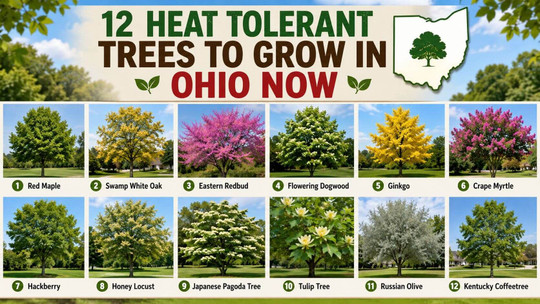
12 Heat Tolerant Trees to Grow in Ohio Now
Ohio summers are becoming warmer and longer, making it more important than ever to choose trees that can handle heat while still thriving in the Buckeye State. Whether you're planting for shade, colorful blooms, wildlife, or curb appeal, selecting heat-tolerant species can help your landscape stay healthy for decades with less maintenance.
Here are 12 excellent heat-tolerant trees that perform well throughout much of Ohio.
1. Red Maple (Acer rubrum)
One of Ohio's most dependable native shade trees, Red Maple adapts well to a variety of soil types and handles summer heat with ease once established.
Why you'll love it:
- Brilliant red fall foliage
- Fast-growing shade tree
- Supports birds and pollinators
- Grows 40–70 feet tall
2. Swamp White Oak (Quercus bicolor)
Despite its name, Swamp White Oak tolerates both moist and moderately dry conditions, making it a versatile choice for Ohio landscapes.
Benefits:
- Long-lived native oak
- Excellent wildlife tree
- Strong heat and drought tolerance
- Beautiful peeling bark
3. Eastern Redbud (Cercis canadensis)
This Ohio native is famous for its breathtaking pink-purple blossoms that cover branches before leaves appear each spring.
Highlights:
- Early spring color
- Compact size for small yards
- Heart-shaped leaves
- Reaches 20–30 feet
4. Flowering Dogwood (Cornus florida)
Flowering Dogwood remains a favorite ornamental tree thanks to its elegant spring blooms and colorful fall foliage.
Best features:
- White spring flowers
- Bright red berries for birds
- Attractive fall colors
- Perfect understory tree
5. Ginkgo (Ginkgo biloba)
Known as a living fossil, Ginkgo is one of the toughest urban trees available. It tolerates heat, pollution, and drought exceptionally well.
Advantages:
- Brilliant golden fall color
- Extremely pest resistant
- Long lifespan
- Great street tree
6. Crape Myrtle (Lagerstroemia spp.)
Modern cold-hardy varieties allow Crape Myrtle to thrive in much of Ohio, especially southern and central areas.
Why plant one:
- Months of colorful summer flowers
- Attractive peeling bark
- Excellent heat tolerance
- Low maintenance
7. Hackberry (Celtis occidentalis)
Hackberry is a rugged native tree that performs well even in difficult growing conditions.
Why it's reliable:
- Handles heat and drought
- Adaptable to many soil types
- Produces berries for wildlife
- Strong shade tree
8. Honey Locust (Gleditsia triacanthos var. inermis)
Thornless Honey Locust varieties are among the easiest shade trees to grow in warm climates.
Benefits include:
- Light, filtered shade
- Small leaves that are easy to rake
- Heat and drought tolerant
- Fast-growing
9. Japanese Pagoda Tree (Styphnolobium japonicum)
This elegant tree blooms during mid-to-late summer when few other trees are flowering.
Top reasons to grow it:
- Creamy white flower clusters
- Excellent urban tree
- Heat and drought tolerant
- Attractive rounded canopy
10. Tulip Tree (Liriodendron tulipifera)
Ohio's state tree grows rapidly and develops into a magnificent shade tree with unique tulip-shaped flowers.
Features:
- Fast growth
- Beautiful spring blooms
- Distinctive leaves
- Can reach 70–100 feet
11. Russian Olive (Elaeagnus angustifolia)
Russian Olive is highly tolerant of heat, drought, and poor soils. However, gardeners should note that it is considered invasive in many areas and is generally not recommended for new plantings in Ohio. Native alternatives such as Silverberry or Serviceberry are better ecological choices.
Characteristics:
- Silvery foliage
- Fragrant yellow flowers
- Extremely drought tolerant
- Thrives in poor soils
12. Kentucky Coffeetree (Gymnocladus dioicus)
A native of the Midwest, Kentucky Coffeetree is one of the best large trees for handling hot summers and urban conditions.
Why gardeners love it:
- Large tropical-looking leaves
- Very tolerant of heat and drought
- Strong branch structure
- Low maintenance
Tips for Success
Even heat-tolerant trees benefit from proper care during their first few years.
- Water deeply once or twice per week during dry periods.
- Apply 2–3 inches of mulch around the base, keeping it away from the trunk.
- Plant during spring or fall for the best establishment.
- Avoid excessive pruning during periods of extreme heat.
- Choose a tree suited to your available space and soil conditions.
Final Thoughts
Planting heat-tolerant trees is a smart investment for Ohio homeowners. These species provide cooling shade, beautiful seasonal color, wildlife habitat, and long-term landscape value while standing up to increasingly hot summers. Whether you're looking for a fast-growing shade tree like the Tulip Tree, vibrant spring blooms from an Eastern Redbud, or the toughness of a Kentucky Coffeetree, there's an excellent option for every yard.
By choosing trees adapted to Ohio's changing climate, you'll enjoy a healthier, more resilient landscape for years to come.