
Posted by TJ Hopkins on Sep 24th 2026
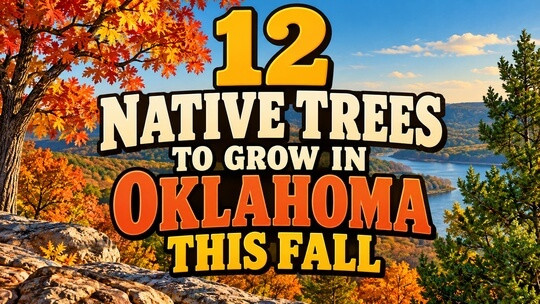
12 Native Trees to Grow in Oklahoma This Fall
Fall is a good time to plant trees in Oklahoma. Cooler weather reduces heat stress, while the soil often stays warm enough for roots to grow. The key is choosing a tree that fits your part of the state and the conditions in your yard. A tree native to eastern Oklahoma, for example, may struggle in a dry western site.
Here are 12 native trees to consider, from small flowering trees to long-lived shade trees.
1. Eastern Redbud
Eastern redbud (Cercis canadensis) brings bright pink flowers to the landscape in early spring. Oklahoma’s state tree works well where a large shade tree would overwhelm the space. Give it room to spread and choose a spot with good drainage.
2. Bur Oak
Bur oak (Quercus macrocarpa) is a strong choice when you have space for a large shade tree. Its broad crown offers generous shade, and its acorns provide food for wildlife. Once established, it can handle a range of Oklahoma conditions, including periods of drought.
3. Post Oak
Post oak (Quercus stellata) is a familiar tree across Oklahoma’s Cross Timbers region. It suits sunny sites with well-drained soil, including places that become dry in summer. Plant it where its mature size will not conflict with buildings or overhead wires.
4. Blackjack Oak
Blackjack oak (Quercus marilandica) often grows alongside post oak in Oklahoma’s native woodlands. Its distinctive leaves and rugged form give it character. It is best suited to a naturalistic planting area with plenty of sun and room to grow.
5. Shumard Oak
Shumard oak (Quercus shumardii) offers shade and attractive red fall color. It grows into a substantial tree, so check its mature spread before planting. A roomy yard or open landscape gives it the best setting.
6. Pecan
Pecan (Carya illinoinensis) is Oklahoma’s state tree and a natural choice for a spacious property. Native pecans often grow along streams and river valleys, where soils are deep and moisture is more dependable. Leave plenty of room for its large canopy.
7. American Persimmon
American persimmon (Diospyros virginiana) adds an interesting fruiting tree to a wildlife-friendly landscape. Its fruit can attract birds and other animals. If fruit is your goal, ask the nursery about the tree you are buying, since persimmons commonly have separate male and female trees.
8. American Plum
American plum (Prunus americana) is a small native tree that produces white spring flowers and fruit later in the season. It can spread by suckers, making it especially useful along a property edge or in an informal planting.
9. Red Mulberry
Red mulberry (Morus rubra) provides fruit for wildlife and shade from its broad leaves. Give it a site where falling fruit will not be a nuisance. When shopping, check the botanical name so you get native red mulberry rather than another mulberry species.
10. Black Gum
Black gum (Nyssa sylvatica), also called black tupelo, is prized for its vivid fall color. It is more at home in eastern Oklahoma, where conditions are generally less dry. Match it carefully to the site and avoid a hot, exposed location with poor soil.
11. Eastern Redcedar
Eastern redcedar (Juniperus virginiana) provides year-round greenery and cover for birds. It can serve as a screen or windbreak where it has adequate space. Because it spreads readily in parts of Oklahoma, consider its location and long-term management before planting.
12. Osage Orange
Osage orange (Maclura pomifera) is a tough native tree with a long history in Oklahoma landscapes. Its thorns and large fruit make it a better fit for a field edge or large property than a small yard. Choose its planting spot with those features in mind.
How to Plant a Tree This Fall
Start by checking your site’s sunlight, drainage, available space and summer water needs. Oklahoma’s climate varies considerably across the state, so confirm that your chosen species grows naturally in or is suited to your county.
Dig a hole wide enough to spread the roots comfortably, but keep the root flare—the place where the trunk widens into the roots—at or slightly above ground level. Refill the hole with the soil you removed, water thoroughly, and add mulch around the tree without piling it against the trunk.
Keep watering as needed through dry fall and winter periods. A newly planted tree still needs moisture even after its leaves drop.
A Tree for the Right Place
Native trees can bring shade, spring flowers, fall color and wildlife value to an Oklahoma yard. Choose one for the space it will occupy when mature, then give it steady care while its roots become established. A thoughtful choice this fall can be part of your landscape for decades.