
Posted by TJ Hopkins on Jul 11th 2026
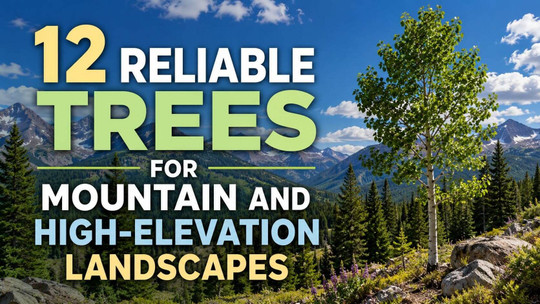
12 Reliable Trees for Mountain and High-Elevation Landscapes
Mountain landscapes offer breathtaking views, cooler temperatures, and unique growing conditions. However, planting trees at higher elevations can be challenging. Cold winters, strong winds, rocky or shallow soils, heavy snowfall, intense sunlight, and shorter growing seasons can make it difficult for many tree species to thrive.
Fortunately, some trees are naturally adapted to rugged mountain environments. These dependable species can tolerate cold temperatures, withstand harsh weather, and grow successfully in challenging soils. Whether you are planting trees for shade, privacy, wildlife habitat, erosion control, or natural beauty, choosing varieties suited to your elevation is essential.
Here are 12 reliable trees to consider for mountain and high-elevation landscapes.
1. Quaking Aspen
Quaking aspen is one of the most recognizable trees found throughout mountainous areas of North America. Its smooth, pale bark and rounded leaves create year-round interest. The leaves flutter in even the slightest breeze, producing the gentle movement that gives the tree its name.
In fall, quaking aspens turn brilliant shades of golden yellow. They grow relatively quickly and are especially attractive when planted in naturalized groups.
Quaking aspens spread through underground roots and may gradually form groves. Give them plenty of room where their natural spreading habit will not become a problem.
Growing Conditions:
- USDA Hardiness Zones: 1–7
- Sun Exposure: Full sun
- Mature Height: 40–50 feet
- Soil: Moist, well-drained soil
- Notable Benefit: Brilliant golden fall foliage
2. Colorado Blue Spruce
Colorado blue spruce is a classic mountain evergreen known for its striking blue-green to silvery-blue needles. Its dense, pyramidal shape makes it an excellent specimen tree, windbreak, privacy screen, or year-round landscape feature.
Once established, Colorado blue spruce can tolerate cold temperatures, strong winds, and periods of drought. It performs best in locations with full sun and good air circulation.
Avoid planting it in poorly drained soil, as excessive moisture around the roots may contribute to disease problems.
Growing Conditions:
- USDA Hardiness Zones: 2–7
- Sun Exposure: Full sun
- Mature Height: 30–60 feet in landscapes
- Soil: Well-drained, slightly acidic soil
- Notable Benefit: Attractive blue foliage throughout the year
3. Douglas Fir
Douglas fir is a large, long-lived evergreen native to western North America. It is commonly found in mountainous forests and is valued for its strong growth, attractive form, and ability to provide shelter for birds and other wildlife.
Young Douglas fir trees typically develop a symmetrical, pyramidal shape. Their soft, flat needles release a pleasant fragrance when crushed.
Because these trees can become very large, they are best suited to spacious properties, woodland plantings, windbreaks, and naturalized landscapes.
Growing Conditions:
- USDA Hardiness Zones: 4–6
- Sun Exposure: Full sun to partial shade
- Mature Height: 40–80 feet or more
- Soil: Deep, moist, well-drained soil
- Notable Benefit: Excellent wildlife habitat and wind protection
4. Rocky Mountain Juniper
Rocky Mountain juniper is a durable evergreen that performs well in dry, rocky, and exposed mountain locations. Its dense foliage ranges from gray-green to blue-green, providing dependable color throughout the year.
This tree is highly drought tolerant once established and can handle poor soils better than many other evergreens. Female trees may produce small, blue, berry-like cones that provide food for birds.
Rocky Mountain juniper works well as a privacy screen, windbreak, specimen tree, or naturalized planting.
Growing Conditions:
- USDA Hardiness Zones: 3–7
- Sun Exposure: Full sun
- Mature Height: 20–40 feet
- Soil: Dry to moderately moist, well-drained soil
- Notable Benefit: Excellent drought and wind tolerance
5. Limber Pine
Limber pine is a rugged evergreen naturally adapted to high elevations, rocky slopes, strong winds, and cold temperatures. Its flexible branches help it withstand harsh mountain weather and heavy snow.
The tree develops an attractive, irregular shape as it matures. In exposed locations, older specimens may become twisted or windswept, adding distinctive character to the landscape.
Limber pine is a good choice for naturalized mountain properties where a durable, low-maintenance evergreen is needed.
Growing Conditions:
- USDA Hardiness Zones: 4–7
- Sun Exposure: Full sun
- Mature Height: 20–40 feet
- Soil: Rocky, sandy, or well-drained soil
- Notable Benefit: Tolerates exposed, high-elevation conditions
6. Paper Birch
Paper birch is admired for its bright white, peeling bark and graceful appearance. It grows naturally in cool northern forests and mountain regions where summers remain relatively mild.
Its green leaves turn yellow during fall, while the white bark provides striking winter interest. Paper birch is especially attractive when planted in small groups or as a multi-trunk specimen.
This species prefers cool, moist soil and may struggle in areas with prolonged summer heat or drought.
Growing Conditions:
- USDA Hardiness Zones: 2–7
- Sun Exposure: Full sun to partial shade
- Mature Height: 40–70 feet
- Soil: Cool, moist, well-drained soil
- Notable Benefit: Beautiful white bark and year-round interest
7. Engelmann Spruce
Engelmann spruce is one of the most dependable evergreen trees for cold, high-elevation environments. It naturally grows in mountain forests where winters are long, temperatures are low, and snowfall can be heavy.
Its narrow, pyramidal growth habit allows snow to slide from the branches more easily. The blue-green needles and graceful form make it an attractive addition to large mountain landscapes.
Engelmann spruce prefers cool conditions and consistent moisture but should not be planted in waterlogged soil.
Growing Conditions:
- USDA Hardiness Zones: 2–5
- Sun Exposure: Full sun
- Mature Height: 50–80 feet
- Soil: Cool, moist, well-drained soil
- Notable Benefit: Exceptional cold and snow tolerance
8. Bristlecone Pine
Bristlecone pine is famous for its extraordinary longevity and ability to survive in some of the harshest mountain environments. These slow-growing trees tolerate cold temperatures, intense sunlight, strong winds, rocky soils, and limited moisture.
Their irregular branching patterns and dense clusters of dark green needles create a rugged, sculptural appearance. Because they grow slowly, bristlecone pines can be suitable for smaller mountain landscapes when given adequate sunlight.
They require excellent drainage and generally perform poorly in rich, overly wet soil.
Growing Conditions:
- USDA Hardiness Zones: 4–7
- Sun Exposure: Full sun
- Mature Height: 15–30 feet
- Soil: Rocky, gravelly, or sandy soil
- Notable Benefit: Extremely long-lived and highly resilient
9. Subalpine Fir
Subalpine fir is a narrow, elegant evergreen commonly found at high elevations in western North America. Its slender shape helps it shed snow and withstand the challenging conditions found near the upper limits of mountain forests.
The tree has soft, blue-green needles and a naturally symmetrical form. It grows best in cool climates with adequate moisture and is especially well suited to naturalized mountain landscapes.
Subalpine fir is not a good choice for hot, humid regions or poorly drained locations.
Growing Conditions:
- USDA Hardiness Zones: 3–6
- Sun Exposure: Full sun to partial shade
- Mature Height: 30–60 feet
- Soil: Cool, moist, well-drained soil
- Notable Benefit: Narrow form suited to snowy locations
10. Mountain Ash
Mountain ash is a beautiful small to medium-sized tree valued for its clusters of white spring flowers and colorful orange or red berries. The fruit often remains on the tree into fall and winter, providing an important food source for birds.
Its compound leaves turn shades of yellow, orange, or red during autumn. Mountain ash grows best in cool climates and can perform well in mountain landscapes with moist, well-drained soil.
Despite its common name, mountain ash is not a true ash tree.
Growing Conditions:
- USDA Hardiness Zones: 3–6
- Sun Exposure: Full sun
- Mature Height: 20–40 feet
- Soil: Moist, slightly acidic, well-drained soil
- Notable Benefit: Colorful berries that attract birds
11. White Fir
White fir is an attractive evergreen with soft, blue-green needles and a full, symmetrical shape. It is more tolerant of heat and dry conditions than several other fir species, making it useful in lower mountain regions and moderately dry landscapes.
Once established, white fir can tolerate occasional drought, although young trees benefit from consistent moisture. Its dense branches provide year-round privacy and valuable shelter for wildlife.
Allow plenty of space for the tree to reach its mature size.
Growing Conditions:
- USDA Hardiness Zones: 4–7
- Sun Exposure: Full sun to partial shade
- Mature Height: 40–70 feet
- Soil: Deep, well-drained soil
- Notable Benefit: Attractive foliage with moderate drought tolerance
12. Ponderosa Pine
Ponderosa pine is a strong, adaptable evergreen native to mountain regions throughout western North America. Mature trees develop tall, straight trunks with distinctive orange-brown bark divided into broad plates.
Its long needles grow in bundles and create an open, attractive canopy. Ponderosa pine is drought tolerant after establishment and performs well in sunny locations with deep, well-drained soil.
Because of its large mature size, it is best suited to spacious properties, naturalized landscapes, and large windbreak plantings.
Growing Conditions:
- USDA Hardiness Zones: 3–7
- Sun Exposure: Full sun
- Mature Height: 50–100 feet or more
- Soil: Sandy, gravelly, or well-drained soil
- Notable Benefit: Excellent drought tolerance after establishment
Tips for Planting Trees at Higher Elevations
Mountain growing conditions can vary dramatically over short distances. Before selecting a tree, consider your elevation, winter temperatures, wind exposure, snowfall, soil depth, drainage, and available sunlight.
For better results:
- Choose trees rated for your USDA Hardiness Zone.
- Select species that tolerate temperatures slightly colder than your typical winter lows.
- Plant in spring after the soil becomes workable, allowing roots time to establish before winter.
- Avoid planting directly in exposed wind corridors whenever possible.
- Use a layer of organic mulch to conserve moisture and protect roots from temperature changes.
- Keep mulch several inches away from the trunk.
- Water newly planted trees deeply during their first few growing seasons.
- Protect young trunks from deer, elk, rodents, and winter sun damage when necessary.
- Avoid heavily fertilizing newly planted mountain trees.
- Choose locally adapted or native species whenever possible.
Consider Snow, Wind, and Soil Conditions
Heavy snow can damage trees with weak branches or dense, poorly structured canopies. Trees with flexible branches or naturally narrow forms are often better able to handle significant snowfall.
Strong mountain winds can also dry out foliage and soil. Evergreen trees planted in exposed locations may experience winter browning when frozen roots cannot replace moisture lost through their needles.
Rocky mountain soils are often shallow and fast draining. Before planting, check the depth and drainage of the soil rather than assuming every location on the property has the same growing conditions.
Final Thoughts
Successful mountain landscaping begins with choosing trees adapted to cold temperatures, strong winds, heavy snow, intense sunlight, and shorter growing seasons. Hardy species such as quaking aspen, Colorado blue spruce, limber pine, Engelmann spruce, bristlecone pine, and Rocky Mountain juniper have characteristics that help them thrive in challenging high-elevation environments.
The best tree will depend on your specific elevation, USDA Hardiness Zone, soil conditions, moisture availability, and available space. By matching each species to the conditions on your property, you can create a beautiful, resilient landscape that provides shade, privacy, wildlife habitat, erosion protection, and year-round interest for many years to come.