
Posted by TJ Hopkins on Aug 22nd 2026
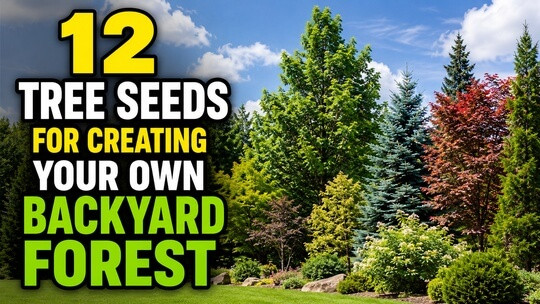
12 Tree Seeds for Creating Your Own Backyard Forest
Creating your own backyard forest is a rewarding way to add beauty, shade, privacy, and wildlife habitat to your property. Instead of purchasing established trees, you can start your miniature forest from seeds and enjoy watching it develop year after year.
Growing trees from seed requires patience, but it gives you the opportunity to grow many trees at an affordable cost. You can also combine different species to create a diverse landscape with varying heights, colors, textures, and benefits for wildlife.
Whether you have a large backyard or several acres available, here are 12 tree seeds to consider for creating your own backyard forest.
1. Sugar Maple
Sugar maple (Acer saccharum) is an excellent choice for anyone hoping to create a classic woodland landscape. These beautiful deciduous trees develop dense green foliage during summer before producing brilliant shades of yellow, orange, and red in fall.
Sugar maples can eventually become large shade trees, commonly reaching 60 to 75 feet tall under favorable conditions. Their broad canopies make them particularly useful for creating the upper layer of a backyard forest.
Sugar maple seeds generally benefit from a period of cold, moist stratification before germination.
Why grow it: Spectacular fall color, abundant shade, long lifespan, and excellent woodland character.
2. Eastern White Pine
Eastern white pine (Pinus strobus) is a fast-growing evergreen that can provide year-round greenery and structure in a backyard forest. Mature trees can become impressive specimens with soft, blue-green needles and tall, straight trunks.
Planting several white pines together can help create natural-looking evergreen sections while providing valuable shelter for birds and other wildlife.
The species grows best in locations receiving plenty of sunlight and having moist, well-drained soil.
Why grow it: Fast growth, evergreen foliage, wildlife habitat, privacy, and year-round visual interest.
3. Northern Red Oak
Northern red oak (Quercus rubra) is a strong candidate for the canopy of a backyard forest. Mature trees develop wide crowns capable of providing substantial amounts of shade.
The acorns can be planted to establish seedlings, although protecting newly planted acorns from squirrels and other wildlife may be necessary.
Once established, northern red oaks can become impressive long-lived trees and provide food and habitat for numerous wildlife species.
Why grow it: Large shade canopy, wildlife value, attractive fall foliage, and long-term landscape value.
4. River Birch
River birch (Betula nigra) adds something different to a backyard forest with its attractive peeling bark and graceful branching structure.
It naturally performs well in moist environments, making it especially useful for lower portions of a property where the soil remains wetter. However, established trees can adapt to various landscape conditions.
River birch is relatively fast growing compared with many hardwood trees, making it useful when you want your young forest to begin developing quickly.
Why grow it: Decorative bark, relatively rapid growth, attractive form, and tolerance of moist soils.
5. American Sycamore
If you have plenty of space, American sycamore (Platanus occidentalis) can become one of the most impressive trees in your backyard forest.
Sycamores are known for their massive trunks, broad crowns, and distinctive mottled bark containing shades of cream, gray, brown, and green. Mature specimens can grow exceptionally large, so they should be planted well away from buildings and utility lines.
Their size makes them particularly suitable for larger properties where they can develop without frequent pruning.
Why grow it: Massive shade canopy, distinctive bark, fast growth, and dramatic appearance.
6. Black Walnut
Black walnut (Juglans nigra) combines the appeal of a large shade tree with edible nut production. The trees develop tall trunks and broad crowns and can become beautiful additions to naturalized landscapes.
Walnuts are an important food source for squirrels and other wildlife.
One consideration is that black walnut produces juglone, a naturally occurring compound that can inhibit the growth of certain sensitive plants nearby. Give these trees plenty of room and choose neighboring plants carefully.
Why grow it: Edible nuts, valuable wildlife food, impressive mature size, and attractive shade.
7. Tulip Tree
Tulip tree (Liriodendron tulipifera), also called tulip poplar, is an excellent option when rapid growth is a priority.
These native trees can eventually reach impressive heights. Their distinctive leaves and yellow-green, tulip-shaped flowers make mature specimens especially attractive.
Tulip trees generally perform best in deep, fertile, well-drained soil with adequate moisture.
Why grow it: Rapid growth, tall forest-like appearance, unusual flowers, and attractive foliage.
8. American Beech
American beech (Fagus grandifolia) can help give a backyard forest the appearance of an established natural woodland.
Beech trees are recognizable by their smooth gray bark and dense foliage. Mature specimens can develop broad crowns that produce considerable shade beneath them.
Because American beech can live for generations under favorable conditions, planting one from seed can create a tree that remains part of the landscape far into the future.
Why grow it: Long lifespan, attractive smooth bark, dense shade, and excellent woodland appearance.
9. Eastern Redbud
Not every tree in your backyard forest needs to become enormous. Smaller understory trees add another layer of vegetation beneath taller canopy species.
Eastern redbud (Cercis canadensis) is particularly useful for this purpose. In early spring, its branches become covered with clusters of pink to purple flowers before its distinctive heart-shaped leaves emerge.
Redbuds commonly remain much smaller than oaks, maples, and other canopy trees.
Why grow it: Beautiful spring flowers, manageable size, pollinator value, and excellent understory potential.
10. Flowering Dogwood
Flowering dogwood (Cornus florida) is another attractive understory species that can increase the diversity of your backyard forest.
Its showy spring display is followed by green summer foliage, red fruits, and colorful fall leaves. The fruits can also provide food for birds and other wildlife.
Dogwoods generally appreciate locations where they receive some protection from intense afternoon sunlight, making them useful around taller trees as your forest develops.
Why grow it: Spring beauty, fall color, wildlife value, and compact woodland form.
11. Colorado Blue Spruce
Colorado blue spruce (Picea pungens) can introduce contrasting color and evergreen structure among decididuous trees.
Its stiff needles range from green to striking silvery blue. Because it retains its needles throughout winter, blue spruce can keep your backyard forest visually interesting after deciduous trees lose their leaves.
Give individual trees adequate spacing so they can develop their characteristic pyramidal form.
Why grow it: Blue-green foliage, year-round color, winter interest, and excellent landscape structure.
12. White Oak
White oak (Quercus alba) is a magnificent long-lived tree for anyone creating a forest intended to mature over many decades.
The tree develops a broad, spreading crown and produces acorns that serve as an important food source for wildlife. Mature white oaks can become enormous, so adequate spacing is essential.
White oak may not provide instant results, but its longevity and wildlife value make it worth considering for a long-term backyard forest project.
Why grow it: Exceptional longevity, abundant wildlife value, impressive shade, and classic woodland appearance.
How to Plan Your Backyard Forest
A backyard forest looks more natural when trees aren't planted in perfectly straight rows. Consider arranging them in loose groups while still allowing enough room for each species to reach its mature size.
Think in terms of different forest layers.
Large trees such as oak, maple, tulip tree, and sycamore can eventually form the upper canopy. Medium and smaller trees such as redbud and dogwood can occupy the understory. Evergreens such as eastern white pine and blue spruce can provide year-round structure.
You should also consider sunlight, drainage, soil type, mature tree size, nearby structures, and overhead utility lines before deciding where each seedling will eventually grow.
Don't Plant Your Tree Seeds Too Close Together
Tiny seedlings can make a large planting area look empty, which makes it tempting to plant them close together. Remember that those seedlings may eventually become trees measuring dozens of feet across.
Research the expected mature spread of each species and plan accordingly. You can plant more densely if you're deliberately creating a woodland and expect to thin trees later, but this requires additional management.
Keep potentially enormous trees such as sycamores and oaks an appropriate distance from houses, septic systems, driveways, power lines, and other structures.
Mix Deciduous and Evergreen Trees
Combining deciduous and evergreen species can make a backyard forest more attractive throughout the year.
Deciduous trees provide changing seasonal interest, including spring growth and colorful autumn foliage. Evergreen trees maintain their needles during winter and can provide privacy and shelter when surrounding deciduous branches are bare.
A mixture of species can also prevent your backyard forest from looking like a single-species plantation.
Create Habitat for Wildlife
One of the biggest benefits of creating a backyard forest is the habitat it can eventually provide.
Oaks and walnuts produce food for wildlife, while flowering and fruit-producing trees can attract birds and pollinators. Mature trees provide nesting locations, shade, shelter, and protection.
You can increase habitat diversity even further by incorporating native shrubs, perennial flowers, grasses, and groundcovers beneath your trees.
Be Patient With Trees Grown From Seed
A backyard forest grown from seed won't appear overnight.
Some seeds can take weeks or months to germinate, and many temperate tree species require specific pretreatments such as cold stratification before they will sprout. Even after germination, seedlings may initially grow slowly while establishing their root systems.
The reward comes with time. Each growing season brings taller seedlings, thicker trunks, expanding canopies, and a landscape that gradually begins to resemble a young woodland.
Final Thoughts
Creating your own backyard forest from tree seeds is a long-term project, but that's part of what makes it special. You're not simply landscaping for the current season—you're establishing trees that could remain on the property for decades or even generations.
Start with species appropriate for your climate and available space. Combine large canopy trees with smaller understory species and evergreens to create variety, and pay close attention to each species' mature size before planting.
With good planning, proper seed preparation, and patience, a handful of tree seeds can eventually transform an open backyard into a thriving miniature forest filled with shade, seasonal color, and wildlife.