
Posted by TJ Hopkins on Aug 18th 2026
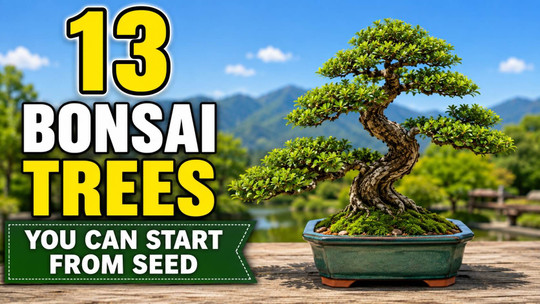
13 Bonsai Trees You Can Start From Seed
Growing a bonsai tree from seed is one of the most rewarding ways to create a miniature tree. Instead of starting with an established plant, you get to guide the tree from its earliest stages, shaping the trunk, branches, and overall character as it matures.
Starting bonsai from seed does require patience. Some tree seeds need special treatments before they will germinate, and it can take several years before a young tree begins to develop the appearance of a mature bonsai. However, the extra time gives you much more control over how your tree develops.
Here are 13 beautiful trees you can start from seed and eventually train as bonsai.
1. Japanese Maple
Japanese maple (Acer palmatum) is one of the most recognizable trees used for bonsai. Its delicate leaves, graceful branching, and brilliant fall colors make it an outstanding choice.
Japanese maple seeds generally benefit from a period of cold stratification before planting. Once seedlings become established, they can be gradually trained through pruning and wiring.
Japanese maples prefer bright light with some protection from intense afternoon sun, particularly during hot summer weather.
2. Japanese Black Pine
Japanese black pine (Pinus thunbergii) is a classic bonsai species known for its rugged bark, strong trunk, and dark green needles.
Young seedlings can be trained early to encourage interesting trunk movement. Over time, careful pruning and candle management can help create the dense foliage pads associated with mature pine bonsai.
This species performs best outdoors in plenty of sunlight.
3. Chinese Elm
Chinese elm (Ulmus parvifolia) is an excellent bonsai tree for beginners because it responds well to pruning and develops attractive fine branching.
The small leaves naturally complement the miniature proportions of a bonsai. As the tree ages, its bark can become increasingly textured and attractive.
Chinese elm seeds can be planted to produce seedlings that can later be shaped into informal upright, broom, and other popular bonsai styles.
4. Trident Maple
Trident maple (Acer buergerianum) is prized by bonsai growers for its small three-lobed leaves, attractive roots, and ability to develop a thick trunk.
Trees grown from seed can be trained from a young age to encourage strong surface roots and trunk taper.
The foliage is green during the growing season and can develop beautiful yellow, orange, or reddish colors in fall.
5. Norway Spruce
Norway spruce (Picea abies) can create an impressive miniature conifer with short needles and naturally attractive branching.
The species works particularly well for upright and informal bonsai designs. Young branches remain relatively flexible, allowing growers to gradually establish the desired shape.
Norway spruce is cold hardy and should generally be grown outdoors where it can experience normal seasonal changes.
6. Scots Pine
Scots pine (Pinus sylvestris) is another excellent pine for bonsai. Mature specimens can develop rugged bark and beautiful irregular forms that resemble old trees growing in harsh environments.
Seedlings can be shaped while young to introduce bends and movement into the trunk.
Because Scots pine is naturally cold hardy, it makes an especially good option for growers in cooler climates.
7. Dawn Redwood
Dawn redwood (Metasequoia glyptostroboides) is a fascinating deciduous conifer that can be grown successfully as bonsai.
Its soft, feathery foliage creates a delicate appearance during spring and summer. In autumn, the foliage changes color before dropping for winter.
Dawn redwood grows relatively quickly compared with many traditional bonsai trees, making it appealing to growers who want to see noticeable development from their seedlings.
8. Bald Cypress
Bald cypress (Taxodium distichum) is famous for growing naturally in wet areas and swamps of the southeastern United States.
As bonsai, bald cypress trees can develop impressive flared trunks that give even relatively young specimens an aged appearance.
The tree is deciduous, producing soft green foliage during the growing season before dropping its leaves.
Bald cypress enjoys abundant moisture and should not be allowed to remain excessively dry during active growth.
9. Crabapple
Crabapple (Malus species) is a wonderful option if you want a flowering bonsai.
Mature trees can produce beautiful spring blossoms followed by miniature apple-like fruits. The combination of flowers, fruit, and an attractive branching structure gives crabapple bonsai year-round interest.
Growing from seed may produce trees with characteristics different from the parent tree, making each seed-grown specimen somewhat unique.
10. European Beech
European beech (Fagus sylvatica) can develop into an elegant bonsai with smooth gray bark and attractive oval leaves.
Beech trees respond well to careful pruning and can eventually develop dense networks of fine branches.
The leaves turn attractive shades of yellow, bronze, and brown during fall. Some dried leaves may remain attached to the branches through part of winter.
11. Ginkgo
Ginkgo (Ginkgo biloba) is one of the most distinctive trees you can grow as bonsai.
Its fan-shaped leaves immediately separate it from most other bonsai species. During autumn, the foliage can turn brilliant golden yellow before falling.
Ginkgo trees have an unusual growth habit, so they are often trained more naturally rather than forced into highly intricate traditional bonsai shapes.
12. Pomegranate
Pomegranate (Punica granatum) is particularly attractive as bonsai because it can produce flowers and fruit while remaining relatively compact.
The tree develops small leaves and can eventually form attractive textured bark. Its bright flowers add another ornamental feature during the growing season.
Pomegranate prefers plenty of sunlight and warmth. In colder regions, the tree may require winter protection.
13. Jacaranda
Jacaranda (Jacaranda mimosifolia) is an interesting option for growers who want something more tropical.
Its delicate, fern-like foliage gives young bonsai trees a graceful appearance. Mature jacaranda trees are famous for their purple-blue flowers, although flowering can be much more difficult to achieve when the tree is maintained as a small bonsai.
Jacaranda prefers warmth, bright light, and protection from freezing temperatures.
How to Start Bonsai Trees From Seed
Before planting bonsai seeds, research the germination requirements of the particular tree species you have selected. There is no special type of seed called a "bonsai seed." Bonsai trees are created by training ordinary tree species to remain miniature.
Many temperate tree seeds experience natural winter conditions before germinating in spring. When growing them yourself, you may need to recreate this process through cold stratification.
After any required pre-treatment, plant the seeds in a well-draining seed-starting medium at the appropriate depth for the species. Keep the growing medium consistently moist without keeping it waterlogged.
A humidity dome can help maintain moisture while seeds are germinating.
Once seedlings emerge, provide sufficient light and allow them to develop a healthy root system before beginning significant bonsai training.
When Should You Start Training Seedlings?
Avoid rushing to turn a newly germinated seedling into a finished bonsai. During the earliest stages, establishing healthy roots, a strong trunk, and vigorous growth is usually more important than creating the final shape.
As seedlings become stronger, you can begin making decisions about trunk movement and future branch placement.
Some growers allow young trees to grow freely for several seasons because rapid growth helps increase trunk thickness. The tree can then be cut back and developed into a more compact bonsai.
Creating an impressive trunk first often produces a much more convincing mature bonsai later.
Choosing a Bonsai Pot
Tiny decorative bonsai pots may look attractive, but they are not necessarily the best containers for very young seedlings.
Young trees often develop faster when they have additional room for root growth. Training pots or larger containers can therefore be useful during the early development period.
Once the trunk and main structure have developed, the tree can gradually be moved into a traditional bonsai container.
Whatever container you use, good drainage is essential.
Indoor vs. Outdoor Bonsai
One of the most common misconceptions about bonsai is that all bonsai trees are indoor plants.
Most traditional bonsai species are outdoor trees.
Japanese maple, pine, spruce, beech, crabapple, bald cypress, dawn redwood, and similar temperate trees normally need seasonal temperature changes and a winter dormancy period.
Tropical and subtropical species such as pomegranate and jacaranda need protection from freezing temperatures and may require indoor overwintering in colder climates.
Always grow the tree according to the environmental requirements of its species rather than simply treating it as a houseplant because it is being trained as bonsai.
Tips for Growing Bonsai From Seed
Give your seedlings plenty of time to establish themselves before aggressive pruning or wiring. Healthy growth during the first few years provides the foundation for a stronger bonsai later.
Start several seeds rather than relying on a single seed. Not every seed will germinate, and growing multiple seedlings also allows you to select the plants with the most interesting trunks and strongest growth.
Pay close attention to watering. Small containers can dry out quickly, particularly during warm or windy weather.
Most importantly, be patient. Bonsai is about gradually developing a tree over many years rather than producing an instant finished plant.
Final Thoughts
Starting bonsai trees from seed takes longer than purchasing established bonsai material, but it gives you the opportunity to influence the tree almost from the beginning of its life.
Japanese maple, Japanese black pine, Chinese elm, trident maple, Norway spruce, Scots pine, dawn redwood, bald cypress, crabapple, European beech, ginkgo, pomegranate, and jacaranda all offer interesting possibilities.
Plant several seeds, concentrate on producing healthy young trees, and gradually introduce pruning and shaping as they mature. With patience and consistent care, a tiny seed can eventually become a beautiful bonsai that you have developed from the very beginning.