
Posted by TJ Hopkins on May 27th 2026
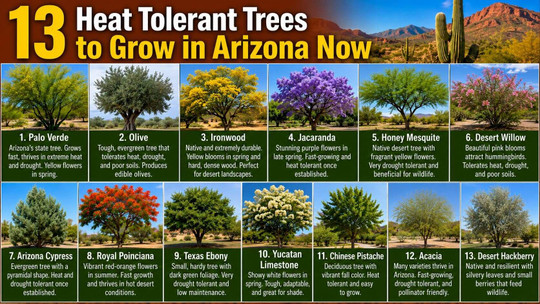
13 Heat Tolerant Trees to Grow in Arizona Now
Arizona’s intense summer heat and dry climate can make landscaping a challenge, but many beautiful and resilient trees thrive in desert conditions. Whether you are looking for fast-growing shade, colorful blooms, wildlife-friendly trees, or drought-tolerant landscaping options, choosing heat-tolerant species can help create a low-maintenance and sustainable yard. These trees are well adapted to Arizona’s hot temperatures, poor soils, and limited rainfall once established.
Here are 13 excellent heat tolerant trees that grow well in Arizona landscapes.
1. Palo Verde
Palo Verde is Arizona’s official state tree and one of the most recognizable desert trees in the Southwest. It features green bark that helps the tree photosynthesize even during dry periods. In spring, it bursts with bright yellow flowers that attract pollinators and add vibrant color to desert landscapes.
This fast-growing tree thrives in extreme heat and drought conditions. Palo Verde works well as a shade tree for xeriscaping and requires very little water once established.
2. Olive Tree
Olive trees are evergreen, durable, and highly tolerant of hot, dry climates. Their silvery-green foliage creates a Mediterranean look that fits beautifully in Arizona landscapes. Mature olive trees can live for decades and produce edible olives under the right conditions.
These trees tolerate poor soils, heat, and drought extremely well. They are ideal for low-maintenance yards and can also provide excellent shade over patios and walkways.
3. Ironwood
Ironwood is a native Sonoran Desert tree known for its incredible durability and dense hardwood. During spring, it produces clusters of purple to pink flowers that attract bees and desert wildlife.
This slow-growing tree is extremely heat and drought tolerant and performs well in natural desert landscaping. Its deep roots help it survive long dry periods with minimal irrigation.
4. Jacaranda
Jacaranda trees are famous for their stunning purple blooms that appear in late spring and early summer. These fast-growing trees create a dramatic canopy of lavender flowers that brighten neighborhoods and streets.
Although they need occasional watering while young, established Jacarandas handle Arizona heat surprisingly well. They make excellent ornamental shade trees for larger yards.
5. Honey Mesquite
Honey Mesquite is a native desert tree valued for its graceful branching structure and feathery foliage. It produces fragrant yellow flowers and seed pods that support wildlife and pollinators.
This tree thrives in extreme desert conditions and grows quickly with very little water. Honey Mesquite provides filtered shade that helps cool outdoor spaces without creating dense, heavy canopies.
6. Desert Willow
Desert Willow is not a true willow, but it gets its name from its narrow willow-like leaves. It produces beautiful trumpet-shaped pink flowers that attract hummingbirds, butterflies, and bees throughout the warm season.
This tree loves heat and performs exceptionally well in dry soils. Desert Willow is a popular choice for colorful desert landscaping because it combines beauty with low water needs.
7. Arizona Cypress
Arizona Cypress is an evergreen tree with attractive blue-green foliage and a naturally pyramidal shape. It works well as a windbreak, privacy screen, or ornamental landscape tree.
Once established, Arizona Cypress tolerates heat, drought, and poor soils very well. It also provides year-round color and structure in desert gardens.
8. Royal Poinciana
Royal Poinciana is known for its fiery red-orange blooms that create a tropical appearance during summer. This tree grows quickly and develops a broad canopy that provides excellent shade.
While it performs best in the warmest parts of Arizona, especially southern regions, it thrives in hot desert climates with proper care and protection from frost when young.
9. Texas Ebony
Texas Ebony is a compact evergreen tree with glossy dark green leaves and fragrant pale flowers. Its dense canopy makes it an excellent shade tree for smaller desert landscapes.
This hardy species handles heat and drought extremely well and requires very little maintenance once mature. Texas Ebony also tolerates poor soil conditions common in desert areas.
10. Yucatan Limestone Tree
The Yucatan Limestone tree produces clusters of showy white flowers during spring and early summer. Its attractive foliage and moderate size make it a great ornamental option for Arizona yards.
This adaptable tree tolerates heat, drought, and alkaline soils while providing excellent shade. It is also known for being relatively low maintenance.
11. Chinese Pistache
Chinese Pistache is a deciduous tree prized for its brilliant fall color. In autumn, the leaves turn vibrant shades of orange, red, and yellow, creating a stunning seasonal display.
This tree tolerates Arizona heat very well and adapts to a variety of soil types. It grows into a strong shade tree with an attractive rounded canopy.
12. Acacia
Many Acacia varieties thrive in Arizona’s desert climate. These trees often feature delicate foliage, fast growth, and fragrant blooms that attract pollinators.
Acacias are highly drought tolerant and perform well in challenging conditions. They are excellent choices for low-water landscapes and can quickly provide shade in new yards.
13. Desert Hackberry
Desert Hackberry is a resilient native tree with silvery-green foliage and small berries that attract birds and wildlife. It grows naturally in arid desert environments and handles heat with ease.
This tree is ideal for natural desert landscaping and requires very little supplemental water once established. Its rugged nature makes it a dependable option for harsh growing conditions.
Tips for Growing Trees in Arizona
When planting trees in Arizona, it is important to water deeply during establishment to encourage strong root systems. Applying mulch around the base helps conserve soil moisture and protect roots from extreme temperatures. Avoid shallow watering, especially during summer heat waves.
Choosing native or drought-tolerant species can significantly reduce water usage and maintenance while still providing beauty, shade, and wildlife benefits. Many desert-adapted trees also improve soil stability and create cooler outdoor spaces around homes and gardens.
Final Thoughts
Heat tolerant trees are essential for creating beautiful and sustainable Arizona landscapes. From colorful flowering trees like Jacaranda and Desert Willow to rugged native species like Palo Verde and Ironwood, there are many excellent choices for desert gardening success.
By selecting trees adapted to Arizona’s climate, gardeners can enjoy shade, seasonal color, and thriving landscapes even during the hottest months of the year.