
Posted by TJ Hopkins on Jul 9th 2026
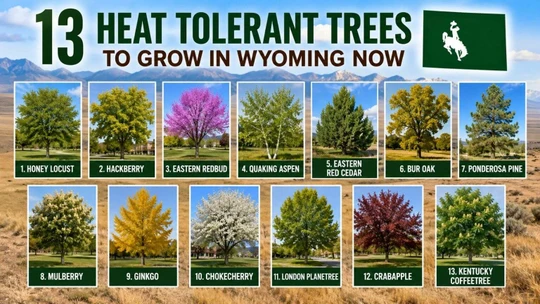
13 Heat Tolerant Trees to Grow in Wyoming Now
Wyoming is known for its rugged landscapes, cold winters, and wide-open spaces, but many areas of the state also experience hot, dry summers. Choosing trees that can tolerate heat while surviving Wyoming's unique climate is the key to creating a beautiful, low-maintenance landscape. Whether you're planting for shade, wildlife, privacy, or seasonal beauty, these trees are proven performers across much of the Cowboy State.
1. Honey Locust (Gleditsia triacanthos)
Honey Locust is one of the toughest shade trees available. It handles heat, drought, wind, and poor soils with ease while providing filtered shade that still allows grass to grow beneath it. Thornless cultivars are especially popular for residential landscapes.
Why grow it:
- Excellent heat and drought tolerance
- Fast-growing shade tree
- Adaptable to many soil types
- Attractive golden fall color
2. Hackberry (Celtis occidentalis)
Hackberry is a hardy native tree that thrives in Wyoming's challenging conditions. It tolerates wind, drought, alkaline soils, and urban environments better than many other shade trees.
Why grow it:
- Extremely durable
- Great wildlife tree
- Long-lived
- Requires minimal maintenance
3. Eastern Redbud (Cercis canadensis)
Eastern Redbud produces breathtaking pink-purple flowers in early spring before the leaves appear. While it prefers some protection in the coldest parts of Wyoming, it performs well in warmer locations with proper watering.
Why grow it:
- Spectacular spring blooms
- Compact size for smaller yards
- Attractive heart-shaped leaves
- Excellent ornamental value
4. Quaking Aspen (Populus tremuloides)
One of Wyoming's signature native trees, Quaking Aspen is famous for its shimmering leaves and brilliant golden fall color. It grows best where summers remain relatively cool but can tolerate seasonal heat with adequate moisture.
Why grow it:
- Native to Wyoming
- Beautiful white bark
- Outstanding fall color
- Creates natural groves
5. Eastern Red Cedar (Juniperus virginiana)
Eastern Red Cedar is an evergreen that tolerates drought, wind, heat, and poor soils. It makes an excellent windbreak or privacy screen while providing year-round color.
Why grow it:
- Evergreen beauty
- Excellent wind resistance
- Very drought tolerant
- Provides winter wildlife shelter
6. Bur Oak (Quercus macrocarpa)
Bur Oak is one of the most adaptable oak species for the Great Plains. It survives harsh winters, hot summers, and dry conditions while eventually becoming a magnificent shade tree.
Why grow it:
- Extremely hardy
- Long lifespan
- Excellent shade
- Strong drought resistance
7. Ponderosa Pine (Pinus ponderosa)
Ponderosa Pine is native throughout much of the western United States and is perfectly suited for many Wyoming landscapes. Its deep root system helps it withstand prolonged dry periods.
Why grow it:
- Native evergreen
- Excellent drought tolerance
- Wildlife habitat
- Beautiful cinnamon-colored bark
8. Mulberry (Morus spp.)
Mulberry trees grow quickly and provide welcome shade while producing sweet fruit enjoyed by birds and people alike. Fruitless varieties are also available for homeowners who prefer less cleanup.
Why grow it:
- Fast-growing
- Heat tolerant
- Produces edible fruit
- Excellent shade tree
9. Ginkgo (Ginkgo biloba)
Known as a living fossil, Ginkgo is incredibly resilient. It tolerates heat, pollution, drought, and pests while displaying spectacular golden-yellow foliage each autumn.
Why grow it:
- Nearly pest-free
- Outstanding fall color
- Long-lived
- Highly adaptable
10. Chokecherry (Prunus virginiana)
A Wyoming native, Chokecherry offers fragrant white spring flowers followed by dark berries that attract wildlife. It's well adapted to the state's climate and makes an excellent natural landscape tree.
Why grow it:
- Native species
- Wildlife favorite
- Spring flowers
- Attractive fruit
11. London Planetree (Platanus × acerifolia)
London Planetree is famous for its ability to handle heat, drought, pollution, and difficult urban conditions. Its mottled bark adds year-round visual interest.
Why grow it:
- Large shade tree
- Heat tolerant
- Attractive peeling bark
- Fast-growing
12. Crabapple (Malus spp.)
Modern disease-resistant Crabapple varieties offer colorful spring blossoms, attractive fruit, and brilliant fall color while remaining relatively easy to grow.
Why grow it:
- Beautiful spring flowers
- Supports pollinators
- Decorative fruit
- Excellent ornamental tree
13. Kentucky Coffeetree (Gymnocladus dioicus)
Kentucky Coffeetree is an underused landscape tree that thrives in hot, dry conditions. Its bold branching structure and coarse foliage give it a distinctive appearance.
Why grow it:
- Highly drought tolerant
- Unique appearance
- Few pest problems
- Excellent urban tree
Tips for Growing Trees Successfully in Wyoming
Wyoming's climate can vary greatly depending on elevation and location, so matching the tree to your local conditions is important. For the best results:
- Water deeply during the first two to three growing seasons.
- Apply mulch to help retain soil moisture and moderate temperatures.
- Plant in spring or early fall whenever possible.
- Protect young trees from deer and rodents.
- Choose species appropriate for your USDA hardiness zone, especially in higher elevations.
Final Thoughts
Growing trees in Wyoming doesn't have to be difficult. By selecting heat-tolerant, drought-resistant species that can also withstand the state's cold winters, you'll enjoy healthier trees that require less maintenance over time. Whether you're looking for colorful flowering trees, towering shade trees, or hardy evergreens, these 13 selections provide reliable performance and lasting beauty across much of Wyoming.