
Posted by TJ Hopkins on Jul 10th 2026
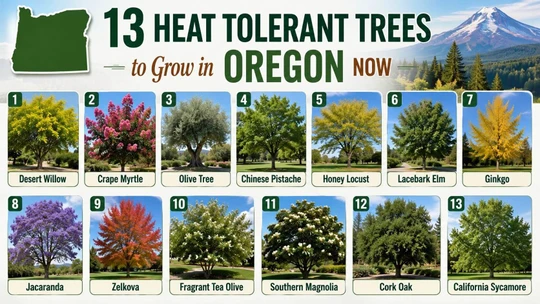
13 Heat-Tolerant Trees to Grow in Oregon Now
Oregon is known for its lush forests and mild climate, but hotter, drier summers are becoming increasingly common across much of the state. Whether you live in the Willamette Valley, Southern Oregon, Central Oregon, or eastern regions, choosing trees that can handle prolonged heat and occasional drought will help create a healthier, lower-maintenance landscape.
Here are 13 beautiful heat-tolerant trees that perform well in many parts of Oregon.
1. Desert Willow (Chilopsis linearis)
Despite its name, Desert Willow isn't a true willow. This small ornamental tree thrives in hot, dry conditions and rewards gardeners with stunning trumpet-shaped flowers in shades of pink, lavender, and white throughout summer.
Why you'll love it:
- Extremely drought tolerant
- Long blooming season
- Attracts hummingbirds and pollinators
- Perfect for xeriscaping
2. Crape Myrtle (Lagerstroemia indica)
Crape Myrtle is one of the longest-blooming ornamental trees available. It produces colorful flower clusters from midsummer into fall while tolerating heat with ease.
Highlights:
- Pink, red, purple, or white flowers
- Attractive peeling bark
- Brilliant fall color
- Excellent for warmer areas of western and southern Oregon
3. Olive Tree (Olea europaea)
Olive trees thrive in hot, dry summers and mild winters, making them increasingly popular in parts of southern Oregon.
Benefits:
- Evergreen beauty
- Silvery foliage
- Very drought resistant
- Long-lived landscape tree
4. Chinese Pistache (Pistacia chinensis)
Chinese Pistache is considered one of the finest shade trees for hot climates. It develops a broad canopy and brilliant orange-red fall foliage.
Best features:
- Outstanding fall colors
- Handles drought well once established
- Pest resistant
- Excellent street or yard tree
5. Honey Locust (Gleditsia triacanthos var. inermis)
Modern thornless Honey Locust varieties provide filtered shade that's perfect for lawns and gardens.
Advantages:
- Heat and drought tolerant
- Fine-textured foliage
- Fast growing
- Easy to maintain
6. Lacebark Elm (Ulmus parvifolia)
Lacebark Elm combines toughness with ornamental beauty. Its distinctive exfoliating bark provides year-round interest.
Why plant it:
- Excellent shade tree
- Highly adaptable
- Resistant to Dutch elm disease
- Tolerates heat, drought, and urban conditions
7. Ginkgo (Ginkgo biloba)
One of the world's oldest tree species, Ginkgo is prized for its fan-shaped leaves and spectacular golden fall display.
Top qualities:
- Extremely hardy
- Heat tolerant
- Disease resistant
- Incredible fall color
Tip: Choose male cultivars to avoid messy fruit.
8. Jacaranda (Jacaranda mimosifolia)
In Oregon's warmest regions, Jacaranda can provide breathtaking spring and early summer displays of lavender-blue flowers.
Why gardeners love it:
- Stunning blooms
- Fern-like foliage
- Fast growing
- Creates a tropical appearance
Best suited for frost-free or protected locations in southern Oregon.
9. Zelkova (Zelkova serrata)
Often considered an excellent substitute for American Elm, Zelkova offers graceful branching and exceptional durability.
Features:
- Beautiful vase-shaped canopy
- Heat and drought tolerant
- Attractive orange and red fall foliage
- Long lifespan
10. Fragrant Tea Olive (Osmanthus fragrans)
This evergreen tree is famous for producing tiny white flowers with an amazingly sweet fragrance.
Reasons to grow it:
- Intensely fragrant flowers
- Evergreen foliage
- Heat tolerant
- Great specimen or privacy tree
11. Southern Magnolia (Magnolia grandiflora)
Southern Magnolia adds elegance with its glossy evergreen leaves and massive fragrant white flowers.
Highlights:
- Large fragrant blooms
- Evergreen year-round
- Excellent shade tree
- Handles summer heat well
12. Cork Oak (Quercus suber)
Native to the Mediterranean, Cork Oak performs exceptionally well in warm, dry climates.
Benefits:
- Thick cork bark
- Evergreen foliage
- Very drought tolerant
- Long-lived shade tree
13. California Sycamore (Platanus racemosa)
California Sycamore is a large native tree that thrives in hot climates while providing abundant shade.
Advantages:
- Fast-growing
- Beautiful mottled bark
- Large cooling canopy
- Excellent drought tolerance once established
Tips for Growing Heat-Tolerant Trees in Oregon
Even drought-tolerant trees need extra care during their first few years.
- Water deeply once or twice a week during the first two growing seasons.
- Apply 2–4 inches of mulch around the base to conserve soil moisture.
- Avoid planting during the hottest weeks of summer.
- Match the tree to your USDA hardiness zone and local soil conditions.
- Once established, reduce watering gradually to encourage deeper root growth.
Final Thoughts
As Oregon's summers become warmer and drier, selecting heat-tolerant trees is a smart investment for both beauty and resilience. Whether you're looking for colorful flowers, dense shade, evergreen foliage, or spectacular fall color, these 13 trees can thrive with less water while enhancing your landscape for decades to come. With proper planting and early care, they'll reward you with years of dependable growth even during hot Oregon summers.