
Posted by TJ Hopkins on Jul 10th 2026
13 Heat-Tolerant Trees to Grow in Wisconsin Now
Wisconsin is known for its cold winters, but recent summers have become noticeably hotter, with longer dry spells and more frequent heat waves. Choosing trees that can withstand high temperatures while still thriving through Wisconsin's changing seasons is a smart investment for homeowners, landscapers, and anyone planting for the future.
The following trees combine excellent heat tolerance with adaptability to Wisconsin's climate, making them attractive, durable choices for yards, parks, and larger landscapes.
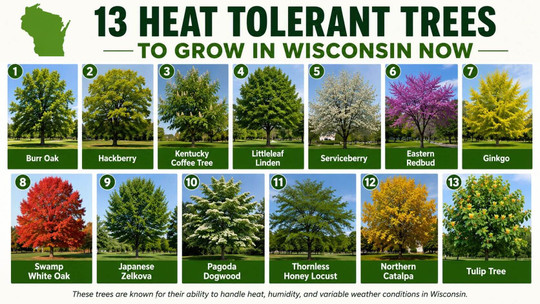
1. Burr Oak (Quercus macrocarpa)
Burr Oak is one of Wisconsin's toughest native trees. It easily tolerates drought, intense summer heat, and poor soils once established. Its massive canopy provides exceptional shade, making it ideal for large properties.
Why grow it?
- Native to Wisconsin
- Extremely drought tolerant
- Long-lived (often several hundred years)
- Outstanding shade tree
2. Hackberry (Celtis occidentalis)
Hackberry is a dependable tree that handles urban conditions, compacted soils, heat, and drought remarkably well. Birds also enjoy its small berries during winter.
Highlights
- Fast-growing
- Heat and wind tolerant
- Low maintenance
- Excellent wildlife value
3. Kentucky Coffee Tree (Gymnocladus dioicus)
This unique native tree produces a bold, open canopy and large compound leaves that create filtered shade. It thrives during hot summers and handles difficult growing conditions with ease.
Best features
- Adaptable to many soil types
- Highly drought resistant
- Attractive winter branching
- Very low maintenance
4. Littleleaf Linden (Tilia cordata)
Littleleaf Linden is prized for its symmetrical shape and fragrant summer flowers that attract bees and other pollinators. It tolerates heat much better than many other shade trees.
Benefits
- Dense shade
- Beautiful fragrant blooms
- Excellent street tree
- Attractive heart-shaped leaves
5. Serviceberry (Amelanchier species)
Serviceberry offers beauty throughout every season. White spring blossoms are followed by edible berries loved by birds, colorful summer foliage, and vibrant fall color.
Why gardeners love it
- Four-season interest
- Great for pollinators
- Edible berries
- Fits smaller landscapes
6. Eastern Redbud (Cercis canadensis)
Few trees rival the spectacular spring display of the Eastern Redbud. Brilliant pink-purple flowers appear before the leaves emerge, creating one of spring's most colorful landscapes.
Advantages
- Excellent ornamental tree
- Heat tolerant once established
- Compact size
- Pollinator favorite
7. Ginkgo (Ginkgo biloba)
Ginkgo is one of the oldest tree species on Earth and among the toughest trees available today. It tolerates heat, drought, pollution, and urban environments exceptionally well.
Top reasons to plant
- Brilliant golden fall color
- Pest resistant
- Disease resistant
- Extremely long lifespan
8. Swamp White Oak (Quercus bicolor)
Despite its name, Swamp White Oak performs well in both moist and moderately dry soils after establishment. It tolerates summer heat while producing outstanding fall color.
Features
- Native tree
- Strong wildlife value
- Beautiful peeling bark
- Long-lasting shade
9. Japanese Zelkova (Zelkova serrata)
Japanese Zelkova is an outstanding substitute for American Elm. It develops a graceful vase-shaped canopy while tolerating hot summers and city conditions.
Why choose it?
- Fast-growing
- Heat resistant
- Excellent street tree
- Attractive exfoliating bark
10. Pagoda Dogwood (Cornus alternifolia)
Pagoda Dogwood stands apart with its distinctive layered branching pattern. Creamy white flowers bloom in late spring, followed by dark berries that birds eagerly consume.
Highlights
- Elegant architectural form
- Pollinator friendly
- Wildlife value
- Beautiful fall foliage
11. Thornless Honey Locust (Gleditsia triacanthos var. inermis)
This tree produces light, filtered shade that allows grass to grow underneath while tolerating heat, drought, and urban stress.
Benefits
- Fine-textured foliage
- Very adaptable
- Fast-growing
- Minimal leaf cleanup in fall
12. Northern Catalpa (Catalpa speciosa)
Northern Catalpa grows quickly and produces enormous heart-shaped leaves along with striking white orchid-like flowers during early summer.
Why it's popular
- Rapid growth
- Excellent shade
- Showy flowers
- Handles heat and drought well
13. Tulip Tree (Liriodendron tulipifera)
The Tulip Tree is one of North America's tallest native hardwoods. Its unique tulip-shaped flowers attract bees and other pollinators while its straight trunk creates a stately landscape tree.
Best qualities
- Fast-growing
- Distinctive flowers
- Attractive fall color
- Excellent shade tree
Tips for Growing Heat-Tolerant Trees in Wisconsin
Although these trees tolerate heat well, proper planting and care help ensure long-term success.
- Plant during spring or early fall whenever possible.
- Water deeply during the first two growing seasons.
- Apply 2–3 inches of mulch around the base while keeping it away from the trunk.
- Avoid excessive fertilization during hot weather.
- Match each tree to the available growing space to avoid future pruning problems.
Final Thoughts
As Wisconsin experiences warmer summers and increasingly unpredictable weather, selecting heat-tolerant trees is becoming more important than ever. The 13 trees above offer a combination of beauty, resilience, and long-term landscape value. Whether you're looking for colorful flowering trees, massive shade trees, or native species that support local wildlife, these selections are well-equipped to thrive in Wisconsin's changing climate for decades to come.