
Posted by TJ Hopkins on Aug 2nd 2026
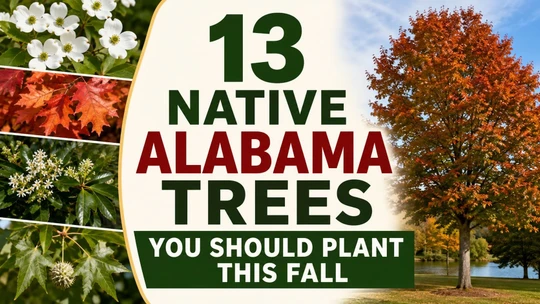
13 Native Alabama Trees You Should Plant This Fall
Alabama's mild climate, abundant rainfall, and long growing season make fall the ideal time to plant native trees. Cooler temperatures and moist soil encourage strong root development before the heat of summer arrives. Native trees are naturally adapted to Alabama's environment, requiring less maintenance while providing food and shelter for birds, butterflies, pollinators, and other wildlife.
Whether you're looking for spectacular fall color, spring blooms, shade, or a wildlife-friendly landscape, these native Alabama trees are excellent choices.
Why Plant Native Trees in Fall?
Fall planting offers several important advantages:
- Cooler weather reduces transplant stress.
- Autumn rains help establish healthy roots.
- Trees have several months to grow before summer heat.
- Native species generally require less watering and fertilizer.
- They support local wildlife and pollinators.
1. Flowering Dogwood (Cornus florida)
One of Alabama's most beloved native trees, Flowering Dogwood produces beautiful white blooms in spring followed by bright red berries that attract songbirds. Its scarlet fall foliage makes it a year-round favorite.
Mature Height: 20–30 feet
Best For:
- Small yards
- Woodland gardens
- Wildlife habitat
2. Southern Red Oak (Quercus falcata)
This fast-growing shade tree is native throughout much of Alabama and develops a broad canopy perfect for cooling landscapes. Its rich red fall foliage provides exceptional seasonal color.
Mature Height: 60–80 feet
Best For:
- Large properties
- Shade
- Wildlife
3. Black Cherry (Prunus serotina)
Black Cherry offers fragrant white flower clusters in spring followed by dark berries enjoyed by dozens of bird species. It grows quickly and adapts well to many soils.
Mature Height: 50–80 feet
Best For:
- Birds
- Pollinators
- Natural landscapes
4. Sweetbay Magnolia (Magnolia virginiana)
Unlike the larger Southern Magnolia, Sweetbay Magnolia fits comfortably into smaller landscapes. Creamy white flowers bloom throughout late spring and summer with a pleasant lemon fragrance.
Mature Height: 20–40 feet
Best For:
- Moist soils
- Smaller landscapes
- Pollinator gardens
5. Red Maple (Acer rubrum)
Red Maple is among Alabama's most dependable trees for brilliant autumn color. New spring flowers and red seed clusters also add early-season interest.
Mature Height: 40–60 feet
Best For:
- Shade
- Fall color
- Wet or average soils
6. American Hornbeam (Carpinus caroliniana)
Sometimes called Musclewood because of its smooth, muscular-looking trunk, this attractive understory tree performs well in partial shade.
Mature Height: 20–35 feet
Best For:
- Woodland gardens
- Small landscapes
- Native habitats
7. Bald Cypress (Taxodium distichum)
Although often associated with swamps, Bald Cypress grows beautifully in ordinary landscapes as well. Its feathery foliage turns a striking copper-orange each fall.
Mature Height: 50–70 feet
Best For:
- Wet areas
- Pond edges
- Large landscapes
8. American Beech (Fagus grandifolia)
American Beech develops a magnificent spreading canopy with smooth gray bark and golden-bronze fall leaves. It provides valuable food for wildlife through its nutritious beechnuts.
Mature Height: 60–80 feet
Best For:
- Shade
- Woodland settings
- Wildlife
9. River Birch (Betula nigra)
River Birch is prized for its beautiful peeling bark and rapid growth. It tolerates Alabama's heat much better than many other birch species.
Mature Height: 40–70 feet
Best For:
- Moist soils
- Fast shade
- Decorative bark
10. Eastern Redbud (Cercis canadensis)
One of the first trees to bloom each spring, Eastern Redbud covers its branches with brilliant pink flowers before leaves emerge.
Mature Height: 20–30 feet
Best For:
- Accent trees
- Pollinator gardens
- Small yards
11. Tulip Poplar (Liriodendron tulipifera)
This towering native tree grows rapidly and produces distinctive tulip-shaped flowers that attract bees and hummingbirds.
Mature Height: 70–100 feet
Best For:
- Large properties
- Shade
- Pollinator support
12. Sourwood (Oxydendrum arboreum)
Sourwood is famous for its spectacular crimson fall foliage and fragrant summer flowers, which produce highly prized sourwood honey.
Mature Height: 25–40 feet
Best For:
- Fall color
- Pollinator gardens
- Woodland landscapes
13. White Oak (Quercus alba)
White Oak is one of North America's finest native shade trees. Long-lived and majestic, it supports hundreds of wildlife species while producing valuable acorns for deer, squirrels, and birds.
Mature Height: 60–100 feet
Best For:
- Long-term shade
- Wildlife habitat
- Large landscapes
Tips for Planting Trees This Fall
For the best success:
- Plant from September through November whenever possible.
- Dig a hole twice as wide as the root ball but no deeper.
- Water deeply after planting.
- Apply 2–3 inches of mulch while keeping it away from the trunk.
- Water weekly during dry weather for the first year.
- Avoid excessive fertilizer until the tree becomes established.
Benefits of Native Alabama Trees
Choosing native species provides numerous long-term rewards:
- Better adapted to Alabama's climate
- Lower maintenance requirements
- Greater resistance to local pests and diseases
- Improved wildlife habitat
- Increased biodiversity
- Enhanced property value
- Beautiful seasonal color throughout the year
Final Thoughts
Planting native trees this fall is one of the best investments you can make for your landscape. From the brilliant scarlet leaves of Red Maple and Sourwood to the elegant spring blooms of Flowering Dogwood and Eastern Redbud, these trees bring beauty, shade, and ecological benefits for generations. By selecting species that naturally thrive in Alabama, you'll enjoy healthier trees that require less maintenance while supporting local birds, butterflies, and beneficial pollinators.