
Posted by TJ Hopkins on Aug 27th 2026
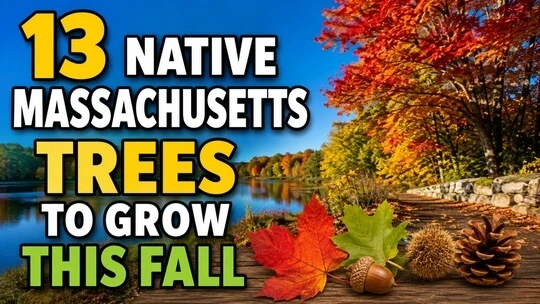
13 Native Massachusetts Trees to Grow This Fall
Fall is one of the best times to plant native trees in Massachusetts. Cooler temperatures, increased rainfall, and warm soil give newly planted trees an opportunity to establish strong root systems before winter arrives. Once spring returns, they are ready to put their energy into healthy new growth.
Native trees are especially valuable because they are naturally adapted to New England's climate and provide food, shelter, and nesting habitat for local wildlife. Whether you're looking for brilliant fall color, shade, privacy, or a wildlife-friendly addition to your property, there are plenty of Massachusetts native trees worth considering.
Here are 13 native Massachusetts trees to grow this fall.
1. Sugar Maple
Sugar maple (Acer saccharum) is one of New England's most recognizable native trees. Famous for its spectacular autumn foliage, its leaves can turn brilliant shades of yellow, orange, and red.
Sugar maples can eventually become large shade trees, often reaching 60 to 75 feet tall. They perform best in fertile, well-drained soil and generally prefer full sun to partial shade.
Fall is an excellent time to establish young sugar maples because cooler weather reduces heat stress while the roots begin developing.
USDA Hardiness Zones: 3–8
Mature Height: 60–75 feet
Sun: Full sun to partial shade
Best Features: Fall color, shade, wildlife value
2. Red Maple
Red maple (Acer rubrum) is another beautiful native maple commonly found throughout Massachusetts. It is adaptable to a variety of growing conditions and is especially appreciated for its colorful autumn display.
Depending on the individual tree and growing conditions, fall leaves may become yellow, orange, scarlet, or deep red.
Red maples typically grow 40 to 60 feet tall and can tolerate both moist and moderately dry sites once established.
USDA Hardiness Zones: 3–9
Mature Height: 40–60 feet
Sun: Full sun to partial shade
Best Features: Bright fall foliage, adaptability, fast growth
3. Eastern White Pine
If you're looking for a native evergreen, Eastern white pine (Pinus strobus) is an excellent Massachusetts tree to consider.
This impressive pine can eventually grow 50 to 80 feet tall or more. Its long, soft needles grow in bundles of five and give mature trees a graceful appearance.
Eastern white pine can be used as a specimen tree, naturalized tree, windbreak, or privacy planting where adequate space is available.
USDA Hardiness Zones: 3–8
Mature Height: 50–80+ feet
Sun: Full sun to partial shade
Best Features: Evergreen foliage, wildlife habitat, fast growth
4. Northern Red Oak
Northern red oak (Quercus rubra) is a strong, attractive native shade tree found throughout Massachusetts.
It develops a broad canopy as it matures and can reach approximately 60 to 75 feet tall. Its leaves commonly turn reddish-brown to bright red in autumn.
The acorns produced by mature trees are an important food source for squirrels, deer, turkeys, and other wildlife.
USDA Hardiness Zones: 4–8
Mature Height: 60–75 feet
Sun: Full sun
Best Features: Shade, acorns, fall color, wildlife value
5. White Oak
White oak (Quercus alba) is a long-lived native tree that can become an impressive feature in a large landscape.
Mature trees develop wide-spreading branches and can live for several centuries under favorable conditions. White oak also supports an enormous variety of wildlife, making it particularly valuable in native landscapes.
Its acorns provide food for numerous mammals and birds, while its foliage supports many native insects.
USDA Hardiness Zones: 3–9
Mature Height: 50–80 feet
Sun: Full sun
Best Features: Longevity, wildlife habitat, large canopy
6. American Beech
American beech (Fagus grandifolia) is a beautiful native forest tree recognizable by its smooth gray bark.
Mature trees typically reach 50 to 70 feet tall and develop broad, dense crowns. Their leaves turn golden yellow to bronze during fall, and young trees sometimes retain dried leaves well into winter.
Beechnuts are also an important food source for wildlife.
USDA Hardiness Zones: 3–9
Mature Height: 50–70 feet
Sun: Full sun to shade
Best Features: Smooth bark, fall foliage, wildlife value
7. Paper Birch
Paper birch (Betula papyrifera) is well known for its distinctive white, peeling bark.
This native tree is particularly well suited to the cooler climate of Massachusetts and typically grows about 50 to 70 feet tall. Its leaves become bright yellow during autumn, creating a striking contrast against the white bark.
Paper birch generally performs best in cooler locations with moist, well-drained soil.
USDA Hardiness Zones: 2–7
Mature Height: 50–70 feet
Sun: Full sun to partial shade
Best Features: White bark, yellow fall foliage, northern character
8. River Birch
River birch (Betula nigra) is another attractive native birch, especially useful for locations with moist soil.
Its peeling bark can display shades of cream, tan, cinnamon, and reddish-brown, giving the tree year-round ornamental interest.
River birch grows relatively quickly and can eventually reach 40 to 70 feet tall. Although it appreciates moisture, established trees can tolerate a wider range of conditions.
USDA Hardiness Zones: 4–9
Mature Height: 40–70 feet
Sun: Full sun to partial shade
Best Features: Peeling bark, fast growth, moisture tolerance
9. Black Cherry
Black cherry (Prunus serotina) is an important native tree for wildlife and can grow throughout much of Massachusetts.
In spring, the tree produces clusters of small white flowers. These are followed later in the season by small dark fruits that are eaten by numerous species of birds.
Black cherry can grow approximately 50 to 80 feet tall in favorable conditions and performs particularly well in full sun.
USDA Hardiness Zones: 3–9
Mature Height: 50–80 feet
Sun: Full sun to partial shade
Best Features: Flowers, fruit, bird habitat
10. Eastern Red Cedar
Despite its common name, Eastern red cedar (Juniperus virginiana) is actually a juniper.
This hardy native evergreen is an excellent choice for naturalized areas, wildlife plantings, screens, and windbreaks. Female trees can produce blue, berry-like cones that are eaten by birds.
Eastern red cedar is also remarkably tolerant of poor and dry soils once established.
USDA Hardiness Zones: 2–9
Mature Height: 30–50 feet
Sun: Full sun
Best Features: Evergreen foliage, bird habitat, drought tolerance
11. American Hornbeam
American hornbeam (Carpinus caroliniana) is a smaller native tree that works well in landscapes where a giant shade tree would be too large.
Sometimes called musclewood because of its smooth, muscular-looking trunk, American hornbeam typically reaches about 20 to 35 feet tall.
Its foliage can turn attractive shades of yellow, orange, and red in fall. It is naturally found in woodland environments and handles partial shade particularly well.
USDA Hardiness Zones: 3–9
Mature Height: 20–35 feet
Sun: Partial shade to full sun
Best Features: Smaller size, interesting bark, fall color
12. Eastern Hemlock
Eastern hemlock (Tsuga canadensis) is a graceful native evergreen found naturally in cool forests throughout Massachusetts.
The tree has short, soft needles and drooping branch tips that create an attractive layered appearance. Eastern hemlocks can grow very large over time, although they are relatively slow-growing compared with some other native trees.
They prefer cool, moist, well-drained soil and are notable for their ability to tolerate considerable shade.
Gardeners should be aware that hemlock woolly adelgid is a serious pest affecting Eastern hemlocks in Massachusetts, so trees should be monitored regularly.
USDA Hardiness Zones: 3–7
Mature Height: 40–70+ feet
Sun: Partial shade to shade
Best Features: Evergreen foliage, shade tolerance, wildlife cover
13. Black Tupelo
Black tupelo (Nyssa sylvatica), also known as black gum, deserves more attention in Massachusetts landscapes.
One of its greatest attractions is its spectacular autumn foliage. Individual trees can display mixtures of yellow, orange, scarlet, crimson, and purple.
Small fruits produced by mature trees also provide food for birds and other wildlife.
Black tupelo generally develops into a medium-sized tree and can be an excellent native alternative to commonly planted ornamental trees.
USDA Hardiness Zones: 3–9
Mature Height: 30–50 feet
Sun: Full sun to partial shade
Best Features: Exceptional fall color, wildlife value, ornamental appearance
Why Plant Native Trees in Massachusetts?
Native trees have evolved alongside New England's wildlife and climate. Once established in an appropriate location, many require less intervention than trees poorly suited to local growing conditions.
They can also provide important environmental benefits. Native trees offer nesting sites and shelter for birds, produce seeds and fruits for wildlife, support native insects and pollinators, provide summer shade, capture rainfall, and add beauty to the landscape.
Planting several different native species can create an especially valuable backyard habitat.
Why Fall Is a Great Time to Plant Trees
Massachusetts summers can occasionally be stressful for newly planted trees because high temperatures increase water loss. Fall provides a much more forgiving planting window.
Air temperatures become cooler while the soil often remains warm enough for root development. Autumn rainfall can also help keep newly planted trees hydrated.
Ideally, trees should have enough time to begin establishing before the ground freezes.
After planting, water thoroughly and continue checking soil moisture until freezing weather arrives. Applying a layer of mulch around the root zone can help conserve moisture and moderate soil temperatures, but keep mulch several inches away from the trunk.
Can You Grow Native Massachusetts Trees From Seed?
Many Massachusetts native trees can be grown from seed, including maples, oaks, birches, pines, black cherry, and black tupelo.
However, germination requirements vary considerably by species.
Some tree seeds can be planted outdoors in fall and exposed naturally to winter conditions. Others benefit from specific treatments such as cold-moist stratification or scarification before they germinate.
Growing trees from seed takes patience, but it can be an inexpensive and rewarding way to establish native trees on your property.
Choosing the Right Native Tree
Before planting, consider the tree's mature height and width rather than its size when young.
A small seedling can eventually become a 70-foot tree, so avoid planting large species directly beneath utility lines or too close to buildings, driveways, septic systems, or other structures.
Also consider sunlight, drainage, soil moisture, available space, and your reason for planting.
For brilliant autumn foliage, consider sugar maple, red maple, or black tupelo. For wildlife, oaks and black cherry are excellent choices. For year-round greenery, Eastern white pine, Eastern red cedar, and Eastern hemlock provide evergreen options.
Final Thoughts
Massachusetts is home to an impressive diversity of native trees, and fall provides an excellent opportunity to add them to your landscape.
From the blazing autumn colors of sugar maple and black tupelo to the towering evergreen beauty of Eastern white pine, there is a native tree for almost every type of Massachusetts property.
Choosing native species doesn't just create a beautiful landscape. It can also provide food and habitat for birds, insects, and other wildlife for decades to come.
Plant the right tree in the right location this fall, and today's small seed or sapling could eventually become a lasting part of the New England landscape.