
Posted by TJ Hopkins on Aug 16th 2026
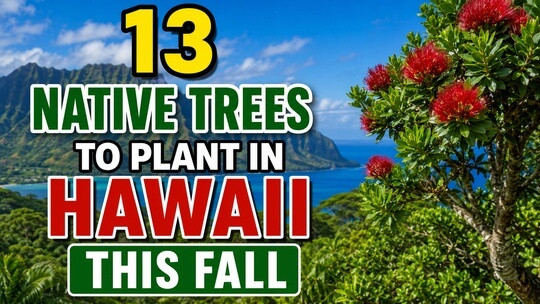
13 Native Trees to Plant in Hawaii This Fall
Hawaii is home to an extraordinary collection of native trees found nowhere else on Earth. Adding native Hawaiian trees to your landscape can provide beauty, shade, wildlife habitat, and a stronger connection to the islands' natural environment.
Fall can be an excellent time to establish trees in many parts of Hawaii. Depending on your location and rainfall patterns, cooler conditions and increased seasonal moisture can reduce stress on newly planted trees. However, Hawaii's elevation, rainfall, soil, and exposure vary dramatically, so it is important to choose a species suited to your particular site.
Here are 13 native Hawaiian trees worth considering for fall planting.
1. ʻŌhiʻa Lehua (Metrosideros polymorpha)
Few trees are as closely associated with Hawaii as the ʻōhiʻa lehua. This highly adaptable native species grows naturally across a remarkable range of Hawaiian environments, from relatively dry areas to wet forests and from lower elevations to mountain landscapes.
ʻŌhiʻa is especially recognizable for its brilliant flowers, which are commonly red but can occur in other shades. The blossoms provide resources for native wildlife, including Hawaiian honeycreepers.
Because Rapid ʻŌhiʻa Death is a serious threat to Hawaii's ʻōhiʻa forests, homeowners should obtain healthy plants from reputable local sources and follow current recommendations designed to prevent spreading the disease.
Growing conditions: Full sun to partial shade, with requirements varying according to the particular plant and location.
Why plant it: Beautiful flowers, tremendous cultural significance, wildlife value, and excellent representation of Hawaii's native flora.
2. Koa (Acacia koa)
Koa is one of Hawaii's most famous native trees. Mature trees can become large and impressive, making koa best suited to properties where there is plenty of room for long-term growth.
The species is also famous for its beautiful wood, but a living koa tree is equally impressive. Its mature foliage consists primarily of flattened leaf-like structures known as phyllodes.
Koa generally performs best in suitable upland environments rather than every coastal or low-elevation location.
Growing conditions: Sunny locations with good drainage and sufficient room for growth.
Why plant it: A magnificent Hawaiian native with outstanding landscape, ecological, and cultural value.
3. Wiliwili (Erythrina sandwicensis)
For homeowners in Hawaii's drier regions, wiliwili is an especially interesting native tree. It naturally occurs in Hawaiian dry forests and has adaptations that allow it to cope with periods of limited rainfall.
Wiliwili may lose its leaves during dry periods, which is a normal response rather than necessarily a sign that the tree is unhealthy. Its striking flowers add seasonal color to the landscape.
Growing conditions: Full sun and dry, well-drained sites.
Why plant it: An excellent choice for appropriate dry landscapes and an important Hawaiian dry-forest species.
4. Lama (Diospyros sandwicensis)
Lama is an endemic Hawaiian tree belonging to the same genus as persimmons. It has attractive evergreen foliage and can develop into a handsome addition to a native landscape.
The tree has important cultural significance in Hawaii and occurs naturally in several different forest environments.
Lama is particularly appealing for gardeners interested in creating a landscape featuring a diverse collection of authentic Hawaiian plants.
Growing conditions: Sun to partial shade, depending on location, with well-drained soil.
Why plant it: Attractive foliage, cultural importance, and value in native Hawaiian landscapes.
5. Māmane (Sophora chrysophylla)
Māmane is a beautiful endemic Hawaiian tree or large shrub known for its clusters of yellow flowers. It is particularly associated with higher-elevation environments.
The tree also has considerable ecological importance. Māmane is a major food plant for the endangered palila, a native Hawaiian honeycreeper found on Hawaiʻi Island.
Māmane isn't appropriate for every backyard, especially hot coastal sites, but it can be an outstanding choice where elevation and growing conditions are suitable.
Growing conditions: Sunny, well-drained sites, particularly in suitable upland environments.
Why plant it: Brilliant yellow flowers and exceptional ecological value.
6. Naio (Myoporum sandwicense)
Naio is a versatile Hawaiian native that can grow as a shrub or develop into a small tree. Different forms occur naturally across a wide range of elevations and habitats.
Its relatively manageable size makes naio worth considering when a massive shade tree isn't practical. Once established in an appropriate location, it can also tolerate comparatively dry conditions.
Growing conditions: Full sun to partial shade and well-drained soil.
Why plant it: Versatile size, attractive evergreen appearance, and usefulness in native landscaping.
7. Hala (Pandanus tectorius)
With its long, narrow leaves, branching growth and distinctive prop roots, hala creates an unmistakably tropical appearance. Female plants can produce large, segmented fruits that resemble pineapples from a distance.
Hala has been extraordinarily important in Hawaiian culture, particularly because its leaves have traditionally been used for weaving.
Give hala plenty of room. Its leaves can have sharp edges, so it is generally better positioned away from narrow walkways and heavily traveled areas.
Growing conditions: Full sun and warm conditions; particularly useful in suitable coastal landscapes.
Why plant it: Dramatic appearance, cultural significance, and good adaptation to many coastal conditions.
8. Kou (Cordia subcordata)
Kou is a beautiful coastal tree producing attractive orange flowers. Its spreading canopy can provide welcome shade in warm Hawaiian landscapes.
The tree has a long history of cultural use in the Hawaiian Islands, and its combination of flowers and tropical foliage makes it an appealing ornamental tree.
Kou generally performs best in warm locations where its coastal adaptations are an advantage.
Growing conditions: Full sun, warmth, and well-drained soil.
Why plant it: Orange flowers, shade, coastal adaptability, and cultural significance.
9. Milo (Thespesia populnea)
Milo is another attractive tree associated with Hawaiian coastal environments. It develops a rounded canopy and produces hibiscus-like flowers that typically open yellow and become darker as they age.
Its manageable ornamental qualities can make it useful for larger residential landscapes when planted with adequate space.
Growing conditions: Full sun and well-drained soil; suitable for many warm coastal environments.
Why plant it: Attractive flowers, shade, and good potential for coastal landscaping.
10. ʻAʻaliʻi (Dodonaea viscosa)
Although ʻāʻaliʻi often grows as a shrub, it can develop into a small tree and deserves a place on a list of useful Hawaiian native landscape plants.
One of its most attractive characteristics is its colorful winged seed capsules, which may display shades of pink, red, purple, or brown.
ʻAʻaliʻi can be particularly valuable in landscapes where drought tolerance and a smaller mature size are desirable.
Growing conditions: Full sun and well-drained soil.
Why plant it: Colorful seed capsules, smaller size, and tolerance of relatively dry conditions once established.
11. ʻIliahi – Hawaiian Sandalwood (Santalum spp.)
Hawaii is home to native sandalwoods collectively known as ʻiliahi. These trees have an unusual lifestyle because they are hemiparasitic: although they photosynthesize, their roots also connect with suitable host plants to obtain water and nutrients.
That relationship means ʻiliahi requires more careful planning than an ordinary landscape tree. The appropriate sandalwood species and compatible host plants will depend on the island and site.
Growing conditions: Vary by species; suitable host plants and appropriate local growing conditions are essential.
Why plant it: Fascinating biology and significant Hawaiian botanical and cultural history.
12. ʻŌlapa (Cheirodendron trigynum)
ʻŌlapa is an attractive native tree of Hawaii's wetter forests. Its leaves are divided into multiple leaflets and can flutter noticeably in the wind, giving the tree a delicate appearance.
Unlike drought-adapted trees such as wiliwili, ʻōlapa is better suited to locations that provide the moisture and environmental conditions associated with wetter native forests.
Growing conditions: Moist conditions and partial sun or filtered light, depending on the site.
Why plant it: Beautiful foliage and an excellent choice for suitable moist native landscapes.
13. Pāpala Kēpau (Pisonia spp.)
Pāpala kēpau refers to native Hawaiian members of the genus Pisonia. These trees are known in part for producing sticky fruits capable of attaching to birds.
They can contribute to the structure and diversity of a Hawaiian native garden, particularly when the appropriate species is matched carefully to local conditions.
Because growing requirements differ among species, gardeners should identify which locally native Pisonia is best suited to their island, elevation, and landscape.
Growing conditions: Vary according to species and natural habitat.
Why plant it: Adds biodiversity and represents another fascinating component of Hawaii's native forests.
Choosing the Right Native Hawaiian Tree
One of the biggest mistakes when choosing a Hawaiian native tree is assuming that "native to Hawaii" means it will grow successfully anywhere in the state.
Hawaii contains dramatically different environments. A tree naturally adapted to a cool, wet mountain forest may struggle in a hot, dry coastal yard, while a drought-adapted dry-forest species may perform poorly in continuously wet soil.
Before planting, consider:
-
Your island and elevation
-
Annual and seasonal rainfall
-
Sun exposure
-
Soil drainage
-
Wind and salt exposure
-
Available space
-
Mature height and canopy width
-
Water available during establishment
Whenever possible, choose plants propagated from locally appropriate sources. A native plant nursery or local conservation organization can also help determine which species and varieties are best suited to your area.
Tips for Planting Native Trees in Hawaii This Fall
Start by choosing a planting location large enough for the tree's mature size. Dig the planting hole approximately as deep as the root ball and wider than the root system so surrounding soil is easier for new roots to penetrate.
Avoid planting the tree too deeply. The root flare should remain near the soil surface.
Water thoroughly immediately after planting. Even drought-tolerant Hawaiian trees generally require regular moisture while establishing a new root system. Gradually reduce supplemental watering as the tree becomes established according to the needs of the particular species.
Applying mulch around the tree can conserve moisture and suppress weeds. Keep mulch several inches away from the trunk rather than piling it directly against the bark.
Young trees should also be monitored for pests, physical damage, drought stress, and other problems during their establishment period.
Protect Hawaii's Native Trees
Planting native species does more than create an attractive yard. Native trees can help support local ecosystems and preserve some of the extraordinary plant diversity that makes Hawaii unique.
Gardeners should also take precautions to avoid spreading pests and diseases between natural areas and home landscapes. This is particularly important with ʻōhiʻa because of the ongoing threat from Rapid ʻŌhiʻa Death.
Buy plants from reputable nurseries, keep gardening equipment clean, avoid moving potentially contaminated soil or plant material between locations, and follow current guidance from Hawaii agricultural and conservation authorities.
Create a Hawaiian Landscape with Native Trees
From the fiery flowers of ʻōhiʻa lehua to the towering beauty of koa and the unusual form of hala, Hawaii's native trees offer an incredible variety of colors, shapes, and growing habits.
The key is choosing a tree that belongs not only in Hawaii, but in the particular environment where you plan to grow it.
Planting the right native tree this fall can provide years of beauty while helping create a landscape that celebrates Hawaii's remarkable natural heritage.