
Posted by TJ Hopkins on Aug 24th 2026
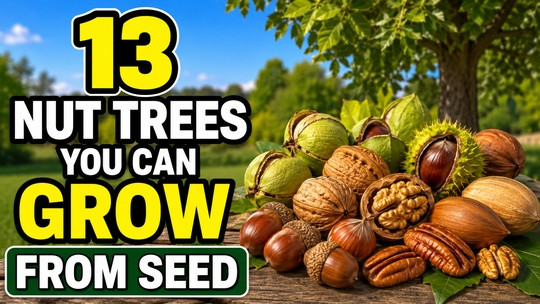
13 Nut Trees You Can Grow From Seed
Growing nut trees from seed is a rewarding way to add long-lived, productive trees to your property. While nut trees usually require more patience than vegetables or annual flowers, many species can be successfully started from seeds or fresh nuts at home.
Depending on the species, a nut tree grown from seed may eventually provide food for your family, wildlife habitat, shade, beautiful fall color, and even valuable timber. Some can live for generations.
One thing to keep in mind is that trees grown from seed are genetically different from their parent trees. The nuts they eventually produce may differ in size, flavor, shell thickness, or productivity. If you enjoy growing trees and don't mind a little unpredictability, starting them from seed can be a fascinating project.
Here are 13 nut trees you can grow from seed.
1. Black Walnut
Black walnut (Juglans nigra) is one of the best-known native nut trees in eastern North America. It develops into a large shade tree and produces distinctive round nuts surrounded by thick green husks.
Fresh black walnuts generally need a period of cold, moist stratification before they will germinate. After removing the husks, the nuts can be placed in moist growing medium and refrigerated for approximately three to four months.
They can also be planted outdoors in fall and allowed to experience natural winter conditions.
Black walnut trees need plenty of room. Mature trees can become very large and develop extensive root systems. They grow best in deep, fertile, well-drained soil and full sun.
2. English Walnut
English walnut (Juglans regia), also known as Persian walnut, produces the familiar walnuts commonly sold for eating.
Walnuts intended for planting should be fresh, untreated, and viable. Like black walnuts, English walnuts usually benefit from cold stratification before spring planting.
Plant the nuts approximately 1–2 inches deep in a deep container or directly in a prepared outdoor location.
English walnut trees prefer full sun and deep, well-drained soil. Keep in mind that seedlings will not necessarily produce nuts identical to those of the parent tree.
3. Butternut
Butternut (Juglans cinerea), sometimes called white walnut, is a North American native tree that produces elongated nuts with rich, oily kernels.
The seeds typically require cold, moist stratification. Fresh nuts can also be planted outdoors during fall so winter naturally provides the cold period.
Butternut trees prefer fertile, moist, well-drained soil and sunny locations. Because butternut populations have been severely affected by butternut canker, growing healthy seedlings can also help preserve this interesting native species.
4. Shagbark Hickory
Shagbark hickory (Carya ovata) is easily recognized on mature trees by its distinctive peeling, shaggy bark.
Its nuts have sweet, edible kernels, although cracking the shells can require some effort.
Fresh hickory nuts can be planted outdoors in fall or cold stratified before spring sowing. Planting several seeds is a good idea because germination can be inconsistent.
Shagbark hickories eventually become large trees, so select a permanent planting location with plenty of space.
5. Shellbark Hickory
Shellbark hickory (Carya laciniosa) produces some of the largest nuts among the hickory species.
Like shagbark hickory, the nuts normally require a cold period before germinating. Fall planting is one of the easiest approaches because nature provides the necessary winter conditions.
Shellbark hickories prefer deep, fertile soils and can eventually become impressive shade trees. Their size makes them better suited to larger properties rather than small residential yards.
6. Pecan
Pecan (Carya illinoinensis) trees can be grown from the same type of pecans we enjoy eating, provided the nuts are fresh, viable, and haven't been roasted or otherwise treated.
Pecans typically benefit from cold, moist stratification for several weeks before planting.
Seedlings grow best in full sun and deep, fertile soil with adequate moisture. Because pecans develop substantial root systems, deep containers are preferable when starting them in pots.
A seed-grown pecan won't necessarily produce nuts identical to the parent tree, and it may take several years before it begins producing.
7. American Hazelnut
American hazelnut (Corylus americana) is an excellent choice when you want a nut-producing plant without the enormous size of a walnut or hickory.
Rather than becoming a towering tree, American hazelnut generally develops into a large multi-stemmed shrub.
The nuts typically need cold, moist stratification before germinating. Seeds can also be planted outdoors in fall.
American hazelnuts provide food for people as well as squirrels, birds, and other wildlife. Growing multiple plants can also improve pollination and nut production.
8. American Chestnut
American chestnut (Castanea dentata) was once one of the dominant trees of eastern North American forests before chestnut blight devastated the species.
American chestnuts can still be grown from seed, although seedlings may eventually encounter the disease.
Chestnuts should not be allowed to completely dry out before planting. They can be cold stratified in slightly moist material over winter and planted in spring.
The trees prefer full sun and well-drained, slightly acidic soil.
If purchasing American chestnut seeds, obtain them from a reputable source so you know exactly what species or hybrid you're growing.
9. Chinese Chestnut
Chinese chestnut (Castanea mollissima) is commonly grown because of its edible nuts and greater resistance to chestnut blight compared with American chestnut.
Fresh chestnuts need to remain slightly moist during storage. Cold stratification over winter usually prepares them for spring germination.
Chinese chestnuts grow best in full sun and well-drained soil.
Planting more than one genetically different tree is especially useful if your goal is eventually harvesting chestnuts because cross-pollination generally improves production.
10. Northern Red Oak
Acorns are nuts, which means oak trees deserve a place on the list.
Northern red oak (Quercus rubra) is a large native shade tree that produces acorns valued by deer, squirrels, turkeys, and numerous other wildlife species.
Red oak acorns usually require cold stratification before germinating. They can be collected in fall and planted outdoors shortly afterward or stored under appropriate moist, cold conditions for spring planting.
Plant viable acorns approximately 1–2 inches deep.
Because oak seedlings quickly develop strong roots, deep pots are preferable if you're starting them in containers.
11. White Oak
White oak (Quercus alba) is another magnificent North American native tree that can be started from acorns.
Unlike red oak acorns, white oak acorns generally don't require a long cold-stratification period and may begin germinating soon after falling from the tree.
For this reason, fresh acorns are best planted relatively quickly after collection.
White oaks are slow-growing compared with many landscape trees, but they can become massive, long-lived trees that provide tremendous ecological value.
12. Bur Oak
Bur oak (Quercus macrocarpa) produces some of the most distinctive acorns of any North American oak. The acorn cup has a fringed appearance that can cover much of the nut.
Fresh bur oak acorns can be planted in fall. Depending on seed source and conditions, germination may occur after exposure to suitable seasonal conditions.
Bur oaks are extremely hardy once established and tolerate a wide range of growing conditions.
Because mature trees can become very large, give seedlings plenty of permanent growing space.
13. Pin Oak
Pin oak (Quercus palustris) is another oak that can easily be started from collected acorns.
The acorns generally need cold, moist stratification before they germinate. Planting them outdoors in fall is a simple way to allow winter weather to provide this naturally.
Pin oaks grow relatively quickly when young and are popular as shade trees. They prefer acidic soil and can struggle in alkaline conditions, where iron deficiency may cause yellow leaves.
Like other large oaks, pin oak should be planted where it has enough room to mature.
How to Tell If a Nut Is Worth Planting
Start with fresh, mature nuts collected from healthy trees or purchased specifically for propagation.
Avoid nuts that are cracked, moldy, badly damaged, roasted, salted, cooked, or excessively dried.
It's usually smart to plant more seeds than the number of trees you ultimately want. Not every seed will germinate, and not every young seedling will survive its first year.
Protect Your Seeds From Wildlife
One of the biggest challenges when planting nuts outdoors isn't germination—it's squirrels and other hungry animals.
Squirrels are remarkably good at finding freshly planted walnuts, pecans, hickory nuts, chestnuts, and acorns.
Protect planting areas with suitable wire mesh or other barriers that allow seedlings to emerge while preventing animals from digging up the seeds. Remove or adjust protection as the seedlings grow so it doesn't interfere with their development.
Give Nut Trees Room for Their Roots
Many nut trees develop strong taproots or extensive root systems while they're young.
If you're starting seeds in containers, use deep pots rather than shallow trays. Don't leave seedlings in undersized containers for too long.
Transplant young trees carefully to minimize root disturbance.
Better yet, if you already know where you want the mature tree, consider direct sowing the seed in its permanent location when appropriate.
How Long Until Seed-Grown Nut Trees Produce Nuts?
Patience is essential.
Depending on the species, climate, growing conditions, and individual seedling, it can take several years or considerably longer before a seed-grown tree produces its first meaningful crop.
Seed-grown trees also aren't clones of their parents. A walnut planted from an exceptional tree could eventually produce nuts with somewhat different characteristics.
For gardeners interested primarily in predictable nut production, named grafted cultivars are generally a better option. But if your goal is the experience of growing a tree from the very beginning, seeds are hard to beat.
Final Thoughts
Growing nut trees from seed isn't a quick gardening project. It's an investment in the future.
Black walnuts, pecans, chestnuts, hazelnuts, hickories, and oaks can potentially remain part of the landscape for decades—and in some cases much longer.
Starting with a simple nut and watching it develop into a mature tree is also one of the most satisfying ways to experience tree growing.
Plant a few extra seeds, protect them from wildlife, give their roots plenty of room, and be patient. The small nut you plant today could eventually become one of the biggest trees on your property.