
Posted by TJ Hopkins on Sep 19th 2026
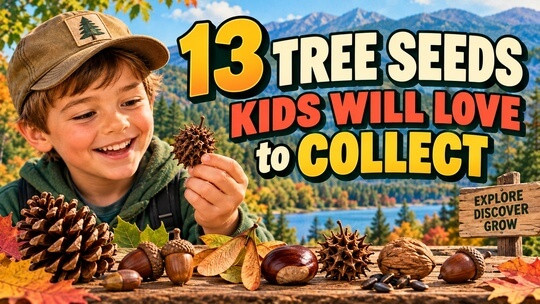
13 Tree Seeds Kids Will Love to Collect
Explore the outdoors, discover interesting seeds, and grow something new!
Collecting tree seeds is a wonderful way to help children connect with nature. Seeds come in an amazing variety of shapes and sizes—from tiny winged seeds that spin through the air to large acorns hidden beneath fallen leaves.
A family seed-collecting adventure can turn an ordinary walk through the woods, a local park, or your own backyard into an exciting treasure hunt. Children can compare seeds, learn how trees reproduce, and even plant some of their discoveries.
Here are 13 fascinating tree seeds kids will love to find and collect.
1. Oak Acorns
Acorns are among the easiest tree seeds for children to recognize. They can be found beneath oak trees during the fall in many parts of the United States.
Acorns come in different shapes and sizes depending on the oak species. Some are small and round, while others are long and narrow. Their little caps make them especially fun to collect.
Look for firm, healthy acorns without cracks, holes, or mold. Place them in a container of water and discard any that float, as they may be damaged or empty.
Many oak species can be grown by planting fresh acorns about one inch deep in a pot or directly in the ground. Some acorns sprout shortly after falling, while others need a period of cold winter weather first.
2. Maple Helicopter Seeds
Maple seeds are often called helicopters, whirligigs, or spinning seeds. Their papery wings help them rotate through the air as they fall from the tree.
Children can toss maple seeds into the air and watch them spin toward the ground. They can also compare the colors, shapes, and sizes produced by different maple trees.
Depending on the species, maple seeds may mature in spring or fall. Collect seeds that are fully developed and beginning to turn tan or brown.
Some maple seeds can be planted right away. Others need several weeks or months of cold, moist conditions before they will sprout.
3. Pine Seeds
Pinecones are exciting natural treasures, but the cone itself is not the seed. The seeds are hidden between the cone’s scales.
Collect mature brown cones that have recently fallen from a pine tree. Place them in a warm, dry area and wait for the scales to open. Gently shake the cones over a sheet of paper to see whether any seeds fall out.
Many pine seeds have thin wings that help them travel on the wind. Children can examine them with a magnifying glass and compare them with maple seeds.
Growing requirements vary by pine species. Some seeds can be planted immediately, while others benefit from cold, moist treatment before planting.
4. Black Walnuts
Black walnuts look like green balls when they first fall from the tree. Inside the thick outer husk is a hard, deeply textured shell containing the seed.
Always wear gloves when handling black walnut husks. The husks can stain hands, clothing, tables, and sidewalks a dark brown color. An adult should remove the husks and supervise the activity.
After cleaning, the nuts usually need a long period of cold, moist conditions before they can germinate. They can be planted outdoors in fall and allowed to experience winter naturally.
Black walnut trees eventually become very large, so choose a permanent planting location carefully.
5. Hickory Nuts
Hickory nuts are surrounded by thick husks that divide into sections as they mature. When the husk opens, it reveals a hard, light-colored nut inside.
These seeds are fun for children to compare with walnuts and acorns. Hickory nuts are usually collected in fall after they drop naturally.
Choose heavy, undamaged nuts without small holes. Plant them outdoors in fall or give them a cold, moist treatment before spring planting.
Hickory trees grow slowly, but they can eventually become strong and impressive shade trees.
6. American Chestnuts
American chestnut seeds are shiny brown nuts found inside extremely prickly burs. These burs can hurt, so children should never handle them without thick gloves and adult supervision.
Chestnuts should be collected soon after they fall because squirrels and other wildlife quickly carry them away. Fresh nuts should not be allowed to dry out completely.
The seeds normally need cold, moist conditions before they sprout. They can be planted outdoors in fall or stored in slightly moist material in a refrigerator until spring.
Be sure to identify the tree carefully, as chestnuts and horse chestnuts are different. Horse chestnuts are poisonous and should never be eaten.
7. Sweetgum Seeds
Sweetgum trees produce round, spiky seed balls that often cover the ground beneath mature trees. Children sometimes call them gumballs, sticker balls, or porcupine eggs.
The tiny seeds are contained inside openings in the dried ball. Place a sweetgum ball inside a paper bag and shake it to see what falls out.
Sweetgum seeds may need cold, moist treatment before planting. Because the seeds are small, they should be planted close to the surface of the soil.
The empty seed balls can also be used for supervised nature crafts.
8. Sycamore Seeds
Sycamore trees produce fuzzy, round seed balls that hang from branches through part of the winter. The balls eventually break apart and release many small seeds.
Each seed has fine hairs that help it travel on the wind. Children can gently pull apart a mature seed ball outdoors and watch the seeds float away.
The hairs may irritate sensitive skin or lungs, so avoid crushing the seed balls indoors. Children with allergies or breathing sensitivities should observe them without pulling them apart.
Sycamore seeds can be planted shallowly in moist soil. These trees grow large and need plenty of room.
9. Catalpa Seeds
Catalpa trees produce long, narrow seedpods that look like giant green beans. The pods turn brown as they dry and may remain on the tree into winter.
Inside each pod are many flat seeds with papery, fringed ends. Opening a dry catalpa pod feels like opening a natural treasure box.
Catalpa seeds are generally easy to plant. Sow them shallowly in moist potting mix and place the container in a warm, bright location.
The seedlings can grow quickly, making catalpa a rewarding tree for a child’s growing project.
10. Tulip Tree Seeds
Tulip trees produce upright, cone-shaped clusters of winged seeds. These clusters often remain attached to the branches after the leaves fall.
As the cluster breaks apart, the narrow seeds spin or flutter toward the ground. Children can search beneath large tulip trees for whole clusters and individual seeds.
Not every seed in a cluster will be fertile, so collect several. The seeds usually benefit from cold, moist treatment before spring planting.
Tulip trees can grow very tall and should eventually be planted in a spacious location.
11. Birch Seeds
Birch trees produce small catkins that contain many tiny, winged seeds. When mature catkins are gently rubbed between the fingers, they break apart and release the seeds.
This is a good collecting activity for children who enjoy examining tiny natural objects. Place the catkins over white paper so the seeds are easier to see.
Birch seeds should be planted on or very close to the soil surface because they need light to germinate. Keep the soil consistently moist without washing the seeds away.
Because the seeds are so small, using a fine mist spray bottle can make watering easier.
12. Alder Seeds
Alder trees produce small, woody structures that look like miniature pinecones. These structures contain numerous tiny seeds.
They often remain on the branches after releasing their seeds, so look for darker, recently matured cones. Place them in a paper bag to dry, then shake the bag to collect any loose seeds.
Alder seeds are normally planted on the surface of moist soil or covered very lightly. Some species benefit from a period of cold, moist treatment.
These trees frequently grow near streams, ponds, wetlands, and other damp places.
13. Redbud Seeds
Redbud trees are known for their beautiful pink or purple spring flowers. Later in the year, they produce flat seedpods that resemble small pea pods.
Wait until the pods turn brown and dry before collecting them. Open the pods carefully to reveal the small, hard seeds inside.
Redbud seeds have a tough outer coating. An adult can carefully scratch the seed coat with sandpaper before soaking the seeds in water. The seeds also usually need a period of cold, moist treatment.
Young redbud trees can eventually add colorful spring flowers to a yard or garden.
Make a Tree Seed Collection
Children do not have to plant every seed they find. They can create a nature collection for observation and learning.
Try placing dry seeds in labeled paper envelopes. Write down the tree’s name, where the seed was found, and the collection date. Children can also draw pictures of the tree, leaves, bark, and seeds in a nature journal.
Avoid sealing damp seeds in plastic bags because moisture can quickly cause mold. If seeds will be planted, research the needs of that particular species before allowing them to dry.
Turn Seed Collecting Into a Game
Make a simple scavenger hunt before heading outside. Ask children to find:
- A seed with a cap
- A seed with wings
- A seed hidden inside a pod
- A large, heavy seed
- A tiny seed
- A prickly seed container
- A seed carried by the wind
- Two seeds from different tree species
Children can earn points for identifying trees, drawing leaves, or finding seeds without removing them from the tree.
Important Seed-Collecting Safety Tips
Adult supervision is important whenever children collect or plant tree seeds.
Never eat a wild seed, nut, berry, or plant unless a knowledgeable adult has positively identified it as safe. Some tree seeds and fruits are poisonous, and edible species may have dangerous look-alikes.
Wear gloves when handling prickly burs, irritating seed hairs, or staining husks. Collect only a small number of seeds and leave plenty behind for birds, squirrels, and natural forest regeneration.
Ask permission before collecting on private property, in parks, or on protected land. Some locations do not allow visitors to remove plants, seeds, or other natural materials.
Grow a Memory From Seed
Tree-seed collecting combines outdoor exploration, science, art, and gardening in one simple activity. Every seed has a story—how it traveled, what tree produced it, and what it might become.
Even if only one collected seed grows, children can enjoy watching it change from a small seed into a living tree. With patience and care, that seedling could become a lasting reminder of a special family adventure.