
Posted by TJ Hopkins on Jul 10th 2026
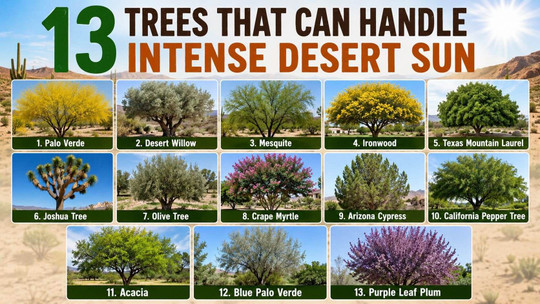
13 Trees That Can Handle Intense Desert Sun
Growing trees in a desert climate can be challenging. Intense sunlight, extreme summer heat, dry air, limited rainfall, and poor soil conditions can place tremendous stress on many tree species. Fortunately, some trees are naturally adapted to harsh environments and can thrive where less heat-tolerant trees struggle.
The best desert trees often have deep or extensive root systems, small leaves, drought-resistant foliage, or other adaptations that help reduce water loss. Once established, many require relatively little supplemental watering while still providing valuable shade, color, privacy, wildlife habitat, and year-round landscape interest.
Whether you are creating a low-water landscape or simply need a tree capable of handling long, hot summers, these 13 trees are excellent options to consider.
1. Palo Verde
Palo Verde is one of the most recognizable trees of the desert Southwest. Its smooth green bark allows the tree to perform photosynthesis even when it drops its small leaves during periods of drought. This unique adaptation helps it conserve water while continuing to produce energy.
In spring, Palo Verde trees become covered with masses of bright yellow flowers that attract bees and other pollinators. Their open, airy canopies provide filtered shade without making the landscape feel overly dense.
Palo Verde grows best in full sun and well-draining soil. Once established, it is highly drought tolerant and generally requires only occasional deep watering.
Growing conditions:
- USDA Zones: 8–11
- Sun: Full sun
- Soil: Sandy, rocky, or well-draining soil
- Water needs: Low once established
- Mature height: Approximately 15–30 feet
2. Desert Willow
Despite its common name, Desert Willow is not a true willow. This heat-loving tree is native to dry areas of the southwestern United States and northern Mexico. It develops narrow, willow-like leaves and beautiful trumpet-shaped flowers in shades of pink, purple, lavender, and white.
Desert Willow blooms throughout much of the warm season and is especially attractive to hummingbirds, bees, and butterflies. Its relatively fast growth and graceful appearance make it a popular choice for desert gardens.
Plant Desert Willow in full sun with excellent drainage. Avoid consistently wet soil, which can cause root problems and excessive growth.
Growing conditions:
- USDA Zones: 7–11
- Sun: Full sun
- Soil: Well-draining sandy or gravelly soil
- Water needs: Low
- Mature height: Approximately 15–30 feet
3. Mesquite
Mesquite trees are well adapted to intense desert heat and prolonged dry conditions. Their extensive root systems allow them to reach moisture deep below the soil surface. Depending on the species and growing conditions, Mesquite may develop into a small tree or a large, spreading shade tree.
The delicate foliage creates light, filtered shade, while small flowers provide food for pollinators. Mesquite trees also produce long seed pods that are used by wildlife.
Mesquite performs best in full sun and should not be overwatered. Excessive irrigation may encourage rapid, weak growth and increase the need for pruning.
Growing conditions:
- USDA Zones: 7–11
- Sun: Full sun
- Soil: Adaptable but must drain well
- Water needs: Very low once established
- Mature height: Approximately 15–40 feet
4. Ironwood
Desert Ironwood is an exceptionally durable tree native to the Sonoran Desert. It is known for its dense, heavy wood and remarkable ability to survive intense heat, drought, and poor soil.
Mature trees develop attractive gray-green foliage and produce clusters of pale pink, lavender, or purple flowers. Ironwood grows slowly but can become a long-lived and valuable part of a desert landscape.
Because of its slow growth, Desert Ironwood is best planted where it can remain undisturbed for many years. It needs full sun and sharply draining soil.
Growing conditions:
- USDA Zones: 9–11
- Sun: Full sun
- Soil: Rocky, sandy, or gravelly soil
- Water needs: Very low
- Mature height: Approximately 15–30 feet
5. Texas Mountain Laurel
Texas Mountain Laurel is an evergreen shrub or small tree valued for its glossy dark-green foliage and fragrant purple flower clusters. The flowers have a sweet scent that many people compare to grape candy.
This attractive tree handles intense sun, heat, and drought once its root system is established. Its evergreen leaves provide year-round color, making it useful as a specimen tree, privacy screen, or small accent tree.
Texas Mountain Laurel grows slowly and prefers well-draining soil. Its seeds and other plant parts are toxic if ingested, so consider placement carefully around children and pets.
Growing conditions:
- USDA Zones: 7–11
- Sun: Full sun to light shade
- Soil: Well-draining, alkaline soil
- Water needs: Low
- Mature height: Approximately 10–20 feet
6. Joshua Tree
The Joshua Tree is an iconic desert plant native to portions of California, Arizona, Nevada, and Utah. Although it resembles a branching tree, it is actually a large species of yucca.
Joshua Trees thrive in dry climates with intense sunlight, low humidity, and sharply draining soil. Their unusual branching forms create dramatic silhouettes and make them excellent focal points in large desert landscapes.
These plants grow slowly and require plenty of space. They are best suited to dry regions with hot summers and cooler winters rather than humid tropical climates.
Growing conditions:
- USDA Zones: 6–10
- Sun: Full sun
- Soil: Sandy, rocky, and extremely well-draining
- Water needs: Very low
- Mature height: Approximately 15–40 feet
7. Olive Tree
Olive trees have been cultivated for thousands of years in hot, sunny regions. Their narrow, silvery-green leaves reflect sunlight and help reduce moisture loss during periods of heat and drought.
Mature Olive trees develop thick, twisted trunks that add character to the landscape. Depending on the variety, they may be grown for fruit or used primarily as ornamental shade trees.
Olive trees require full sun and well-draining soil. They tolerate drought after establishment but may produce better growth and fruit with occasional deep watering.
Growing conditions:
- USDA Zones: 8–11
- Sun: Full sun
- Soil: Well-draining soil
- Water needs: Low to moderate
- Mature height: Approximately 20–30 feet
8. Crape Myrtle
Crape Myrtle is popular in hot climates because it combines excellent heat tolerance with colorful summer flowers. Depending on the variety, blooms may be white, pink, red, lavender, or deep purple.
These trees perform especially well in areas with long, hot summers. Their attractive peeling bark and colorful fall foliage provide additional seasonal interest after flowering ends.
Crape Myrtle flowers most heavily when planted in full sun. While established trees tolerate periods of drought, occasional deep watering may improve flowering during extremely dry weather.
Growing conditions:
- USDA Zones: 6–10
- Sun: Full sun
- Soil: Adaptable, well-draining soil
- Water needs: Low to moderate
- Mature height: Approximately 10–30 feet
9. Arizona Cypress
Arizona Cypress is a heat- and drought-tolerant evergreen tree native to the southwestern United States and Mexico. Its dense blue-green, gray-green, or silvery foliage provides year-round color and can create an effective windbreak or privacy screen.
Unlike many evergreen trees, Arizona Cypress performs well in dry climates with intense sunlight. It develops a naturally pyramidal shape and generally requires little pruning when given enough room to grow.
Plant Arizona Cypress in full sun and well-draining soil. Avoid locations where the roots will remain wet for extended periods.
Growing conditions:
- USDA Zones: 7–9
- Sun: Full sun
- Soil: Sandy, rocky, or well-draining soil
- Water needs: Low once established
- Mature height: Approximately 30–50 feet
10. California Pepper Tree
California Pepper Tree is a graceful evergreen tree with drooping branches, fine-textured foliage, and clusters of pink to red pepper-like berries. Its broad canopy can provide valuable shade in hot, dry landscapes.
Once established, this tree tolerates intense sun and drought. However, its roots can become extensive, and fallen berries may create litter beneath the canopy.
California Pepper Tree should be planted where it has plenty of room to mature and away from pavement, foundations, and underground utilities.
Growing conditions:
- USDA Zones: 8–11
- Sun: Full sun
- Soil: Adaptable and well-draining
- Water needs: Low
- Mature height: Approximately 25–40 feet
11. Acacia
Acacia trees are known for their ability to survive extreme heat, intense sunlight, and dry conditions. Many species develop fine-textured foliage and produce clusters of yellow or cream-colored flowers.
Their open canopies provide filtered shade, while the flowers attract bees and other beneficial insects. Depending on the species, Acacia trees may remain relatively small or develop into broad, spreading shade trees.
Choose an Acacia species suited to your local climate, as cold tolerance varies considerably. Most prefer full sun, low humidity, and well-draining soil.
Growing conditions:
- USDA Zones: Varies by species
- Sun: Full sun
- Soil: Sandy or well-draining soil
- Water needs: Low
- Mature height: Approximately 10–40 feet
12. Blue Palo Verde
Blue Palo Verde is named for the blue-green appearance of its bark and foliage. Like other Palo Verde species, its green bark can perform photosynthesis, helping the tree survive periods when drought causes it to lose some or all of its leaves.
In spring, Blue Palo Verde produces an impressive display of bright yellow flowers. Its spreading canopy provides filtered shade and creates a colorful focal point in desert landscapes.
This tree grows best in full sun and well-draining soil. Deep but infrequent watering encourages a stronger root system and healthier long-term growth.
Growing conditions:
- USDA Zones: 8–11
- Sun: Full sun
- Soil: Sandy, gravelly, or well-draining soil
- Water needs: Very low
- Mature height: Approximately 20–30 feet
13. Purple Leaf Plum
Purple Leaf Plum is valued for its deep reddish-purple foliage and pale pink or white spring flowers. The colorful leaves provide a striking contrast against light-colored homes, gravel landscapes, and green plants.
Although Purple Leaf Plum handles strong sunlight and summer heat, it generally requires more water than native desert trees such as Palo Verde, Mesquite, or Ironwood. It performs best in desert landscapes where supplemental irrigation is available.
Plant Purple Leaf Plum in full sun for the richest foliage color. Good airflow and proper watering can help reduce disease problems.
Growing conditions:
- USDA Zones: 4–9
- Sun: Full sun
- Soil: Fertile, well-draining soil
- Water needs: Moderate
- Mature height: Approximately 15–25 feet
Tips for Growing Trees in Intense Desert Sun
Even drought-tolerant trees need regular watering while establishing their root systems. Newly planted trees may require deeper and more frequent irrigation during their first one to three years, especially during extreme summer heat.
Water slowly and deeply rather than applying small amounts every day. Deep watering encourages roots to grow farther into the soil, helping trees become more drought resistant over time. Allow the soil surface to begin drying between watering sessions unless the species requires consistently moist conditions.
Apply a layer of mulch around the root zone to reduce evaporation and moderate soil temperatures. Keep mulch several inches away from the trunk to prevent excess moisture from collecting against the bark.
Whenever possible, plant desert trees during fall, winter, or early spring. Cooler temperatures reduce transplant stress and allow roots more time to become established before intense summer heat arrives.
Choosing the Right Desert Tree
Before selecting a tree, consider more than heat tolerance alone. Mature size, cold hardiness, soil drainage, irrigation needs, root growth, maintenance requirements, and available planting space are all important.
Native desert trees such as Palo Verde, Desert Willow, Mesquite, and Ironwood are often among the best choices for extremely dry landscapes. Trees such as Crape Myrtle, Olive, and Purple Leaf Plum can also tolerate strong summer sun but may need more supplemental water.
With the right species and proper care during establishment, trees can provide shade, beauty, wildlife habitat, and long-lasting structure—even in landscapes exposed to intense desert sun.