
Posted by TJ Hopkins on Aug 9th 2026
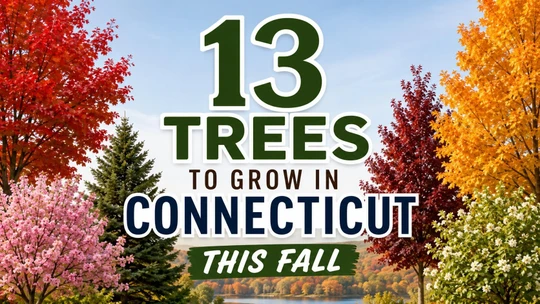
13 Trees to Grow in Connecticut This Fall
Fall is one of the best times to add trees to a Connecticut landscape. Cooler temperatures reduce heat stress, autumn rains can help keep newly planted roots moist, and the soil often remains warm enough for root development after top growth begins to slow.
Connecticut’s climate supports an impressive variety of trees, from towering native shade trees to colorful flowering species. Whether you want brilliant fall foliage, spring flowers, wildlife habitat, privacy, or a long-lived shade tree, there are plenty of excellent choices.
Here are 13 trees to grow in Connecticut this fall, including several native species that are well adapted to New England conditions.
1. Sugar Maple
Sugar maple (Acer saccharum) is an iconic New England tree and an excellent choice for Connecticut landscapes. It is famous for its spectacular autumn display, with leaves changing to shades of yellow, orange, scarlet, and red.
Sugar maples eventually become large shade trees, so give them plenty of room to mature. They generally perform best in fertile, well-drained soil and locations with full sun to partial shade.
USDA Zones: 3–8
Mature Height: 60–75 feet
Sun: Full sun to partial shade
Best Feature: Outstanding fall foliage
2. Red Maple
Red maple (Acer rubrum) is native to Connecticut and one of the most versatile trees for residential landscapes. Its fall foliage can range from yellow and orange to brilliant red.
Red maples tolerate a fairly wide range of soil conditions, including sites that are occasionally wet. Their adaptability makes them useful for larger yards, naturalized areas, and woodland edges.
USDA Zones: 3–9
Mature Height: 40–70 feet
Sun: Full sun to partial shade
Best Feature: Bright red fall color
3. Eastern Redbud
For a smaller ornamental tree, consider the Eastern redbud (Cercis canadensis). Before its heart-shaped leaves appear in spring, its branches become covered with clusters of pink to purplish-pink flowers.
Redbuds are especially attractive near patios, woodland gardens, walkways, and mixed landscape beds. In colder parts of Connecticut, planting one in a somewhat protected location can be beneficial.
USDA Zones: 4–9
Mature Height: 20–30 feet
Sun: Full sun to partial shade
Best Feature: Early spring flowers
4. Eastern White Pine
Eastern white pine (Pinus strobus) is a classic native evergreen that can become an impressive landscape specimen. Its long, soft needles give the tree a graceful appearance throughout the year.
Because Eastern white pines can become very large, they work best on properties with sufficient space. Groups of trees can also provide privacy, wind protection, and valuable wildlife cover.
USDA Zones: 3–8
Mature Height: 50–80+ feet
Sun: Full sun to partial shade
Best Feature: Year-round evergreen foliage
5. White Oak
Few trees make as impressive a long-term addition to a property as the white oak (Quercus alba). This native oak can live for centuries under favorable conditions and eventually develop a broad, spreading canopy.
White oaks also have tremendous wildlife value. Their acorns provide food for squirrels, deer, wild turkeys, and numerous other animals, while the tree itself supports many insects and birds.
USDA Zones: 3–9
Mature Height: 50–80 feet
Sun: Full sun
Best Feature: Wildlife habitat and longevity
6. Northern Red Oak
Northern red oak (Quercus rubra) is another excellent native tree for Connecticut. It generally grows faster than white oak and develops into a tall, handsome shade tree.
Its large leaves can turn deep red, reddish-brown, or russet during autumn. Plant it where the mature canopy will have enough room to spread without interfering with buildings or utility lines.
USDA Zones: 4–8
Mature Height: 60–75 feet
Sun: Full sun
Best Feature: Fast-growing native shade tree
7. American Beech
The American beech (Fagus grandifolia) is a beautiful native forest tree recognizable by its smooth gray bark and broad canopy.
Leaves typically turn golden yellow to bronze in autumn, and younger trees may retain some of their dried leaves well into winter. American beech is best suited to properties where it has considerable room to mature.
USDA Zones: 3–9
Mature Height: 50–70 feet
Sun: Full sun to partial shade
Best Feature: Smooth bark and graceful form
8. Flowering Dogwood
Flowering dogwood (Cornus florida) provides interest during multiple seasons. Its showy spring bracts are followed by green summer foliage, red fruits, and attractive reddish-purple fall color.
It naturally grows along woodland edges and often performs well where it receives morning sunlight and some protection from intense afternoon heat.
USDA Zones: 5–9
Mature Height: 15–30 feet
Sun: Partial shade to full sun
Best Feature: Spring flowers and fall color
9. Black Tupelo
If autumn color is a priority, black tupelo (Nyssa sylvatica) deserves serious consideration. Also called black gum, this native tree can produce spectacular shades of scarlet, crimson, orange, yellow, and purple.
It is valuable to wildlife as well. Its small fruits are eaten by numerous bird species, making it an excellent addition to a wildlife-friendly landscape.
USDA Zones: 3–9
Mature Height: 30–50 feet
Sun: Full sun to partial shade
Best Feature: Exceptional fall foliage
10. River Birch
Homeowners dealing with moist areas may want to consider river birch (Betula nigra). This attractive native tree is known for its peeling bark, which reveals shades of cream, tan, cinnamon, and salmon.
Although associated with streams and moist environments, established trees can adapt to various landscape settings when given appropriate growing conditions.
USDA Zones: 4–9
Mature Height: 40–70 feet
Sun: Full sun to partial shade
Best Feature: Attractive peeling bark
11. Serviceberry
Serviceberry (Amelanchier spp.) is an excellent option when you want a smaller native tree with multiple seasons of interest.
White flowers appear in spring, followed by edible berry-like fruits that are also highly attractive to birds. The foliage often develops beautiful orange, yellow, or red colors during fall.
USDA Zones: 4–9, depending on species
Mature Height: 15–25 feet, depending on species
Sun: Full sun to partial shade
Best Feature: Flowers, fruit, and fall color
12. American Hornbeam
American hornbeam (Carpinus caroliniana) is a smaller native tree that works particularly well in naturalized landscapes and partially shaded locations.
Its smooth, muscular-looking trunk gives it distinctive character even when the tree is bare. Fall foliage may develop attractive shades of yellow, orange, and red.
Because it tolerates partial shade, American hornbeam can be a useful choice where larger sun-loving shade trees aren't appropriate.
USDA Zones: 3–9
Mature Height: 20–35 feet
Sun: Partial shade to full sun
Best Feature: Attractive trunk and compact size
13. Eastern Hemlock
Eastern hemlock (Tsuga canadensis) is a graceful native evergreen with short needles and gently drooping branches. It can be grown as a specimen tree, in naturalized woodland settings, or in groups.
Hemlocks tolerate more shade than many evergreen trees and generally prefer cool, moist, well-drained conditions.
One important consideration is the invasive hemlock woolly adelgid, which can seriously damage Eastern hemlocks. Trees should be monitored regularly for signs of infestation.
USDA Zones: 3–7
Mature Height: 40–70+ feet
Sun: Partial shade to full sun
Best Feature: Shade-tolerant evergreen foliage
Why Plant Trees in Connecticut During Fall?
Fall planting offers several advantages. Once temperatures cool, newly planted trees experience less stress from summer heat. Meanwhile, the soil can remain warm enough for roots to continue establishing before winter.
Autumn weather can also mean less frequent watering than during hot summer conditions, although newly planted trees should never be allowed to dry out.
The goal is to give the root system time to begin establishing before the ground freezes.
Tips for Planting Trees This Fall
Choose a location based on the tree’s mature size, not its size at planting. A young tree that looks tiny today could eventually reach 60 or 80 feet tall.
Dig the planting hole approximately two to three times as wide as the root ball, but avoid planting too deeply. The root flare—the area where the trunk begins widening into the main roots—should remain visible near soil level.
Backfill primarily with the existing native soil rather than creating a heavily amended planting pocket.
After planting, water deeply and apply approximately 2–3 inches of mulch over the root zone. Keep mulch several inches away from the trunk instead of piling it against the bark.
Continue checking soil moisture until the ground freezes, particularly during dry autumn weather.
Choosing the Right Connecticut Tree
The best tree depends on what you want from your landscape.
For spectacular autumn foliage, consider sugar maple, red maple, or black tupelo. For wildlife habitat, white oak, serviceberry, and black tupelo are excellent choices. If you need an evergreen, consider Eastern white pine or Eastern hemlock.
Smaller properties may be better suited to serviceberry, flowering dogwood, Eastern redbud, or American hornbeam, while large properties can accommodate magnificent mature trees such as white oak, Northern red oak, sugar maple, and Eastern white pine.
Whatever species you choose, matching the tree to your property's sunlight, drainage, soil, available space, and moisture conditions will give it the best chance of thriving.
With careful selection and proper planting, a tree planted this fall can become a beautiful part of your Connecticut landscape for decades—or even generations—to come.