
Posted by TJ Hopkins on Jun 21st 2026
13 Trees with Spectacular Spring Blooms
Spring is one of the most beautiful seasons in the garden. As temperatures rise and days grow longer, flowering trees burst into color, transforming landscapes with vibrant blossoms, sweet fragrances, and stunning displays. Whether you're planning a new landscape or simply looking for inspiration, these 13 flowering trees offer some of the most spectacular spring blooms.
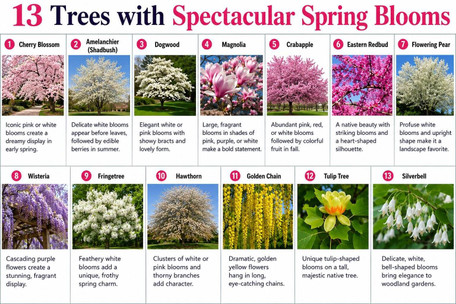
1. Cherry Blossom
Cherry blossom trees are among the most iconic spring bloomers. Their clouds of pink or white flowers create breathtaking displays that attract visitors around the world. These trees bloom in early spring before the leaves emerge, producing a soft, romantic appearance.
Best for: Ornamental landscapes, parks, and front yards.
2. Serviceberry (Amelanchier or Shadbush)
Serviceberry trees produce delicate white flowers in early spring before the foliage appears. After flowering, the trees develop edible berries that attract birds and wildlife. Their attractive fall color adds another season of interest.
Best for: Small yards, wildlife gardens, and natural landscapes.
3. Dogwood
Dogwood trees are prized for their elegant white, pink, or red blooms. The showy bracts surrounding the small flowers create a striking display in spring. Dogwoods also offer colorful foliage and attractive berries later in the year.
Best for: Woodland gardens and partially shaded landscapes.
4. Magnolia
Magnolias produce some of the largest and most fragrant spring flowers of any tree. Their blooms appear in shades of pink, white, purple, and yellow, often before leaves emerge. The dramatic flowers make magnolias true focal points in the landscape.
Best for: Specimen plantings and large garden spaces.
5. Crabapple
Crabapple trees provide abundant blossoms in pink, red, or white. Their flowers are followed by colorful fruits that persist into fall and winter, attracting birds and adding seasonal interest.
Best for: Pollinator gardens and ornamental landscapes.
6. Eastern Redbud
Eastern Redbud is a native North American tree known for its brilliant pink to purple flowers that appear directly on branches and trunks. Its heart-shaped leaves and compact size make it a favorite for residential landscapes.
Best for: Small yards and native plant gardens.
7. Flowering Pear
Flowering pear trees produce masses of white blossoms that cover the tree in early spring. Their upright form and dense canopy make them popular street and landscape trees.
Best for: Formal landscapes and urban settings.
8. Wisteria
Although often grown as a vine, trained wisteria can develop into small tree forms. Long clusters of fragrant purple flowers cascade downward, creating one of the most dramatic spring displays.
Best for: Garden focal points and ornamental plantings.
9. Fringetree
Fringetrees produce unusual feathery white flowers that give the tree a soft, cloud-like appearance. Their fragrant blooms attract pollinators and add unique texture to spring landscapes.
Best for: Native gardens and smaller landscapes.
10. Hawthorn
Hawthorn trees bloom with clusters of white or pink flowers in late spring. Their thorny branches provide wildlife habitat, while their colorful berries add fall and winter interest.
Best for: Wildlife gardens and naturalized landscapes.
11. Golden Chain Tree
Golden chain trees create spectacular displays of hanging yellow flower clusters that resemble waterfalls of gold. The blooms can reach up to two feet long, making this tree especially eye-catching.
Best for: Cool climates and ornamental gardens.
12. Tulip Tree
Tulip trees produce unique tulip-shaped flowers in shades of yellow and orange. Although the blooms often appear high in the canopy, they create a distinctive and beautiful display.
Best for: Large landscapes and shade tree plantings.
13. Silverbell
Silverbell trees produce graceful clusters of white, bell-shaped flowers that dangle beneath the branches. Their delicate appearance makes them excellent choices for woodland gardens.
Best for: Shaded landscapes and woodland settings.
Tips for Growing Flowering Trees
- Plant trees in locations that receive the recommended amount of sunlight.
- Improve soil drainage before planting.
- Water regularly during the first few years after planting.
- Apply mulch around the base to conserve moisture and suppress weeds.
- Prune only when necessary to maintain the tree's natural shape.
- Choose varieties suited to your USDA hardiness zone.
Final Thoughts
Flowering trees bring beauty, fragrance, and seasonal interest to any landscape. From the iconic cherry blossom to the elegant silverbell, these trees offer stunning displays that signal the arrival of spring. Whether you have a small backyard or a large property, adding one or more of these spectacular bloomers can transform your landscape into a colorful spring showcase.