
Posted by TJ Hopkins on Jul 7th 2026
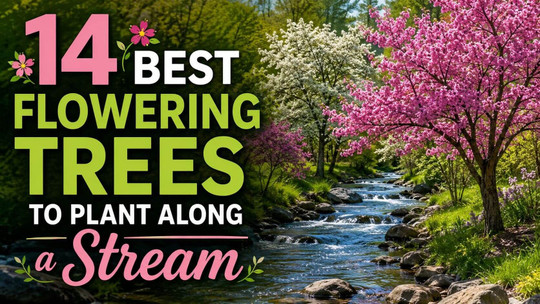
14 Best Flowering Trees to Plant Along a Stream
A stream brings movement, wildlife, and natural beauty to any landscape. Choosing flowering trees that thrive in moist soils can transform an ordinary creek or brook into a stunning focal point filled with seasonal color, fragrance, and birdsong. Whether you're restoring a natural waterway or enhancing your backyard, these trees offer beauty while helping stabilize streambanks and provide valuable habitat for pollinators and wildlife.
Here are 14 of the best flowering trees to consider planting along a stream.
1. Eastern Redbud (Cercis canadensis)
Eastern Redbud is one of the first trees to bloom each spring, covering its branches with vibrant pink to purple flowers before the leaves appear. It grows naturally along woodland edges and streambanks, making it an excellent choice for moist locations.
Why you'll love it:
- Brilliant early spring blooms
- Heart-shaped leaves
- Attracts bees and butterflies
- Tolerates occasional flooding
2. Flowering Dogwood (Cornus florida)
Flowering Dogwood is a classic native tree known for its elegant white or pink spring blossoms. It thrives in moist, well-drained soils near streams and provides year-round interest with colorful fall foliage and bright red berries.
Highlights:
- Beautiful spring flowers
- Red berries attract birds
- Outstanding fall color
- Excellent understory tree
3. American Fringe Tree (Chionanthus virginicus)
This underrated native tree produces masses of delicate, fragrant white flowers that resemble fringe or lace. It performs exceptionally well near streams where the soil remains consistently moist.
Benefits:
- Fragrant blooms
- Low maintenance
- Supports pollinators
- Attractive blue fruits on female trees
4. Sweetbay Magnolia (Magnolia virginiana)
Sweetbay Magnolia thrives in wet soils and naturally grows in swamps and along waterways. Creamy white, lemon-scented flowers appear throughout late spring and summer.
Best features:
- Sweet fragrance
- Evergreen in warmer climates
- Glossy foliage
- Handles wet soils well
5. Serviceberry (Amelanchier canadensis)
Also called Juneberry or Shadbush, Serviceberry produces clouds of white flowers in early spring followed by delicious berries loved by birds—and people.
Why plant it:
- Four-season beauty
- Edible berries
- Excellent wildlife tree
- Brilliant orange-red fall foliage
6. Blackhaw Viburnum (Viburnum prunifolium)
Although often grown as a large shrub, Blackhaw can easily develop into a small flowering tree. Creamy white flower clusters bloom in spring, followed by blue-black fruits.
Advantages:
- Native species
- Bird-friendly fruit
- Adaptable to moist soils
- Excellent fall color
7. Crabapple (Malus species)
Flowering Crabapples offer spectacular spring displays in shades of white, pink, and deep red. Many disease-resistant varieties thrive near streams provided drainage isn't constantly saturated.
Top qualities:
- Abundant blossoms
- Decorative fruit
- Pollinator favorite
- Attractive branching structure
8. Carolina Silverbell (Halesia tetraptera)
Native to woodland streams throughout the southeastern United States, Carolina Silverbell produces graceful, bell-shaped white flowers that dangle beneath its branches.
Perfect for streamside planting because it:
- Loves moist soils
- Has elegant spring flowers
- Supports native wildlife
- Offers golden fall foliage
9. Japanese Flowering Cherry (Prunus serrulata)
Few trees rival the breathtaking spring display of Japanese Flowering Cherry. Plant it where it receives good sunlight and consistently moist, well-drained soil.
Why it's popular:
- Spectacular pink blossoms
- Classic ornamental tree
- Creates dramatic spring landscapes
- Excellent specimen planting
10. Crape Myrtle (Lagerstroemia indica)
In warmer climates, Crape Myrtle provides months of colorful summer flowers when many other trees have finished blooming. It appreciates moisture but also tolerates dry spells once established.
Notable features:
- Long bloom season
- Attractive peeling bark
- Wide range of flower colors
- Excellent summer interest
11. Red Buckeye (Aesculus pavia)
Red Buckeye produces striking red tubular flowers that hummingbirds simply can't resist. It naturally grows near streams and rivers throughout the southeastern United States.
Reasons to plant:
- Hummingbird magnet
- Early spring blooms
- Native species
- Compact size
12. Tulip Tree (Liriodendron tulipifera)
One of North America's tallest native trees, the Tulip Tree features unusual tulip-shaped yellow-green flowers in late spring. It naturally grows in moist river valleys and along streams.
Benefits include:
- Fast growth
- Shade-producing canopy
- Nectar-rich flowers
- Valuable wildlife habitat
13. Southern Catalpa (Catalpa bignonioides)
Southern Catalpa produces large clusters of orchid-like white flowers with purple and yellow markings. Its large heart-shaped leaves provide excellent shade beside streams.
Why choose Catalpa:
- Showy flower clusters
- Pollinator friendly
- Adaptable to moist soils
- Interesting seed pods
14. American Plum (Prunus americana)
American Plum is a hardy native tree that bursts into bloom with fragrant white flowers before leafing out. It also produces edible plums enjoyed by both wildlife and people.
Great features:
- Early spring blossoms
- Edible fruit
- Dense wildlife cover
- Excellent erosion control
Tips for Planting Trees Along a Stream
To give your flowering trees the best chance of success:
- Plant above the normal waterline to prevent prolonged root saturation.
- Choose native species whenever possible to support local wildlife.
- Mulch around young trees to conserve moisture and reduce weeds.
- Avoid disturbing streambanks during planting to minimize erosion.
- Space trees appropriately so mature canopies have room to develop.
- Water regularly during the first growing season until trees become established.
Final Thoughts
A thoughtfully planted streamside landscape can become one of the most beautiful parts of your property. By selecting flowering trees that naturally thrive in moist conditions, you'll enjoy colorful blooms from early spring through summer while creating valuable habitat for birds, butterflies, bees, and other wildlife.
Whether you prefer the delicate blossoms of a Serviceberry, the fragrant flowers of a Sweetbay Magnolia, or the vibrant pink blooms of an Eastern Redbud, these 14 flowering trees can turn any stream into a stunning natural showcase that becomes more beautiful with each passing season.