
Posted by TJ Hopkins on Jul 10th 2026
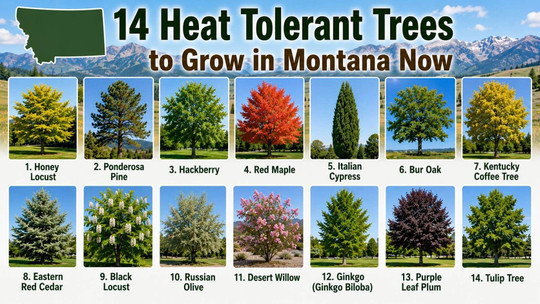
14 Heat Tolerant Trees to Grow in Montana Now
Montana is known for its cold winters, but many parts of the state also experience hot, dry summers that can be tough on trees. Whether you live in Billings, Bozeman, Missoula, Great Falls, or another part of Big Sky Country, choosing trees that can handle heat and occasional drought will help create a healthier, lower-maintenance landscape.
Here are 14 excellent heat-tolerant trees that perform well in Montana's challenging climate.
1. Honey Locust (Gleditsia triacanthos)
Honey Locust is one of the best shade trees for hot, dry locations. Its airy canopy allows filtered sunlight to reach lawns and gardens while providing welcome summer shade.
Why you'll love it:
- Extremely drought tolerant once established
- Fast-growing
- Adaptable to many soil types
- Beautiful golden fall foliage
2. Ponderosa Pine (Pinus ponderosa)
Native to much of the western United States, Ponderosa Pine is perfectly suited for Montana's dry climate.
Highlights:
- Evergreen year-round
- Highly drought tolerant
- Long-lived
- Excellent wind resistance
3. Hackberry (Celtis occidentalis)
Hackberry is one of the toughest shade trees available. It tolerates poor soils, heat, wind, and drought while providing excellent shade.
Benefits:
- Low maintenance
- Wildlife-friendly berries
- Strong urban performer
- Attractive rounded crown
4. Red Maple (Acer rubrum)
Although often associated with moist soils, Red Maple adapts surprisingly well when given occasional watering during dry periods.
Why plant it:
- Brilliant scarlet autumn color
- Fast growth
- Attractive shape
- Great lawn specimen
5. Italian Cypress (Cupressus sempervirens)
In Montana's warmer microclimates, Italian Cypress adds dramatic vertical interest to landscapes.
Features:
- Narrow growth habit
- Evergreen foliage
- Heat and drought tolerant
- Excellent accent tree
6. Bur Oak (Quercus macrocarpa)
Bur Oak is among the toughest native oaks in North America and thrives in Montana's hot summers and cold winters.
Advantages:
- Exceptional longevity
- Massive shade tree
- Highly drought resistant
- Supports wildlife
7. Kentucky Coffee Tree (Gymnocladus dioicus)
This unique tree handles difficult growing conditions remarkably well.
Reasons to plant:
- Heat tolerant
- Resistant to drought
- Large tropical-looking leaves
- Unique branching pattern during winter
8. Eastern Red Cedar (Juniperus virginiana)
Eastern Red Cedar is one of the most dependable evergreen trees for dry climates.
Benefits:
- Excellent windbreak
- Wildlife shelter
- Drought tolerant
- Attractive blue-green foliage
9. Black Locust (Robinia pseudoacacia)
Black Locust grows rapidly and thrives in poor soils where many other trees struggle.
Highlights:
- Fragrant white flowers
- Nitrogen-fixing roots improve soil
- Fast-growing
- Excellent drought resistance
10. Russian Olive (Elaeagnus angustifolia)
Russian Olive has long been valued for surviving extreme drought and poor soils.
Pros:
- Silvery foliage
- Fragrant flowers
- Extremely hardy
- Excellent wind tolerance
Note: Before planting, check local regulations, as Russian Olive is considered invasive in some areas.
11. Desert Willow (Chilopsis linearis)
Despite its name, Desert Willow isn't a true willow. It produces beautiful trumpet-shaped flowers throughout summer and thrives in hot, sunny conditions.
Why gardeners love it:
- Spectacular pink to lavender blooms
- Very drought tolerant
- Attracts hummingbirds and pollinators
- Low water requirements once established
12. Ginkgo (Ginkgo biloba)
Ginkgo is one of the oldest tree species on Earth and is remarkably resilient.
Features:
- Bright golden fall foliage
- Pest resistant
- Heat tolerant
- Long-lived and low maintenance
13. Purple Leaf Plum (Prunus cerasifera)
Purple Leaf Plum provides season-long color with its rich burgundy foliage and spring blossoms.
Best qualities:
- Beautiful pink flowers
- Colorful foliage
- Moderate drought tolerance
- Excellent ornamental tree
14. Tulip Tree (Liriodendron tulipifera)
With proper establishment and occasional deep watering during extended dry spells, Tulip Tree can perform well in favorable Montana locations.
Benefits:
- Fast-growing
- Large shade tree
- Unique tulip-shaped flowers
- Attractive yellow fall color
Tips for Growing Trees in Montana
To help your new trees thrive during Montana's hot summers:
- Water deeply once or twice a week during the first two growing seasons.
- Apply 2–4 inches of mulch around the base to conserve moisture and reduce weeds.
- Avoid planting during periods of extreme summer heat.
- Choose planting locations with well-drained soil.
- Water evergreen trees before winter to reduce moisture stress.
- Protect young trees from deer and rodent damage when necessary.
Final Thoughts
Montana's hot summers don't have to limit your landscaping choices. By selecting heat-tolerant trees like Honey Locust, Bur Oak, Ponderosa Pine, Eastern Red Cedar, and Ginkgo, you can enjoy beautiful shade, vibrant seasonal color, and resilient landscapes for decades to come.
With proper planting and care during their first few years, these hardy trees will reward you with lasting beauty while standing up to Montana's heat, drought, and challenging weather conditions.