
Posted by TJ Hopkins on Aug 25th 2026
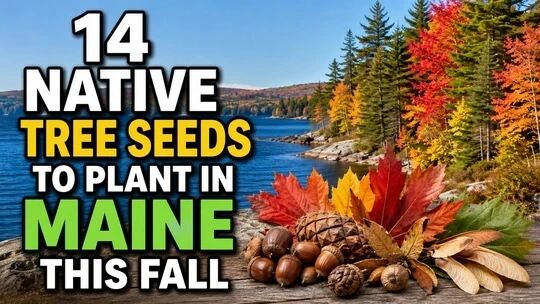
14 Native Tree Seeds to Plant in Maine This Fall
Fall is one of the best times to plant native tree seeds in Maine. As temperatures cool and leaves begin to drop, nature creates ideal conditions for many tree species to begin their journey from seed to seedling.
Many native Maine trees produce seeds that require a period of cold, moist conditions before they will germinate. This process, known as cold stratification, happens naturally when seeds are planted outdoors in fall and remain in the soil throughout winter.
Instead of trying to recreate winter conditions in a refrigerator, gardeners can often plant freshly collected or purchased seeds outdoors and allow Maine's winter weather to do the work.
Here are 14 native tree seeds worth planting in Maine this fall.
1. Sugar Maple
Sugar maple (Acer saccharum) is one of the most recognizable trees in New England. Famous for brilliant orange, yellow, and red fall foliage, it is also the tree responsible for much of the region's maple syrup production.
Sugar maple seeds mature in late summer and fall. They generally benefit from several months of cold, moist stratification, making fall planting an excellent option.
Plant the seeds approximately 1/4 to 1/2 inch deep in moist, well-drained soil. Choose a location with partial shade or morning sun, especially for young seedlings.
Once established, sugar maples can grow into impressive shade trees that may reach 60 to 80 feet tall.
2. Red Maple
Red maple (Acer rubrum) is another beautiful native maple commonly found throughout Maine. It tolerates a surprisingly wide range of growing conditions, from moist lowlands to relatively dry upland sites.
Unlike sugar maple, red maple seeds commonly mature during spring and early summer. However, properly stored seeds can be planted in fall.
Red maple grows relatively quickly and is valued for its attractive red flowers, reddish seeds, and colorful autumn foliage.
Plant it where the mature tree will have plenty of room to develop its broad canopy.
3. Red Oak
Northern red oak (Quercus rubra) is an excellent native tree for anyone interested in planting acorns.
Collect healthy acorns after they fall from mature trees. Avoid acorns with obvious holes, cracks, mold, or other damage.
Red oak acorns generally require cold stratification before germinating. Planting them in fall allows this process to happen naturally.
Plant acorns approximately 1 to 2 inches deep. Protect the planting area with hardware cloth or another barrier because squirrels, chipmunks, and other wildlife may quickly discover your acorns.
Northern red oak can eventually reach 60 to 75 feet or more and provides valuable food and habitat for wildlife.
4. White Oak
White oak (Quercus alba) is a magnificent native tree with exceptional wildlife value. Its acorns are eaten by deer, squirrels, turkeys, jays, and numerous other animals.
White oak differs from red oak because its acorns can begin germinating shortly after falling.
Fresh acorns should therefore be planted relatively quickly. Place them about 1 to 2 inches beneath the soil and keep the planting area protected from hungry wildlife.
White oaks grow slowly when young but can eventually become enormous, long-lived trees.
5. Eastern White Pine
Eastern white pine (Pinus strobus) is Maine's official state tree and one of the most important native conifers in the Northeast.
The seeds develop inside long, narrow cones and are released as the cones mature.
Eastern white pine seeds generally germinate better after exposure to cold, moist conditions. Fall sowing provides those conditions naturally.
Plant seeds shallowly, approximately 1/8 to 1/4 inch deep. Keep the soil consistently moist without allowing it to remain waterlogged.
White pines grow relatively quickly once established and can eventually exceed 80 feet in height.
6. Balsam Fir
Balsam fir (Abies balsamea) is strongly associated with the northern forests of Maine. Its fragrant evergreen foliage has also made it a favorite Christmas tree.
Seeds are released from upright cones during fall.
Balsam fir seeds benefit from cold stratification, so outdoor fall sowing can be an easy way to prepare them for spring germination.
Plant the seeds shallowly in a well-drained growing medium or prepared outdoor seedbed. Young seedlings generally appreciate some protection from intense sunlight.
Balsam fir performs especially well in Maine's cool climate.
7. Paper Birch
Few trees represent northern New England forests as beautifully as paper birch (Betula papyrifera).
Its striking white bark makes it easy to recognize, while its small winged seeds can be collected from mature seed structures.
Birch seeds are extremely small and should not be buried deeply. Scatter them over prepared soil and press them gently against the surface.
Keep the seedbed moist. Because the seeds are tiny, allowing the soil surface to completely dry can quickly reduce germination success.
Paper birch prefers sunny locations and is often among the first trees to colonize disturbed areas.
8. Yellow Birch
Yellow birch (Betula alleghaniensis) is another important native tree of Maine's forests.
Older trees develop distinctive bronze or yellowish bark that often peels into thin curls. The tree prefers cool, moist environments and is commonly associated with northern hardwood forests.
Its tiny seeds benefit from exposure to winter conditions.
For fall sowing, scatter seeds over moist soil and lightly press them into the surface rather than burying them deeply.
Choose an area where the seedbed can remain consistently moist during germination.
9. American Beech
American beech (Fagus grandifolia) is a beautiful native shade tree known for smooth gray bark and dense foliage.
Its triangular nuts, commonly called beechnuts, mature during fall and are an important food source for wildlife.
Beechnuts generally require cold, moist stratification before germinating.
Plant fresh nuts approximately 1/2 to 1 inch deep in fall. Protect them from rodents, which may otherwise remove your entire planting.
Beech trees grow best in fertile, well-drained soil and can eventually develop into large, impressive forest trees.
10. Black Cherry
Black cherry (Prunus serotina) is a native tree producing clusters of small dark fruits during late summer.
Birds and other wildlife eagerly consume the fruit, helping distribute the seeds throughout forests and fields.
The pits have a hard seed coat and typically benefit from an extended period of cold, moist stratification.
Fall planting is an easy way to provide this natural winter treatment. Remove remaining fruit pulp before planting and sow the pits approximately 1/2 to 1 inch deep.
Black cherry can grow quickly and may eventually reach 50 to 80 feet tall under favorable conditions.
11. American Basswood
American basswood (Tilia americana) is an attractive native tree with large heart-shaped leaves and fragrant flowers that attract pollinators.
Its small nutlike seeds have a reputation for being somewhat difficult to germinate because they can possess both hard seed coats and internal dormancy.
Natural outdoor planting exposes the seeds to changing temperatures throughout fall, winter, and spring.
Don't be discouraged if germination doesn't occur during the first spring. Some basswood seeds may require additional time before sprouting.
Once established, basswood makes an excellent large shade tree.
12. Eastern Hemlock
Eastern hemlock (Tsuga canadensis) is a graceful evergreen native to Maine and much of the northeastern United States.
Its small cones produce tiny winged seeds.
Hemlock seeds benefit from cold stratification and should be planted very shallowly because of their small size.
Young eastern hemlocks tolerate shade extremely well, making them particularly useful for woodland planting.
They prefer cool, moist, well-drained soil and may struggle in exposed locations that become excessively hot or dry.
13. Northern White Cedar
Northern white cedar (Thuja occidentalis), also commonly called arborvitae, naturally occurs in parts of Maine.
Its small cones contain lightweight seeds that can be collected as the cones mature.
Seeds typically benefit from cold, moist stratification before spring germination.
Plant them shallowly in moist, well-drained soil. Once established, northern white cedar provides year-round greenery and valuable shelter for wildlife.
It can also be used for natural screens and windbreaks where growing conditions are suitable.
14. Tamarack
Tamarack (Larix laricina) is one of Maine's most interesting native conifers because it loses its needles every fall.
During the growing season, its needles are soft and green. In autumn, they turn a brilliant golden yellow before dropping.
Seeds develop inside small cones and generally benefit from a period of cold stratification.
Plant tamarack seeds shallowly in moist soil. The species naturally grows in cool, wet environments, although cultivated trees can tolerate somewhat different conditions once established.
Tamarack is an excellent choice for gardeners looking for an unusual native tree with spectacular fall color.
Why Plant Tree Seeds in Fall?
Planting tree seeds in fall closely follows the natural reproductive cycle of many Maine trees.
Seeds fall from trees, settle beneath leaves and other organic material, and remain outdoors throughout winter. Cold temperatures and moisture gradually help break seed dormancy.
When temperatures rise in spring, seeds that have completed their dormancy requirements can begin germinating.
Fall planting also eliminates some of the work involved with refrigerator stratification. Instead of storing seeds in moist material for several months indoors, you're allowing the outdoor environment to provide the treatment naturally.
How to Protect Fall-Planted Tree Seeds
One of the biggest challenges with outdoor seed planting isn't winter—it's wildlife.
Squirrels, mice, chipmunks, birds, and other animals can quickly locate acorns, nuts, and larger tree seeds.
Covering planting areas with hardware cloth or wire mesh can help protect seeds while still allowing rain and snow to reach the soil. The protection should be removed or adjusted before seedlings become large enough to grow through it.
Label your planting locations as well. After several months of snow and winter weather, it can be surprisingly difficult to remember exactly where each species was planted.
Don't Expect Every Seed to Germinate
Tree seed germination is naturally variable.
Even under ideal conditions, some seeds will never sprout. Others may remain dormant longer than expected. Wildlife, fungal problems, excessive moisture, drought, and seed quality can all affect results.
Planting several seeds of each species increases your chances of producing healthy seedlings.
Once seedlings emerge, you can select the strongest plants and transplant or thin them as necessary.
Grow a Piece of Maine's Native Forest
Growing native Maine trees from seed requires patience, but watching a tiny seed develop into a tree can be incredibly rewarding.
Sugar maples can eventually provide spectacular fall color. Oaks can produce acorns for generations of wildlife. White pines can tower over the landscape, while tamaracks bring golden color to autumn wetlands and gardens.
By planting native tree seeds this fall, you're not simply growing seedlings for next spring. You're starting trees that could remain part of the Maine landscape for decades—or even centuries.