
Posted by TJ Hopkins on Sep 9th 2026
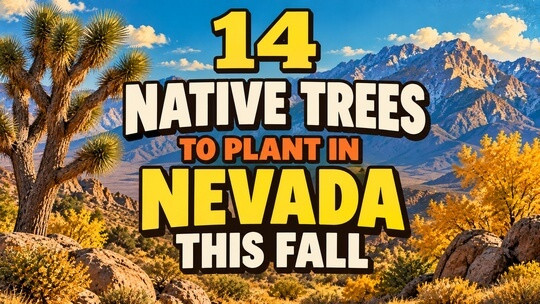
14 Native Trees to Plant in Nevada This Fall
Nevada may be known for its deserts, but the state supports a surprisingly diverse collection of native trees. From drought-tolerant pinyon pines and junipers to cottonwoods that flourish beside streams, Nevada’s native trees have adapted to demanding conditions.
Fall can be an excellent time to plant native trees because cooler temperatures reduce heat stress and allow roots to begin establishing before the next hot summer. It is also a natural time to sow the seeds of many native trees that require a period of winter cold before they can germinate.
Before planting, consider your elevation, winter temperatures, soil drainage and access to water. A tree native to Nevada’s mountains may not survive in the Mojave Desert, while a desert species may be damaged by the severe winters of northern Nevada.
1. Singleleaf Pinyon Pine
The singleleaf pinyon pine (Pinus monophylla) is one of Nevada’s two official state trees. It grows naturally throughout much of the Great Basin, frequently sharing open woodlands with Utah juniper.
This slow-growing evergreen usually develops a rounded crown and can eventually reach approximately 20 to 40 feet tall. Its blue-green needles occur individually rather than in bundles, giving the species its name. Mature trees also produce edible pine nuts that provide food for birds, mammals and people.
Singleleaf pinyon is an excellent option for dry, sunny landscapes with rocky or well-drained soil. Avoid planting it in locations that remain wet for extended periods.
2. Great Basin Bristlecone Pine
Great Basin bristlecone pine (Pinus longaeva) is Nevada’s other official state tree. It is famous for its extraordinary longevity and ability to survive on exposed, rocky mountainsides where few other trees can grow.
The tree has dark green needles arranged densely along its branches. It grows extremely slowly and may develop a twisted, weathered appearance as it ages.
Bristlecone pine is best suited to high-elevation locations with cold winters, intense sunlight and exceptionally well-drained soil. It is not a good choice for a heavily irrigated lawn or a hot, low-desert garden. Wild bristlecone trees and their seeds may be protected, so obtain seeds or nursery plants from a reputable legal source.
3. Ponderosa Pine
Ponderosa pine (Pinus ponderosa) is a tall, impressive conifer found in mountainous areas of Nevada. Mature specimens are recognizable by their long needles and orange-brown bark, which separates into broad plates.
This tree can grow 60 feet tall or considerably taller under favorable conditions. Its large size means it should be planted well away from buildings and overhead utility lines.
Choose a sunny location with deep, well-drained soil. Although established ponderosa pines tolerate periods of drought, young trees need consistent moisture while developing their root systems.
4. Jeffrey Pine
Jeffrey pine (Pinus jeffreyi) occurs naturally in the mountains of western Nevada, particularly near the Sierra Nevada. It resembles ponderosa pine but is well adapted to cold winters, dry summers and challenging mountain soils.
The Jeffrey pine’s large cones have inward-pointing prickles that feel less sharp than those of ponderosa pine. Mature bark may have a scent that people compare to vanilla or butterscotch.
Give this potentially large tree plenty of room. It prefers full sun, good air circulation and soil that drains freely.
5. Limber Pine
Limber pine (Pinus flexilis) is a resilient high-elevation evergreen named for its flexible young branches. It grows naturally on cold, windy slopes and rocky ridges.
The tree typically has a broad, irregular shape rather than the perfectly symmetrical form of many ornamental conifers. Its seeds are an important food source for birds and small mammals.
Limber pine is most appropriate for colder communities and elevated properties. Plant it in full sun and avoid compacted or waterlogged soil.
6. White Fir
White fir (Abies concolor) is native to mountain forests in parts of Nevada and the broader western United States. It is an attractive evergreen with soft, blue-green needles and a naturally pyramidal shape.
Under suitable conditions, white fir becomes a large tree. It performs best in cooler parts of the state where it receives adequate moisture without sitting in saturated soil.
Plant white fir where it will have room to mature. It may struggle in Nevada’s hottest valleys and low-desert communities.
7. Utah Juniper
Utah juniper (Juniperus osteosperma) is one of the most dependable native trees for Nevada’s dry interior. It commonly grows alongside singleleaf pinyon in open woodlands.
This evergreen has scale-like foliage, fibrous bark and berry-like cones. Its irregular shape adds a rugged Great Basin character to natural landscapes. Once established, Utah juniper requires little supplemental water.
Plant it in full sun and dry, well-drained soil. Keep it away from frequently irrigated lawns, where excessive moisture can cause problems.
8. Western Juniper
Western juniper (Juniperus occidentalis) is native to portions of western and northwestern Nevada. It is an exceptionally hardy evergreen capable of surviving cold winters, dry summers and poor soil.
Mature trees may develop thick trunks and broad crowns. Their blue, berry-like cones provide food for wildlife, while the dense branches offer shelter throughout the year.
Western juniper grows best in open sun with excellent drainage. Its mature size and wide-spreading roots should be considered before planting near structures.
9. Curlleaf Mountain Mahogany
Curlleaf mountain mahogany (Cercocarpus ledifolius) is a native evergreen shrub or small tree found at middle and upper elevations. It has narrow leaves with curled edges and produces seeds with long, twisting, featherlike tails.
This rugged species tolerates wind, drought and rocky soil. It is valuable for wildlife habitat and works well in naturalized landscapes where a full-sized shade tree would be too large.
Plant curlleaf mountain mahogany in full sun. Water it during establishment, but do not place it in an area receiving constant irrigation.
10. Quaking Aspen
Quaking aspen (Populus tremuloides) grows in Nevada’s cooler mountains, where it often forms beautiful groves. Its rounded leaves flutter in the slightest breeze and turn brilliant yellow during fall.
Aspens spread through underground roots and can produce numerous new stems. This creates an attractive grove but may be unsuitable for a small, carefully controlled yard.
Choose a cool location with dependable moisture and enough space for the tree to spread. Aspen is generally not suited to Nevada’s hot, dry lowlands.
11. Fremont Cottonwood
Fremont cottonwood (Populus fremontii) is a fast-growing deciduous tree associated with rivers, washes, springs and other riparian areas. It provides valuable shade and habitat in some of Nevada’s hottest regions.
This cottonwood can become very large and needs considerably more water than upland desert trees. Its vigorous roots may travel toward irrigation pipes, septic systems and other sources of moisture.
Fremont cottonwood is best planted on a spacious property with naturally moist soil. It should not be treated as a water-saving tree simply because it is native to the state.
12. Black Cottonwood
Black cottonwood (Populus trichocarpa) is native to moist areas in northern and western Nevada. It is a tall, rapidly growing tree with shiny leaves and deeply furrowed bark at maturity.
The species is useful for stream restoration, wildlife habitat and large rural properties. However, its size, spreading roots and need for moisture usually make it inappropriate for small residential yards.
Plant black cottonwood near a reliable water source while leaving plenty of distance from pavement, foundations and underground utilities.
13. Desert Willow
Desert willow (Chilopsis linearis) is a small flowering tree native to washes and desert areas of the Southwest, including southern Nevada. Despite its common name, it is not a true willow.
Its narrow leaves are accompanied by showy trumpet-shaped flowers that can attract hummingbirds and other pollinators. Once established, desert willow handles heat and drought remarkably well.
Plant it in full sun and fast-draining soil. This is a particularly attractive choice for Las Vegas and other warm southern Nevada communities, but it may suffer winter damage in the colder north.
14. Joshua Tree
Joshua tree (Yucca brevifolia) is an iconic Mojave Desert species native to southern Nevada. Although it looks unlike a conventional tree, it can develop a tall trunk with multiple twisting branches.
Joshua trees demand full sun, low humidity and extremely well-drained soil. They are highly drought tolerant after establishment but can be damaged by excessive watering. Their natural range is limited by elevation and winter temperature, making them unsuitable for much of northern Nevada.
Purchase a legally propagated plant or seeds. Never remove Joshua trees, seedlings or seeds from protected land.
Why Plant Native Nevada Trees in the Fall?
Fall planting gives many trees a chance to establish roots during cooler weather. Deciduous trees can direct energy toward their roots after their leaves drop, while evergreen trees may continue limited root growth whenever the soil is not frozen.
Fall weather also reduces evaporation, but newly planted trees still require attention. Dry Nevada soil may need supplemental water well into autumn and during snow-free winter periods.
Seeds from many cold-climate trees use winter moisture and low temperatures as a natural form of cold stratification. However, germination requirements vary considerably by species. Some seeds need cleaning, soaking, scarification or several months of controlled cold treatment.
Tips for Successful Fall Planting
Choose a tree that matches your part of Nevada rather than selecting one based only on appearance. Elevation, winter cold, summer heat and annual rainfall can change dramatically across the state.
Dig a planting hole that is wider than the root ball but no deeper. Position the root flare at or slightly above the surrounding soil level. Backfill with the original soil unless a soil test indicates that an amendment is necessary.
Apply mulch around the planting area to conserve moisture and moderate soil temperature. Keep the mulch several inches away from the trunk so moisture does not collect against the bark.
Water slowly and deeply after planting. Continue checking the soil until the ground freezes, remembering that drought-tolerant trees still require regular moisture while their roots become established.
Protect young trees from deer, rabbits and rodents when necessary. Use a properly sized tree guard or wire enclosure that does not rub against the trunk.
Choosing the Right Tree for Your Nevada Landscape
Northern Nevada gardeners should concentrate on cold-hardy species such as singleleaf pinyon, Utah juniper, limber pine and curlleaf mountain mahogany. Homeowners near mountain forests may also be able to grow ponderosa pine, Jeffrey pine, white fir or aspen.
Southern Nevada gardeners can consider desert willow and Joshua tree, along with carefully selected pinyons and junipers at suitable elevations. Cottonwoods are possibilities where space and dependable water are available.
Native does not automatically mean suitable for every property. Selecting a tree from the correct Nevada habitat is the most important step toward long-term success.
Plant a Piece of Nevada This Fall
Nevada’s native trees reflect the state’s remarkable variety of landscapes. Some endure the exposed slopes of the Great Basin, while others grow beside mountain streams or beneath the intense sun of the Mojave Desert.
By choosing a species suited to your elevation, climate and water supply, you can create a more resilient landscape that supports wildlife and celebrates Nevada’s natural heritage. Plant carefully this fall, provide dependable water during establishment and give your new tree enough space to grow for generations.