
Posted by TJ Hopkins on Aug 23rd 2026
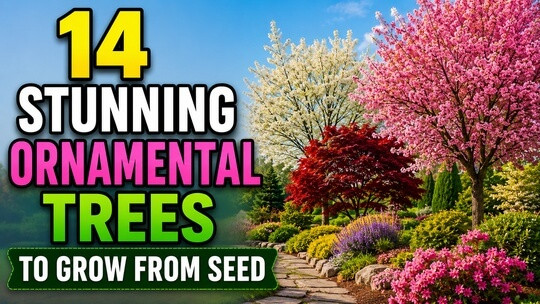
14 Stunning Ornamental Trees to Grow From Seed
Growing ornamental trees from seed is a rewarding way to add beauty, color, shade, and character to your landscape. While starting trees from seed requires more patience than purchasing established nursery plants, it gives you the opportunity to watch a tree develop from its earliest stages.
Ornamental trees can transform an ordinary yard with colorful flowers, brilliant fall foliage, unusual bark, graceful branches, or distinctive leaves. Many popular species can be successfully started from seed at home with the proper preparation.
Here are 14 stunning ornamental trees worth growing from seed.
1. Eastern Redbud
Eastern redbud (Cercis canadensis) is one of the most recognizable spring-flowering trees in North America. Before its leaves appear, the branches become covered with clusters of pink to purplish-pink flowers.
Redbuds generally grow about 20 to 30 feet tall, making them suitable for smaller landscapes. Their heart-shaped leaves provide additional interest throughout the growing season.
Redbud seeds have a hard outer coat and usually benefit from scarification followed by a period of cold stratification before planting.
Why grow it: Spectacular early spring flowers and a manageable mature size.
2. Flowering Dogwood
Flowering dogwood (Cornus florida) is prized for its beautiful spring display and attractive branching habit. Its showy white or pink bracts surround clusters of small flowers, while red fruits and colorful foliage provide additional interest later in the year.
Trees typically reach 15 to 30 feet tall and perform particularly well in locations with morning sun and some afternoon shade.
Seeds generally require cold, moist stratification before they are ready to germinate.
Why grow it: Multiple seasons of interest, including spring flowers, fall foliage, and colorful fruit.
3. Japanese Maple
Japanese maple (Acer palmatum) is famous for its graceful form and finely divided foliage. Depending on the individual seedling, leaves may develop shades of green, red, orange, yellow, or combinations of several colors.
Seed-grown Japanese maples will not necessarily look exactly like their parent tree. That unpredictability is part of the appeal—you may end up with a completely unique tree.
Seeds typically benefit from cold stratification before sowing.
Why grow it: Elegant foliage, beautiful fall color, and the possibility of producing a unique specimen.
4. Southern Magnolia
Southern magnolia (Magnolia grandiflora) creates a dramatic landscape specimen with its large evergreen leaves and enormous fragrant white flowers.
These trees can eventually become quite large, sometimes reaching 60 feet or more under favorable conditions. They are best suited to landscapes with plenty of room for long-term growth.
Fresh magnolia seeds generally germinate best after their fleshy outer coating has been removed and the seeds have received appropriate cold stratification.
Why grow it: Huge fragrant flowers and attractive evergreen foliage.
5. Crape Myrtle
Crape myrtle (Lagerstroemia indica) is known for producing abundant clusters of flowers during the heat of summer. Flower colors can include pink, purple, red, lavender, and white.
Another attractive characteristic is the bark. Mature plants often develop smooth, peeling bark that creates additional visual interest during winter.
Crape myrtle seeds can be started indoors and are relatively small, so they should not be planted too deeply.
Why grow it: Long-lasting summer flowers and beautiful ornamental bark.
6. Golden Rain Tree
Golden rain tree (Koelreuteria paniculata) produces large clusters of bright yellow flowers during summer. The flowers are followed by papery seed pods that resemble small lanterns.
Mature trees commonly reach around 25 to 40 feet tall and develop a broad, attractive crown.
The hard seeds often benefit from scarification and stratification to encourage successful germination.
Why grow it: Yellow summer flowers followed by unusual decorative seed pods.
7. Mimosa Tree
Mimosa (Albizia julibrissin) has an unmistakably tropical appearance. Its fern-like foliage is topped with fluffy pink flowers that create a striking display during summer.
The seeds have extremely hard coats and can remain dormant until conditions are suitable for germination. Scarification or hot-water treatment is commonly used before planting.
Keep in mind that mimosa can spread aggressively and is considered invasive in some parts of the United States. Check local recommendations before planting it outdoors.
Why grow it: Feathery foliage and unusual pink summer flowers.
8. Jacaranda
Jacaranda (Jacaranda mimosifolia) is famous for its spectacular clusters of lavender-blue to purple flowers. In warm climates, a mature jacaranda covered in blooms can become the centerpiece of an entire landscape.
The tree performs best in warm areas where severe freezes are uncommon. Gardeners in colder climates can grow young jacarandas in containers and protect them during winter.
Seeds are relatively straightforward to sow when fresh and provided with warmth and consistent moisture.
Why grow it: Incredible purple flowers and elegant fern-like foliage.
9. Royal Poinciana
Royal poinciana (Delonix regia) is one of the world's most dramatic flowering trees. Mature specimens can develop broad spreading crowns covered with brilliant orange-red or scarlet flowers.
This tropical tree requires warm conditions and is not suitable for year-round outdoor planting in cold climates.
Its hard-coated seeds generally benefit from scarification or soaking before sowing.
Why grow it: Spectacular tropical flowers and a wide, graceful canopy.
10. Saucer Magnolia
Saucer magnolia (Magnolia × soulangeana) produces enormous cup-shaped flowers in shades of white, pink, and purple. The flowers often appear before the foliage, making them especially noticeable in early spring.
The tree typically remains smaller than Southern magnolia and can work well as a specimen tree in residential landscapes.
Growing hybrid magnolias from seed can produce seedlings that vary from the parent plant, so flower color and other characteristics may be unpredictable.
Why grow it: Huge early spring flowers and an attractive landscape form.
11. American Yellowwood
American yellowwood (Cladrastis kentukea) is an underused native ornamental tree that deserves more attention. Mature specimens produce hanging clusters of fragrant white flowers that resemble wisteria blossoms.
Trees generally develop a rounded crown and can reach approximately 30 to 50 feet tall.
Yellowwood seeds have hard coats and commonly require scarification before germination.
Why grow it: Fragrant hanging flower clusters and an attractive shade-tree form.
12. Tulip Tree
Tulip tree (Liriodendron tulipifera), also called tulip poplar, is an impressive native tree with uniquely shaped leaves and tulip-like greenish-yellow flowers marked with orange.
This is a large, fast-growing tree capable of reaching impressive heights, so it should be planted where it has plenty of room to mature.
Seeds generally require a period of cold, moist stratification before planting.
Why grow it: Distinctive foliage, unusual flowers, fast growth, and impressive mature size.
13. Japanese Tree Lilac
Japanese tree lilac (Syringa reticulata) combines the beauty of lilacs with the form of a small ornamental tree. It produces large clusters of creamy-white flowers that can fill the surrounding area with fragrance.
Trees generally remain around 20 to 30 feet tall, making them a useful choice for smaller yards where a full-sized shade tree would become too large.
Seeds can benefit from a period of cold stratification before sowing.
Why grow it: Fragrant flowers and a compact ornamental-tree form.
14. Crabapple
Crabapple trees (Malus species and hybrids) are among the most colorful ornamental trees for spring landscapes. Depending on the tree, flower colors may range from white to pink and deep red.
Many crabapples also produce colorful fruits that remain on the branches into fall or winter and may attract birds.
Trees grown from seed can vary considerably from their parents, especially when the seed comes from a cultivated variety. This makes seed-grown crabapples particularly interesting for gardeners who enjoy experimentation.
Seeds generally require cold stratification before germination.
Why grow it: Heavy spring flowering, colorful fruit, wildlife value, and excellent seasonal interest.
Tips for Growing Ornamental Trees From Seed
Tree seeds shouldn't all be treated the same way. Some species germinate readily after planting, while others contain natural dormancy mechanisms that prevent immediate germination.
Before sowing a particular species, determine whether its seeds require cold stratification, warm stratification, scarification, soaking, or no pre-treatment at all.
Cold stratification usually involves keeping seeds in a slightly moist medium under refrigerated conditions for a specific period. Scarification involves weakening or opening a hard seed coat so moisture can reach the embryo.
Once seeds are ready for planting, use a clean, well-draining seed-starting medium and containers with adequate drainage. Keep the medium consistently moist but not waterlogged.
Young seedlings also need sufficient light. If they are started indoors, gradually acclimate them to outdoor sunlight, wind, and temperature fluctuations before permanently moving them outside.
Remember That Seed-Grown Trees Can Be Different
One of the most interesting aspects of growing ornamental trees from seed is genetic variation.
Seeds collected from cultivated ornamental trees don't necessarily produce exact copies of their parents. Flower color, foliage color, growth habit, mature size, and other characteristics may vary.
For gardeners who want an exact copy of a particular cultivar, vegetative propagation or a grafted tree is usually more appropriate. But if you enjoy experimenting and watching something unique develop, growing from seed can be much more exciting.
Be Patient With Your Trees
Growing ornamental trees from seed isn't an instant landscaping project. Some trees may grow quickly, while others need several years before developing their characteristic shape, colorful foliage, or first flowers.
That patience is also what makes the process rewarding. A tiny seedling can eventually become a flowering specimen, shade tree, or landscape centerpiece that remains in your yard for decades.
Whether you're attracted to the brilliant pink flowers of an Eastern redbud, the graceful foliage of a Japanese maple, the enormous blossoms of a magnolia, or the purple flowers of a jacaranda, there are plenty of beautiful ornamental trees you can start from seed.
Choose species appropriate for your climate and available growing space, follow the germination requirements for each tree, and give your seedlings time to develop. The result could be a collection of beautiful ornamental trees you grew entirely from seed.