
Posted by TJ Hopkins on Jul 21st 2026
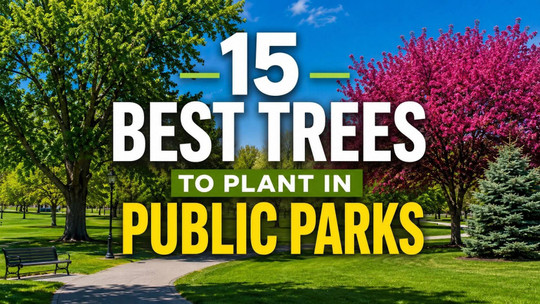
15 Best Trees to Plant in Public Parks
Public parks are some of the most cherished spaces in any community. They provide shade on hot summer days, colorful scenery throughout the seasons, cleaner air, and valuable habitat for birds and pollinators. Choosing the right trees for a public park is important because they must be attractive, durable, safe, and capable of thriving with minimal maintenance.
Whether you're designing a new city park or improving an existing green space, these 15 tree species offer beauty, longevity, and outstanding landscape value.
1. Red Maple (Acer rubrum)
Red Maple is one of the most dependable shade trees for parks. It grows quickly, adapts to many soil types, and produces brilliant red foliage in autumn that attracts visitors every year.
Why it's a great choice:
- Spectacular fall color
- Fast-growing
- Excellent shade tree
- Adaptable to wet or dry soils
- Supports native wildlife
2. Bur Oak (Quercus macrocarpa)
Bur Oak is a massive native tree known for its incredible lifespan and resistance to drought. Once established, it requires little maintenance and provides abundant shade.
Benefits:
- Extremely long-lived
- Excellent drought tolerance
- Strong limbs
- Valuable wildlife habitat
- Impressive park centerpiece
3. American Elm (Disease-Resistant Varieties)
Modern disease-resistant American Elm cultivars have restored one of America's favorite park trees. Their graceful vase-shaped canopy creates beautiful shaded walkways.
Highlights:
- Elegant arching canopy
- Excellent street and park tree
- Large cooling shade
- Strong urban tolerance
4. London Planetree (Platanus × acerifolia)
One of the toughest trees available, the London Planetree handles pollution, compacted soils, and heavy foot traffic with ease.
Ideal for:
- Urban parks
- Busy recreational areas
- Walking paths
- City landscapes
5. Kentucky Coffeetree (Gymnocladus dioicus)
This unique native tree has bold branching, large leaves, and exceptional drought tolerance. Its open canopy allows grass to grow beneath it.
Advantages:
- Low maintenance
- Pest resistant
- Handles poor soils
- Attractive winter appearance
6. Tulip Tree (Liriodendron tulipifera)
Tulip Trees are among the tallest native hardwoods in North America. Their tulip-shaped flowers appear in late spring, attracting bees and butterflies.
Features:
- Fast growth
- Beautiful flowers
- Tall shade canopy
- Excellent specimen tree
7. White Oak (Quercus alba)
White Oak is considered one of the finest shade trees in America. It develops a broad, majestic canopy that can live for centuries.
Benefits:
- Outstanding longevity
- Strong wood
- Wildlife favorite
- Excellent fall color
8. American Linden (Basswood) (Tilia americana)
Basswood trees produce fragrant flowers that pollinators absolutely love. Their dense canopy provides outstanding shade for picnic areas and playgrounds.
Best qualities:
- Sweet-smelling blooms
- Excellent shade
- Supports honey bees
- Attractive heart-shaped leaves
9. Bald Cypress (Taxodium distichum)
Despite its name, Bald Cypress grows well in both wet and moderately dry soils. Its feathery foliage turns rich orange in fall before dropping.
Perfect for:
- Pond edges
- Wet park areas
- Rain gardens
- Lakeside landscapes
10. Ginkgo (Ginkgo biloba) – Male Trees
Ginkgo trees are famous for their fan-shaped leaves and brilliant golden autumn display. Male cultivars are preferred since they don't produce messy fruit.
Advantages:
- Extremely pest resistant
- Pollution tolerant
- Long lifespan
- Gorgeous yellow foliage
11. Sugar Maple (Acer saccharum)
Sugar Maple provides one of the most breathtaking fall color displays of any North American tree. Its dense canopy also offers excellent summer shade.
Why plant it:
- Brilliant orange and red foliage
- Dense cooling shade
- Long-lived
- Beautiful symmetrical form
12. River Birch (Betula nigra)
River Birch is prized for its attractive peeling bark and adaptability to difficult growing conditions.
Strengths:
- Decorative bark
- Fast-growing
- Moisture tolerant
- Native species
- Great near streams and ponds
13. Serviceberry (Amelanchier spp.)
Serviceberries provide beauty in every season with spring flowers, edible berries, colorful fall foliage, and attractive bark.
Seasonal appeal:
- White spring blossoms
- Edible berries for birds
- Orange-red autumn leaves
- Compact size for smaller parks
14. Northern Red Oak (Quercus rubra)
Northern Red Oak combines rapid growth with impressive size and excellent wildlife value, making it one of the most popular park trees.
Benefits include:
- Fast for an oak
- Strong structure
- Excellent shade
- Produces acorns for wildlife
- Vibrant fall color
15. Flowering Crabapple (Malus spp.)
Modern disease-resistant flowering crabapples bring spectacular spring color while remaining compact enough for entrances, gardens, and gathering areas.
Features:
- Colorful spring blooms
- Attractive ornamental fruit
- Compact growth
- Excellent pollinator tree
- Beautiful year-round interest
Tips for Choosing Trees for Public Parks
Before planting, consider the specific needs of the park:
- Choose a mix of shade and ornamental trees.
- Plant diverse species to reduce disease risks.
- Select trees adapted to your local climate.
- Leave adequate space for mature growth.
- Avoid species with weak wood near playgrounds and walking paths.
- Incorporate native trees whenever possible to support local wildlife.
Final Thoughts
The best public parks combine beauty, comfort, and sustainability. By selecting hardy, long-lived tree species that provide shade, seasonal color, and ecological benefits, communities can create inviting outdoor spaces that people will enjoy for generations. A diverse collection of trees not only enhances the landscape but also improves air quality, supports wildlife, and helps make parks healthier, cooler, and more resilient.