
Posted by TJ Hopkins on Jul 8th 2026
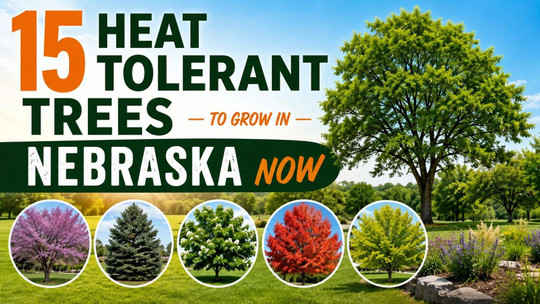
15 Heat-Tolerant Trees to Grow in Nebraska Now
Nebraska's hot summers, strong winds, and occasional droughts can make choosing the right tree a challenge. Fortunately, many tree species are well adapted to the state's climate and thrive even during long stretches of heat. Whether you're planting for shade, wildlife, privacy, or seasonal beauty, selecting heat-tolerant trees will give your landscape the best chance for long-term success.
Here are 15 excellent heat-tolerant trees that perform well across much of Nebraska.
1. Bur Oak (Quercus macrocarpa)
Bur Oak is one of Nebraska's toughest native trees. Its deep root system allows it to withstand drought, heat, and windy conditions while providing massive shade for generations.
Why you'll love it:
- Native to Nebraska
- Extremely drought tolerant
- Long-lived shade tree
- Excellent wildlife value
Growing Conditions
- USDA Zones: 3–8
- Mature Height: 70–90 feet
- Sun: Full sun
2. Kentucky Coffeetree (Gymnocladus dioicus)
With its bold branching pattern and attractive foliage, the Kentucky Coffeetree handles Nebraska's hot summers with ease.
Highlights
- Tolerates drought and urban conditions
- Few pest problems
- Unique winter appearance
- Low maintenance
Growing Conditions
- USDA Zones: 3–8
- Height: 60–75 feet
- Sun: Full sun
3. Hackberry (Celtis occidentalis)
Hackberry is one of the easiest shade trees to grow in the Great Plains. It thrives in poor soils, heat, and drought while providing food for birds.
Benefits
- Native tree
- Fast growing
- Highly adaptable
- Excellent wildlife tree
4. Honey Locust (Gleditsia triacanthos var. inermis)
Modern thornless Honey Locust varieties create light, filtered shade that allows grass to grow underneath.
Why plant it?
- Heat and drought tolerant
- Fine-textured foliage
- Fast growth
- Attractive golden fall color
5. Eastern Redbud (Cercis canadensis)
For stunning spring color, Eastern Redbud is hard to beat. Its vibrant pink blossoms appear before the leaves emerge.
Best Features
- Spectacular spring flowers
- Compact size
- Pollinator friendly
- Beautiful heart-shaped leaves
6. Northern Catalpa (Catalpa speciosa)
Known for its enormous leaves and orchid-like flowers, Northern Catalpa thrives in Nebraska's summer heat.
Advantages
- Fast growing
- Large shade canopy
- Beautiful white flowers
- Tolerates difficult soils
7. Chinkapin Oak (Quercus muehlenbergii)
This attractive oak grows well in hot, dry locations while producing sweet acorns loved by wildlife.
Growing Highlights
- Excellent drought resistance
- Strong branching
- Attractive bark
- Outstanding wildlife tree
8. American Linden (Tilia americana)
American Linden offers dense shade and fragrant summer flowers that attract bees and butterflies.
Why Grow It
- Excellent shade tree
- Pollinator favorite
- Attractive heart-shaped leaves
- Reliable performer
9. Ginkgo (Ginkgo biloba)
Ginkgo is one of the oldest tree species on Earth and performs exceptionally well in hot urban environments.
Benefits
- Extremely pest resistant
- Brilliant yellow fall color
- Long-lived
- Heat and pollution tolerant
10. Autumn Blaze Maple (Acer × freemanii)
This popular maple combines rapid growth with brilliant scarlet fall foliage.
Highlights
- Fast-growing shade tree
- Outstanding fall color
- Adaptable to many soils
- Good heat tolerance
11. Ohio Buckeye (Aesculus glabra)
Ohio Buckeye provides attractive foliage, spring flowers, and good drought resistance once established.
Best Features
- Native to the Midwest
- Interesting seed pods
- Moderate shade
- Wildlife value
12. Ponderosa Pine (Pinus ponderosa)
This evergreen is well suited to western Nebraska's dry climate and remains attractive throughout the year.
Advantages
- Excellent drought tolerance
- Evergreen privacy
- Wind resistant
- Long lifespan
13. Eastern Red Cedar (Juniperus virginiana)
A true Nebraska native, Eastern Red Cedar is one of the toughest evergreens available.
Why it's popular
- Excellent windbreak tree
- Drought tolerant
- Wildlife shelter
- Minimal maintenance
14. White Oak (Quercus alba)
White Oak develops into a magnificent shade tree capable of thriving through Nebraska's hot summers.
Benefits
- Long-lived
- Strong branches
- Beautiful fall color
- Excellent wildlife habitat
15. Shumard Oak (Quercus shumardii)
Shumard Oak combines rapid growth with excellent heat tolerance and brilliant red fall foliage.
Highlights
- Large shade tree
- Excellent drought resistance
- Spectacular autumn color
- Adaptable to many soils
Tips for Growing Trees Successfully in Nebraska
Even heat-tolerant trees benefit from proper planting and care.
- Plant during spring or fall whenever possible.
- Water deeply during the first two growing seasons.
- Apply 2–4 inches of mulch around the base while keeping it away from the trunk.
- Choose locations with full sun for most species.
- Avoid overwatering established drought-tolerant trees.
- Prune during dormancy to encourage strong branch structure.
Final Thoughts
Nebraska's climate doesn't have to limit your landscaping choices. By selecting trees that naturally tolerate heat, drought, and wind, you'll enjoy healthier trees with less maintenance for decades to come. Whether you're looking for a massive shade tree like Bur Oak, a colorful ornamental such as Eastern Redbud, or an evergreen windbreak like Eastern Red Cedar, these 15 trees are excellent choices for landscapes across the Cornhusker State.