
Posted by TJ Hopkins on Aug 9th 2026
15 Native Trees to Grow in Colorado This Fall
Fall can be an excellent time to plant trees in Colorado. Cooler temperatures reduce stress on newly planted trees, while the soil often remains warm enough for roots to establish before winter. Choosing trees native to Colorado can make the process even easier because these species are naturally adapted to the state's climate, elevation, soils, and seasonal temperature swings.
Colorado's landscapes vary dramatically, from dry plains and foothills to high mountain forests. That means the best native tree for your property depends on elevation, available moisture, soil conditions, sunlight, and how much room the mature tree will have.
Here are 15 native Colorado trees to consider planting this fall.
1. Quaking Aspen
Botanical Name: Populus tremuloides
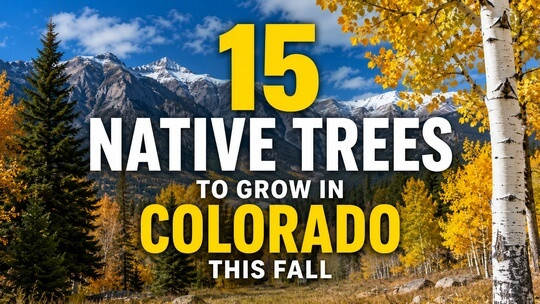
Quaking aspen is one of Colorado's most recognizable native trees. Its rounded leaves flutter in even a light breeze, and in autumn they turn brilliant shades of golden yellow.
Aspens grow relatively quickly and perform best in sunny locations with adequate moisture. Keep in mind that they naturally spread through underground root suckers and may eventually form a grove.
USDA Zones: 1–7
Height: 20–50 feet
Sun: Full sun
Best Feature: Spectacular golden fall foliage
2. Colorado Blue Spruce
Botanical Name: Picea pungens
Colorado's state tree is an obvious choice for a native landscape. Colorado blue spruce develops a classic pyramidal shape and attractive blue-green to silvery-blue needles.
It can become a substantial tree, so give it plenty of room. It generally performs best in well-drained soil with consistent moisture rather than extremely hot, dry sites.
USDA Zones: 2–7
Height: 30–60+ feet
Sun: Full sun
Best Feature: Striking blue-green evergreen foliage
3. Ponderosa Pine
Botanical Name: Pinus ponderosa
Ponderosa pine is a magnificent native evergreen found throughout many of Colorado's foothills and mountain regions. Mature specimens develop distinctive orange-brown, plated bark.
Once established, ponderosa pine is relatively drought tolerant and can be an excellent choice for larger properties and naturalized landscapes.
USDA Zones: 3–7
Height: 50–100+ feet
Sun: Full sun
Best Feature: Drought tolerance and impressive mature form
4. Douglas Fir
Botanical Name: Pseudotsuga menziesii
Douglas fir is a tall native conifer that grows naturally in many Colorado mountain forests. It develops a beautiful pyramidal shape when young and can eventually become an impressive landscape specimen.
Choose a site with good drainage and enough space for its eventual size.
USDA Zones: 4–6
Height: 40–80+ feet in landscapes
Sun: Full sun to partial shade
Best Feature: Tall, attractive evergreen form
5. Rocky Mountain Juniper
Botanical Name: Juniperus scopulorum
For homeowners dealing with dry conditions, Rocky Mountain juniper deserves consideration. This tough native evergreen tolerates drought and many challenging sites once established.
Its dense evergreen foliage also provides valuable cover for birds and other wildlife.
USDA Zones: 3–7
Height: 20–40 feet
Sun: Full sun
Best Feature: Excellent drought tolerance
6. Limber Pine
Botanical Name: Pinus flexilis
Limber pine is a slow-growing native evergreen adapted to some remarkably harsh environments. Its flexible branches help explain its common name.
It's an interesting option for homeowners looking for a rugged, long-lived native conifer.
USDA Zones: 4–7
Height: 20–50 feet
Sun: Full sun
Best Feature: Excellent cold and wind tolerance
7. Bristlecone Pine
Botanical Name: Pinus aristata
Colorado's native Rocky Mountain bristlecone pine is famous for its longevity and ability to survive difficult mountain conditions.
Its irregular growth habit and dense needles can give it a sculptural appearance. Because it grows slowly, it's especially useful where a massive, fast-growing tree isn't desirable.
USDA Zones: 4–7
Height: 15–40 feet
Sun: Full sun
Best Feature: Extraordinary longevity
8. Narrowleaf Cottonwood
Botanical Name: Populus angustifolia
Narrowleaf cottonwood is commonly associated with streams, rivers, and other moist locations in Colorado.
It grows quickly and can become a substantial shade tree. Because of its moisture requirements and eventual size, it's most appropriate for larger properties with sufficient water.
USDA Zones: 3–7
Height: 40–70 feet
Sun: Full sun
Best Feature: Fast growth and excellent shade
9. Plains Cottonwood
Botanical Name: Populus deltoides subsp. monilifera
Plains cottonwood is an iconic tree of Colorado's eastern plains and riparian corridors. These large trees provide valuable shade and wildlife habitat.
This is not a small-yard tree. Its eventual height, broad canopy, extensive roots, and moisture needs should all be considered before planting.
USDA Zones: 3–9
Height: 50–80+ feet
Sun: Full sun
Best Feature: Large spreading shade canopy
10. Boxelder
Botanical Name: Acer negundo
Boxelder is a native maple that can tolerate a surprisingly broad range of growing conditions. It grows quickly and can provide shade relatively fast.
The species can develop an irregular form and may produce abundant seedlings, so it works especially well in naturalized areas where a perfectly formal appearance isn't necessary.
USDA Zones: 2–9
Height: 30–50 feet
Sun: Full sun to partial shade
Best Feature: Adaptability and fast growth
11. Gambel Oak
Botanical Name: Quercus gambelii
Gambel oak is a native Colorado oak that may grow as a small tree or a large, spreading shrub depending on conditions.
It produces acorns that provide food for wildlife and develops attractive autumn foliage. It also spreads by root sprouts, making it especially suitable for naturalized landscapes and wildlife plantings.
USDA Zones: 4–8
Height: 10–30 feet
Sun: Full sun
Best Feature: Wildlife value and fall color
12. Thinleaf Alder
Botanical Name: Alnus incana subsp. tenuifolia
Thinleaf alder naturally occurs along streams and other moist locations throughout the Rocky Mountain region.
It's an especially useful native species for wetter properties, restoration projects, streamside plantings, and wildlife habitat.
USDA Zones: 2–7
Height: 15–30 feet
Sun: Full sun to partial shade
Best Feature: Excellent choice for moist sites
13. Peachleaf Willow
Botanical Name: Salix amygdaloides
Peachleaf willow is a native deciduous tree typically found near rivers, streams, ponds, and other locations where moisture is readily available.
Its relatively fast growth makes it useful for establishing shade and natural habitat around suitable wet areas.
USDA Zones: 2–8
Height: 30–50 feet
Sun: Full sun
Best Feature: Fast growth in moist locations
14. Subalpine Fir
Botanical Name: Abies lasiocarpa
Subalpine fir is a beautiful narrow evergreen native to Colorado's higher elevations. It naturally grows in cool mountain environments and has a slender, spire-like shape.
Gardeners at appropriate elevations may find it an attractive native alternative to more commonly planted ornamental evergreens.
USDA Zones: 2–6
Height: 30–60+ feet
Sun: Full sun to partial shade
Best Feature: Beautiful narrow evergreen form
15. Engelmann Spruce
Botanical Name: Picea engelmannii
Engelmann spruce is another classic tree of Colorado's high-elevation forests. It prefers cooler environments and adequate moisture, making it much better suited to mountain properties than hot, dry urban sites along the plains.
Given the right conditions, it develops into an impressive evergreen specimen.
USDA Zones: 2–5
Height: 50–80+ feet
Sun: Full sun to partial shade
Best Feature: Excellent native evergreen for cool mountain climates
Why Plant Native Colorado Trees?
Native trees have spent thousands of years adapting to regional environmental conditions. When planted in an appropriate location, they can provide several advantages.
They can support native birds, insects and other wildlife while creating a landscape that feels naturally connected to Colorado. Many native species are also well adapted to cold winters, intense sunlight, variable precipitation and challenging soils.
However, native does not automatically mean drought tolerant. Cottonwoods, willows and alders, for example, naturally grow where considerably more moisture is available.
Matching the tree to the site is more important than simply choosing a species because it is native.
Tips for Planting Trees in Colorado This Fall
Fall planting should give a tree enough time to begin establishing roots before the ground freezes. Earlier fall planting is generally preferable to waiting until winter is approaching.
Dig the planting hole approximately as deep as the root ball but substantially wider. Avoid planting the tree too deeply—the root flare should remain near the soil surface.
Water thoroughly after planting and continue monitoring soil moisture until the ground freezes. Even drought-tolerant native trees require regular water while establishing.
Apply a layer of mulch around the root zone to conserve moisture and moderate soil temperatures, but keep mulch several inches away from the trunk.
Newly planted evergreens can be especially vulnerable to winter drying, so adequate fall watering is important.
Choosing the Right Tree for Your Colorado Property
Before choosing one of these trees, consider your elevation, USDA hardiness zone, soil drainage, available irrigation, sunlight and mature planting space.
A tree that thrives beside a mountain stream may struggle in a dry Front Range yard, while a drought-tolerant ponderosa pine or Rocky Mountain juniper may be much better suited to that location.
Colorado's dramatic changes in elevation also mean that planting conditions can differ considerably over relatively short distances. When in doubt, choose species that naturally occur under conditions similar to those on your property.
Final Thoughts
From the brilliant golden foliage of quaking aspen to the blue-green needles of Colorado blue spruce, Colorado offers an impressive selection of native trees.
Planting native species such as ponderosa pine, Gambel oak, Rocky Mountain juniper, limber pine and Douglas fir can create a beautiful landscape while providing valuable habitat for local wildlife.
Choose the right species for your particular elevation and moisture conditions, plant it correctly, and give it consistent water during establishment. A tree planted this fall could become part of your Colorado landscape for decades—or even generations—to come.