
Posted by TJ Hopkins on Jun 22nd 2026
15 Trees That Thrive in Poor Soil Conditions
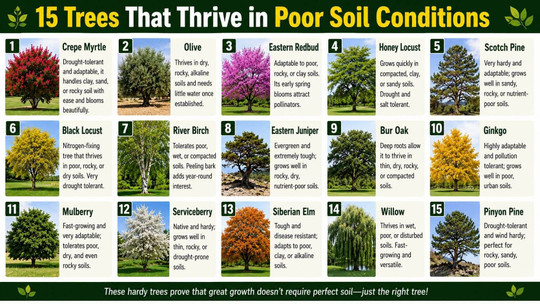
Not every landscape has rich, fertile soil, but that doesn’t mean you can’t grow beautiful and healthy trees. Many species have adapted to survive in sandy, rocky, clay, compacted, or nutrient-poor soils. These hardy trees can tolerate drought, poor drainage, and difficult growing conditions while still providing shade, flowers, wildlife habitat, and year-round beauty.
Here are 15 trees that thrive in poor soil conditions.
1. Crepe Myrtle
Crepe myrtle is one of the best flowering trees for difficult locations. It tolerates clay, sandy, and rocky soils while producing vibrant summer blooms in shades of red, pink, purple, and white. Once established, it is highly drought tolerant and requires minimal maintenance.
Growing Conditions:
- Full sun
- Well-drained soil
- USDA Zones 6–9
2. Olive Tree
Olive trees excel in dry, rocky, alkaline soils where many other trees struggle. Their silvery foliage and drought tolerance make them ideal for Mediterranean-style landscapes. Established trees need very little supplemental watering.
Growing Conditions:
- Full sun
- Excellent drainage
- USDA Zones 8–10
3. Eastern Redbud
Eastern redbud brightens spring landscapes with masses of pink blossoms before the leaves emerge. It adapts well to rocky, clay, and poor soils while providing early nectar for pollinators.
Growing Conditions:
- Full sun to partial shade
- Adaptable soils
- USDA Zones 4–9
4. Honey Locust
Honey locust is an extremely adaptable shade tree that tolerates compacted, clay, sandy, and urban soils. Its open canopy creates filtered shade, making it an excellent lawn tree.
Growing Conditions:
- Full sun
- Tolerates poor drainage and drought
- USDA Zones 3–8
5. Scotch Pine
Scotch pine thrives in sandy, rocky, and nutrient-poor soils. This evergreen is highly adaptable and performs well in windy locations and challenging growing conditions.
Growing Conditions:
- Full sun
- Well-drained soil
- USDA Zones 2–7
6. Black Locust
Black locust improves soil quality by fixing nitrogen, making it beneficial in degraded areas. It tolerates drought, poor soil, and rocky sites while producing fragrant white flowers.
Growing Conditions:
- Full sun
- Dry to moderately moist soils
- USDA Zones 4–8
7. River Birch
River birch tolerates compacted and poor soils better than many other birch species. Its attractive peeling bark provides year-round interest, making it a favorite landscape tree.
Growing Conditions:
- Full sun to partial shade
- Moist or poorly drained soils
- USDA Zones 4–9
8. Eastern Juniper
Eastern juniper is one of the toughest native evergreens. It thrives in rocky, dry, and nutrient-poor soils while providing excellent wildlife habitat and year-round color.
Growing Conditions:
- Full sun
- Dry, rocky soils
- USDA Zones 2–9
9. Bur Oak
Bur oak develops a deep root system that allows it to survive in thin, rocky, compacted, or drought-prone soils. It is a long-lived shade tree that provides valuable wildlife habitat.
Growing Conditions:
- Full sun
- Adaptable soil conditions
- USDA Zones 3–8
10. Ginkgo
Ginkgo is one of the most adaptable urban trees available. It tolerates poor soils, air pollution, road salt, and compacted ground while producing brilliant golden fall foliage.
Growing Conditions:
- Full sun
- Nearly any soil type
- USDA Zones 4–9
11. Mulberry
Mulberry trees grow rapidly and tolerate dry, rocky, and poor soils. Many varieties produce edible fruit while providing shade and attracting wildlife.
Growing Conditions:
- Full sun
- Adaptable to most soils
- USDA Zones 4–9
12. Serviceberry
Serviceberry is a native tree that performs well in thin, rocky soils and drought-prone sites. It offers beautiful spring flowers, edible berries, and outstanding fall color.
Growing Conditions:
- Full sun to partial shade
- Well-drained soils
- USDA Zones 4–9
13. Siberian Elm
Siberian elm is exceptionally hardy and tolerates clay, alkaline, and poor soils. Its rapid growth and toughness make it suitable for difficult sites.
Growing Conditions:
- Full sun
- Dry or poor soils
- USDA Zones 3–9
14. Willow
Many willow species thrive in wet, disturbed, or poor soils where other trees fail. Their fast growth and graceful appearance make them excellent choices near ponds and low areas.
Growing Conditions:
- Full sun
- Moist soils
- USDA Zones 4–9
15. Pinyon Pine
Pinyon pine is perfectly adapted to rocky, sandy, and dry soils. This drought-tolerant evergreen withstands harsh conditions and produces edible pine nuts.
Growing Conditions:
- Full sun
- Dry, well-drained soils
- USDA Zones 4–8
Final Thoughts
Poor soil doesn't have to limit your landscape options. These hardy trees have evolved to thrive in challenging conditions, whether your soil is rocky, sandy, compacted, or low in nutrients. By choosing trees suited to your site, you can enjoy beautiful flowers, shade, wildlife habitat, and year-round interest without the need for extensive soil amendments.
With the right tree, even the poorest soil can support a thriving landscape.