
Posted by TJ Hopkins on Aug 27th 2026
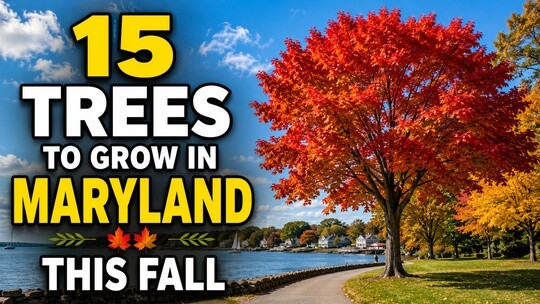
15 Trees to Grow in Maryland This Fall
Fall is one of the best times to plant trees in Maryland. Cooler temperatures, increased rainfall, and warm soil give newly planted trees an opportunity to establish strong root systems before winter arrives. When spring returns, the trees are already in place and ready to put their energy into new growth.
Maryland’s climate supports an impressive variety of native and well-adapted trees. From towering shade trees to colorful flowering species, there are plenty of options for homeowners looking to add beauty, wildlife habitat, privacy, or fall color to their property.
Here are 15 trees to grow in Maryland this fall.
1. Red Maple
Red Maple (Acer rubrum) is one of the most recognizable native trees in Maryland. It is especially prized for its brilliant fall foliage, which can range from yellow and orange to deep scarlet red.
Red Maples are adaptable and can tolerate many different soil conditions. They grow relatively quickly and can eventually become excellent shade trees.
USDA Zones: 3–9
Sun: Full sun to partial shade
Mature Height: 40–70 feet
Best Feature: Brilliant red fall foliage
2. White Oak
White Oak (Quercus alba) is a magnificent native tree that can live for hundreds of years. Mature trees develop broad, spreading crowns that provide substantial shade.
White Oaks are also extremely valuable to wildlife. Their acorns provide food for deer, squirrels, turkeys, and many other animals, while the trees themselves support numerous insects and birds.
USDA Zones: 3–9
Sun: Full sun
Mature Height: 50–80 feet
Best Feature: Long-lived native shade and wildlife tree
3. Eastern Redbud
Eastern Redbud (Cercis canadensis) brings spectacular color to the landscape in early spring. Before its leaves emerge, its branches become covered with clusters of pink to purple flowers.
Its relatively small size makes Redbud an excellent choice for yards where a massive shade tree would be too large.
USDA Zones: 4–9
Sun: Full sun to partial shade
Mature Height: 20–30 feet
Best Feature: Beautiful early-spring flowers
4. American Sycamore
American Sycamore (Platanus occidentalis) is a fast-growing native tree that can reach impressive proportions. One of its most distinctive characteristics is its mottled bark, which peels away to reveal patches of cream, tan, and green.
Because of its eventual size, this tree is best suited to large properties where it has plenty of room to grow.
USDA Zones: 4–9
Sun: Full sun
Mature Height: 75–100+ feet
Best Feature: Massive size and distinctive bark
5. Black Gum
Black Gum (Nyssa sylvatica), also known as Black Tupelo, is an outstanding choice for Maryland landscapes. Its glossy green summer leaves transform into spectacular shades of red, orange, purple, and scarlet during fall.
The small fruits are also valuable food for birds and other wildlife.
USDA Zones: 3–9
Sun: Full sun to partial shade
Mature Height: 30–50 feet
Best Feature: Exceptional fall color
6. Tulip Poplar
Tulip Poplar (Liriodendron tulipifera) is Maryland’s state tree and one of the tallest native hardwood trees in eastern North America.
The tree produces uniquely shaped leaves and attractive yellow-green flowers with orange markings in spring. It grows quickly when planted in a suitable location with adequate moisture.
USDA Zones: 4–9
Sun: Full sun
Mature Height: 70–100+ feet
Best Feature: Fast-growing, majestic native tree
7. Flowering Dogwood
Flowering Dogwood (Cornus florida) is a classic understory tree native to Maryland. Its beautiful spring display consists of white or pink bracts surrounding small flowers.
Later in the year, red fruits attract birds, while the foliage often develops rich red and burgundy shades during fall.
USDA Zones: 5–9
Sun: Partial shade to full sun
Mature Height: 15–30 feet
Best Feature: Spring flowers and attractive fall foliage
8. River Birch
River Birch (Betula nigra) is an excellent choice for areas with moist soil. It is frequently planted near streams, ponds, drainage areas, and other locations where soil moisture may be higher.
Its peeling bark provides year-round visual interest and becomes especially attractive as the tree matures.
USDA Zones: 4–9
Sun: Full sun to partial shade
Mature Height: 40–70 feet
Best Feature: Attractive peeling bark
9. American Holly
American Holly (Ilex opaca) is a native evergreen tree that provides year-round greenery. Female trees can produce bright red berries when an appropriate male pollinator is nearby.
Its dense evergreen foliage also provides valuable shelter and nesting habitat for birds.
USDA Zones: 5–9
Sun: Full sun to partial shade
Mature Height: 15–50 feet
Best Feature: Evergreen foliage and red berries
10. Sweetgum
Sweetgum (Liquidambar styraciflua) is known for its star-shaped leaves and colorful autumn display. Individual trees may develop combinations of yellow, orange, red, burgundy, and purple foliage.
Keep in mind that mature Sweetgum trees produce distinctive spiny seed balls, so placement away from heavily traveled sidewalks and play areas may be preferable.
USDA Zones: 5–9
Sun: Full sun
Mature Height: 60–80 feet
Best Feature: Multicolored fall foliage
11. Eastern White Pine
Eastern White Pine (Pinus strobus) is a fast-growing evergreen that can provide privacy, wind protection, and year-round color.
Its long, soft needles grow in bundles of five. Because the tree can become very large, it should be planted where it has adequate space to develop naturally.
USDA Zones: 3–8
Sun: Full sun to partial shade
Mature Height: 50–80+ feet
Best Feature: Fast-growing evergreen screen
12. Shagbark Hickory
Shagbark Hickory (Carya ovata) is a distinctive native tree named for the long strips of bark that separate from the trunk as the tree matures.
The tree produces edible hickory nuts that are enjoyed by both people and wildlife. Its leaves typically turn an attractive golden yellow during autumn.
USDA Zones: 4–8
Sun: Full sun to partial shade
Mature Height: 60–80 feet
Best Feature: Unique bark and edible nuts
13. Serviceberry
Serviceberry (Amelanchier spp.) is an excellent smaller tree for Maryland gardens. White flowers appear in early spring, followed by edible berry-like fruits that are popular with birds.
Its foliage can also provide attractive orange and red coloring in fall.
USDA Zones: 4–9, depending on species
Sun: Full sun to partial shade
Mature Height: 15–30 feet
Best Feature: Flowers, edible fruit, and fall color
14. Northern Red Oak
Northern Red Oak (Quercus rubra) is a large native shade tree with relatively fast growth compared with many other oaks. Its broad canopy makes it an excellent choice for larger residential landscapes.
The tree produces acorns that provide an important food source for wildlife.
USDA Zones: 4–8
Sun: Full sun
Mature Height: 60–75 feet
Best Feature: Large canopy and wildlife value
15. Bald Cypress
Bald Cypress (Taxodium distichum) is unusual because it is a deciduous conifer. Although it looks like an evergreen during summer, its soft needles turn coppery orange or reddish brown before dropping in fall.
It is famous for tolerating wet conditions but can also grow successfully in ordinary landscape soils once established.
USDA Zones: 4–9
Sun: Full sun
Mature Height: 50–70 feet
Best Feature: Wet-soil tolerance and beautiful fall color
Why Plant Trees in Maryland During Fall?
Fall planting offers several advantages. Air temperatures are cooler, which reduces stress on newly planted trees, while the soil often remains warm enough for continued root development.
Fall also typically brings more favorable moisture conditions than the hottest part of summer. With less energy needed to support new leaves and shoots, a newly planted tree can concentrate on establishing its root system.
Trees planted in fall may therefore have a valuable head start when spring growth begins.
Tips for Fall Tree Planting
Choose a planting location based on the tree’s mature size, rather than its size when young. Consider overhead power lines, buildings, sidewalks, driveways, septic systems, and nearby trees before planting.
Dig the planting hole approximately two to three times wider than the root ball but avoid planting the tree too deeply. The root flare—the point where the trunk begins widening into the major roots—should remain near the soil surface.
Water thoroughly after planting and continue monitoring soil moisture until the ground freezes. A layer of mulch around the tree can help conserve moisture and moderate soil temperatures, but avoid piling mulch directly against the trunk.
Young trees may require supplemental watering during dry periods for their first several growing seasons.
Choosing the Right Tree for Your Maryland Property
The best tree depends on what you want to accomplish.
For spectacular fall color, consider Red Maple, Black Gum, Sweetgum, or Bald Cypress. For a large shade tree, White Oak, Northern Red Oak, Tulip Poplar, or American Sycamore can be excellent choices.
If you have limited space, Eastern Redbud, Flowering Dogwood, or Serviceberry may be better suited to your landscape. For year-round greenery and privacy, American Holly and Eastern White Pine are strong candidates.
Also consider your property's soil drainage, available sunlight, moisture levels, and the tree's mature height and spread before making your final selection.
Start Growing Trees This Fall
Planting a tree is an investment that can continue providing benefits for decades. Trees can add shade, privacy, seasonal color, wildlife habitat, and natural beauty while transforming the appearance of a property as they mature.
Maryland's fall weather provides an excellent opportunity to establish many tree species before winter. Whether you choose a towering White Oak, colorful Red Maple, flowering Eastern Redbud, or evergreen American Holly, getting your tree established in fall can help prepare it for vigorous growth the following spring.