
Posted by TJ Hopkins on Aug 23rd 2026
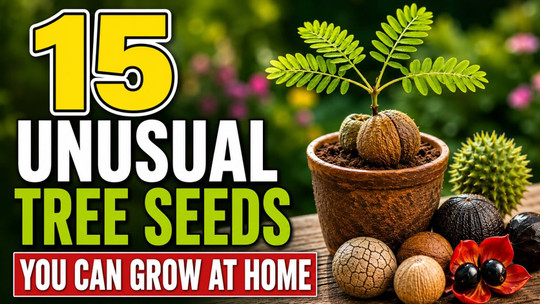
15 Unusual Tree Seeds You Can Grow at Home
Growing a tree from seed is already a rewarding experience, but it becomes even more interesting when the seed itself is unusual. Some tree seeds are enormous, brightly colored, strangely shaped, or capable of producing trees that look like they belong in another world.
Whether you enjoy experimenting with rare plants, collecting unusual seeds, or simply want something different for your home or garden, there are plenty of fascinating trees worth trying. Keep in mind that many tropical species need warm temperatures and may need to be grown indoors during winter in colder climates.
Here are 15 unusual tree seeds you can grow at home.
1. Baobab Tree
The baobab is one of the most recognizable trees in the world. Mature trees develop massive swollen trunks that can store large quantities of water, while their relatively sparse branches create a distinctive silhouette.
Baobab seeds have extremely hard seed coats, so germination can take some patience. Scarifying or soaking the seeds before planting can help moisture penetrate the shell.
Young baobabs can be grown in containers, making them an interesting choice for gardeners who don't live in a tropical climate. They need plenty of warmth, bright light, and excellent drainage.
2. Dragon Blood Tree
The Dragon Blood Tree is famous for its unusual umbrella-shaped canopy and red sap. Mature specimens have an almost prehistoric appearance.
Starting one from seed requires patience because seedlings grow relatively slowly. Seeds generally perform best when planted in a warm, well-draining growing medium.
Because mature trees require specialized warm and dry conditions, gardeners in colder areas will usually need to grow young plants in containers.
3. Rainbow Eucalyptus
Rainbow eucalyptus is one of the most colorful trees you can grow. As mature bark peels away, different layers can display shades of green, orange, red, blue, and purple.
Its seeds are extremely small compared with the enormous tree they can eventually produce.
Rainbow eucalyptus needs warmth, moisture, and plenty of sunlight. It is best suited to tropical and subtropical climates, although young plants can be grown in containers in colder regions.
4. Monkey Puzzle Tree
The Monkey Puzzle Tree looks like something from the age of dinosaurs. Its branches are covered with stiff, sharply pointed evergreen leaves arranged in a highly distinctive pattern.
The seeds are surprisingly large and need to be fresh for the best chance of germination.
Once established, Monkey Puzzle Trees can eventually become very large, so this isn't a permanent houseplant. Give seedlings plenty of light and plan ahead for their eventual outdoor location.
5. Bottle Tree
Bottle trees are named for the swollen trunks that develop as the trees mature. The thickened trunk helps the plant store water during dry conditions.
These trees can make fascinating container specimens while they are young.
Provide seedlings with bright light and a fast-draining soil mixture. Avoid keeping the soil constantly wet because excessive moisture can cause root problems.
6. African Tulip Tree
The African Tulip Tree produces spectacular clusters of orange-red flowers and can become an impressive ornamental tree in warm climates.
The seeds are lightweight and winged, allowing them to travel on the wind in nature.
Seedlings prefer warm temperatures, good light, and consistent moisture while becoming established. Because this species can become a large tropical tree, it requires considerable space when grown outdoors.
7. Sausage Tree
Few trees have fruit as unusual as the Sausage Tree. Mature trees produce enormous sausage-shaped fruits that hang from long stalks beneath the branches.
It is a tropical African species that requires warm growing conditions.
Seeds can be started in containers filled with well-draining soil. Young plants appreciate warmth and sunlight, but gardeners should remember that a mature Sausage Tree can become quite large.
8. Cannonball Tree
The Cannonball Tree earns its name from the huge, round fruits that resemble cannonballs. Even more unusual is the way its flowers and fruits can develop directly from the trunk.
It produces large, fragrant, colorful flowers and is an extraordinary tree for tropical landscapes.
Seeds should be planted while relatively fresh and kept warm and consistently moist during germination.
9. Japanese Raisin Tree
The Japanese Raisin Tree is unusual because the edible portion associated with its fruit is actually the swollen fruit stalk rather than the small fruit itself. When mature, these stalks can develop a sweet flavor reminiscent of raisins.
Unlike many tropical trees on this list, the Japanese Raisin Tree can tolerate colder conditions once established.
It makes an interesting ornamental shade tree and can be a fun choice for gardeners interested in uncommon edible landscape plants.
10. Ice Cream Bean Tree
The Ice Cream Bean Tree produces long pods containing seeds surrounded by soft, sweet white pulp. The pulp is often described as having a flavor reminiscent of vanilla ice cream.
It is a fast-growing tropical tree that appreciates warmth and plenty of moisture.
Seeds are usually best planted fresh because their viability can decline during storage. Give seedlings rich, well-draining soil and plenty of room as they grow.
11. Flamboyant Tree
Also called Royal Poinciana, the Flamboyant Tree produces spectacular red or orange flowers that can cover much of the canopy.
Its large, flat seed pods contain hard seeds that may benefit from scarification or soaking before planting.
The tree thrives in warm climates with abundant sunlight. Young specimens can be container-grown, although mature trees eventually need considerable outdoor space.
12. Traveler's Tree
Despite its tree-like appearance, the Traveler's Tree is actually more closely related to bananas and bird-of-paradise plants than true woody trees.
Its enormous leaves grow in a dramatic fan-shaped arrangement, giving the plant an unmistakably tropical appearance.
Growing it from seed requires warmth, humidity, and patience. It makes an impressive container specimen while young but eventually becomes very large.
13. Jacaranda Tree
Jacaranda trees are famous for their spectacular purple-blue flowers. When mature trees bloom, their canopies can become covered in color.
Their seeds are found inside flat, round woody pods and are relatively easy to handle.
Jacaranda seedlings need warmth and bright light. Gardeners in colder climates can grow them in containers and move them indoors before freezing temperatures arrive.
14. Wollemi Pine
The Wollemi Pine is one of the world's most fascinating trees. The species was known primarily from fossils until living trees were discovered in Australia in the 1990s.
Its ancient appearance and remarkable history have made it highly sought after by plant collectors.
Growing Wollemi Pine from seed can be challenging, and seed availability may be limited. Gardeners fortunate enough to obtain viable seeds should provide carefully controlled moisture and well-draining growing conditions.
15. Black Bat Flower Tree
For gardeners attracted to unusual tropical plants, species producing dark, dramatic flowers or seeds can make especially interesting additions to a collection. However, common names can sometimes be misleading.
The well-known Black Bat Flower (Tacca chantrieri), for example, is an herbaceous tropical plant rather than a true tree. It produces extraordinary dark flowers with long whisker-like structures and can be grown from seed in warm, humid conditions.
It makes an excellent choice if your goal is simply to grow something exceptionally unusual alongside your tree seedlings.
Tips for Growing Unusual Tree Seeds
Rare and exotic seeds can have very different germination requirements. Before planting, research the specific needs of each species rather than treating every tree seed the same way.
Some hard-coated seeds benefit from soaking or scarification, while temperate species may require a period of cold stratification. Tropical seeds frequently need consistently warm temperatures.
Use a clean, well-draining seed-starting medium and containers with drainage holes. Keep the growing medium appropriately moist without allowing it to become waterlogged.
Most importantly, be patient. Some unusual tree seeds germinate quickly, while others may require weeks or even months before producing a seedling.
Can You Grow Exotic Trees in Containers?
Many exotic trees can spend their first several years growing in containers. This is particularly useful for gardeners living in areas where winters are too cold for tropical species.
Container growing allows you to move sensitive plants indoors before freezing weather arrives. Choose containers with good drainage and gradually increase pot size as the root system develops.
Remember that many of these species eventually become enormous trees. Container culture may be temporary unless the plant can tolerate regular pruning or naturally adapts well to restricted root space.
Check Before Planting Exotic Trees Outdoors
An unusual tree can be exciting to grow, but not every species belongs in every landscape.
Before planting an exotic tree outdoors, check its mature size, cold tolerance, local growing recommendations, and invasive potential. A species that behaves well in one climate can potentially spread aggressively in another.
If you're unsure, keeping the tree in a container can provide more control.
Final Thoughts
Growing unusual trees from seed gives you an opportunity to watch some of the world's most fascinating plants develop from their earliest stages.
From the enormous trunk of a baobab and colorful bark of rainbow eucalyptus to the prehistoric appearance of the Monkey Puzzle Tree, each species offers something completely different.
Choose a tree suited to the growing conditions you can provide, research its germination requirements before planting, and don't be discouraged by slow germination. With patience and proper care, a strange-looking seed could eventually become one of the most interesting plants in your collection.