
Posted by TJ Hopkins on Jul 3rd 2026
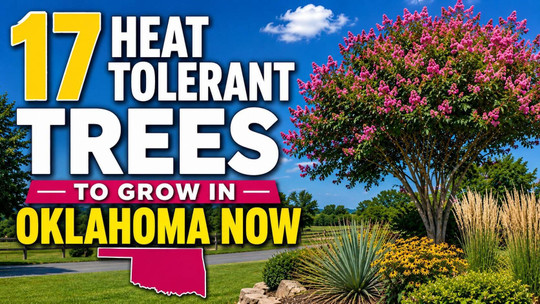
17 Heat-Tolerant Trees to Grow in Oklahoma Now
Oklahoma’s hot summers, strong winds, and unpredictable weather can be challenging for many trees. Fortunately, there are plenty of beautiful species that thrive in the state's climate. Whether you're looking for shade, colorful blooms, wildlife habitat, or drought-resistant landscaping, choosing heat-tolerant trees will help ensure long-term success with less maintenance.
Here are 17 of the best heat-tolerant trees to grow in Oklahoma.
1. Crape Myrtle (Lagerstroemia indica)
Crape myrtle is one of the most popular ornamental trees in the South for good reason. It loves Oklahoma's hot summers and produces spectacular blooms from midsummer into fall.
Why you'll love it:
- Long-lasting flowers in pink, red, white, or purple
- Attractive peeling bark
- Excellent drought tolerance
- Low maintenance
2. Bur Oak (Quercus macrocarpa)
Bur oak is a native tree that handles Oklahoma's heat, drought, and wind remarkably well.
Benefits:
- Massive shade tree
- Extremely long-lived
- Deep root system
- Excellent wildlife value
3. Shumard Oak (Quercus shumardii)
If you want fast shade and brilliant red fall color, Shumard oak is an outstanding choice.
Highlights:
- Tolerates heat and clay soils
- Fast-growing
- Beautiful autumn foliage
- Strong branches
4. Bald Cypress (Taxodium distichum)
Despite its reputation as a swamp tree, bald cypress adapts well to dry landscapes once established.
Why plant it:
- Handles drought surprisingly well
- Soft, feathery foliage
- Unique appearance
- Pest resistant
5. Eastern Redbud (Cercis canadensis)
One of Oklahoma's favorite native flowering trees.
Features:
- Bright pink spring flowers
- Heart-shaped leaves
- Great for smaller yards
- Supports pollinators
6. Desert Willow (Chilopsis linearis)
This southwestern native thrives in extreme heat.
Advantages:
- Beautiful trumpet-shaped flowers
- Attracts hummingbirds
- Requires little water
- Excellent drought resistance
7. Chinese Pistache (Pistacia chinensis)
Chinese pistache combines durability with outstanding fall color.
Reasons to grow it:
- Heat tolerant
- Vibrant orange and red foliage
- Strong urban tree
- Adaptable to many soil types
8. Honey Locust (Gleditsia triacanthos var. inermis)
Honey locust provides filtered shade that allows grass to grow beneath it.
Benefits:
- Heat and drought tolerant
- Fine-textured foliage
- Fast growth
- Excellent landscape tree
9. Chinkapin Oak (Quercus muehlenbergii)
A native oak that performs exceptionally well across Oklahoma.
Features:
- Drought resistant
- Attractive glossy leaves
- Wildlife-friendly acorns
- Long lifespan
10. Southern Magnolia (Magnolia grandiflora)
In eastern and southern Oklahoma, southern magnolia performs beautifully.
Highlights:
- Large fragrant white flowers
- Evergreen foliage
- Dense shade
- Elegant appearance
11. Red Maple (Acer rubrum)
While it appreciates some moisture, many cultivars perform well throughout Oklahoma.
Why choose it:
- Brilliant fall color
- Fast growth
- Excellent shade tree
- Adaptable varieties available
12. Lacebark Elm (Ulmus parvifolia)
Lacebark elm is one of the toughest shade trees available.
Advantages:
- Excellent heat tolerance
- Attractive mottled bark
- Disease resistant
- Strong wind resistance
13. Texas Red Oak (Quercus buckleyi)
Native to nearby Texas, this oak handles Oklahoma heat with ease.
Benefits:
- Outstanding red fall color
- Drought tolerant
- Moderate growth rate
- Great wildlife tree
14. Western Soapberry (Sapindus drummondii)
A hardy native tree perfect for difficult growing conditions.
Features:
- Heat resistant
- Yellow fall foliage
- Attractive golden berries
- Excellent for wildlife
15. Arizona Cypress (Cupressus arizonica)
This evergreen thrives in dry, sunny locations.
Why it's popular:
- Blue-gray foliage
- Excellent drought tolerance
- Wind resistant
- Great privacy screen
16. Cedar Elm (Ulmus crassifolia)
Cedar elm is one of the toughest native shade trees available.
Highlights:
- Handles extreme summer heat
- Tolerates poor soils
- Attractive yellow fall color
- Very low maintenance
17. Kentucky Coffeetree (Gymnocladus dioicus)
An unusual but highly adaptable tree that's becoming increasingly popular.
Benefits:
- Large compound leaves
- Excellent drought tolerance
- Strong branching structure
- Unique winter appearance
Tips for Growing Trees in Oklahoma
To give your trees the best chance of success:
- Plant during fall or early spring whenever possible.
- Water deeply during the first two growing seasons.
- Apply 2–4 inches of mulch around the base while keeping it away from the trunk.
- Choose species suited to your USDA hardiness zone and local soil conditions.
- Avoid overwatering once trees are established, as many heat-tolerant species actually perform better in well-drained soils.
Final Thoughts
Oklahoma's climate doesn't have to limit your landscaping options. From colorful flowering trees like crape myrtle and redbud to towering shade trees like bur oak and Shumard oak, there are many species that flourish despite intense summer heat.
By selecting trees that naturally tolerate drought, wind, and high temperatures, you'll enjoy healthier landscapes, lower maintenance, and beautiful outdoor spaces for decades to come.