
Posted by TJ Hopkins on May 13th 2026
25 Shade Trees That Grow in USDA Zone 4
If you live in USDA Zone 4, you know how important it is to choose hardy trees that can survive freezing winters while still providing beautiful shade during the warmer months. Fortunately, many shade trees thrive in Zone 4 conditions, offering everything from vibrant fall color and fast growth to wildlife habitat and cooling summer canopies.
Whether you are planting along a driveway, adding privacy to your yard, or creating a cooler outdoor space, these cold-hardy shade trees are excellent choices for northern climates.
Best Shade Trees for USDA Zone 4
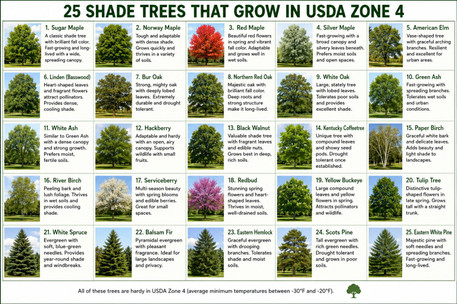
1. Sugar Maple
Sugar Maple trees are one of the most popular shade trees for colder climates. Known for their brilliant orange and red fall foliage, they develop wide canopies that provide dense shade. These long-lived trees grow best in moist, well-drained soil.
2. Norway Maple
Norway Maple is a fast-growing tree that adapts well to many soil conditions. It develops a dense crown that creates excellent shade for lawns and streetscapes.
3. Red Maple
Red Maple trees are admired for their bright spring flowers and striking red fall color. They tolerate wetter soils better than many other maple species and grow quickly in cooler regions.
4. Silver Maple
Silver Maple is a fast-growing shade tree with silvery undersides on its leaves that shimmer in the wind. It grows best in moist areas and quickly forms a broad canopy.
5. American Elm
American Elm trees feature graceful arching branches and a vase-shaped growth habit. Modern disease-resistant varieties make this classic shade tree a strong option for urban landscapes.
6. Linden (Basswood)
Linden trees are valued for their heart-shaped leaves and fragrant flowers that attract pollinators. They provide dense summer shade and perform well in northern climates.
7. Bur Oak
Bur Oak is a hardy and durable oak species that thrives in Zone 4. It tolerates drought once established and develops a massive spreading canopy over time.
8. Northern Red Oak
Northern Red Oak is a strong, long-lived shade tree with brilliant fall color and sturdy branching. It grows well in deep, fertile soils and adapts to many conditions.
9. White Oak
White Oak trees are known for their stately appearance and broad crowns. These large shade trees can live for generations and tolerate a variety of soil types.
10. Green Ash
Green Ash trees grow quickly and produce a rounded canopy ideal for shade. They adapt well to urban environments and moist soils.
11. White Ash
White Ash develops a dense canopy and strong branching structure. It is commonly planted as a shade tree in parks and residential landscapes.
12. Hackberry
Hackberry trees are adaptable and easy to grow. They tolerate wind, pollution, and poor soils while producing small fruits that attract birds and wildlife.
13. Black Walnut
Black Walnut is a valuable hardwood tree that also provides excellent shade. Its fragrant leaves and edible nuts make it a favorite for larger landscapes.
14. Kentucky Coffeetree
Kentucky Coffeetree is a unique shade tree with bold branching and large compound leaves. It tolerates drought and urban conditions once established.
15. Paper Birch
Paper Birch trees are loved for their bright white bark and delicate appearance. They thrive in cooler climates and provide light, filtered shade.
16. River Birch
River Birch performs especially well in wet soils. Its peeling bark and lush foliage make it a beautiful ornamental shade tree for northern yards.
17. Serviceberry
Serviceberry trees offer year-round beauty with spring flowers, edible berries, and colorful fall foliage. Their smaller size makes them ideal for compact landscapes.
18. Redbud
Redbud trees produce stunning pink spring flowers before their leaves emerge. They grow well in moist, well-drained soil and add ornamental value to any yard.
19. Yellow Buckeye
Yellow Buckeye trees feature large leaves and clusters of yellow spring flowers. They attract pollinators and provide dense shade in larger landscapes.
20. Tulip Tree
Tulip Trees grow tall and straight with attractive tulip-shaped flowers in late spring. They create excellent shade once mature and grow rapidly in fertile soil.
21. White Spruce
White Spruce is an evergreen tree that provides year-round color, shade, and wind protection. Its dense branching makes it useful for privacy screens.
22. Balsam Fir
Balsam Fir trees have a classic pyramidal shape and fragrant needles. They thrive in cooler climates and are excellent for large yards and naturalized areas.
23. Eastern Hemlock
Eastern Hemlock is a graceful evergreen with soft needles and drooping branches. It grows well in partially shaded areas with moist soil.
24. Scots Pine
Scots Pine is a rugged evergreen tree that tolerates drought and poor soils. Its evergreen foliage provides year-round screening and shade.
25. Eastern White Pine
Eastern White Pine is one of the tallest native pines in North America. Its soft needles and fast growth make it a favorite for windbreaks and shade.
Why Plant Shade Trees in Zone 4?
Shade trees provide many benefits beyond appearance. In USDA Zone 4 landscapes, they can:
- Reduce cooling costs during summer
- Increase property value
- Provide wildlife habitat
- Improve air quality
- Create privacy and wind protection
- Add seasonal beauty with flowers and fall color
Cold-hardy shade trees are especially important in northern climates because they are built to withstand harsh winters, snow, and freezing temperatures.
Tips for Growing Shade Trees in USDA Zone 4
When planting shade trees in colder climates, keep these tips in mind:
- Plant in spring or early fall for best root establishment
- Water young trees regularly during the first few growing seasons
- Apply mulch around the base to help conserve moisture
- Avoid planting too close to buildings or power lines
- Choose trees suited for your soil type and sunlight conditions
Final Thoughts
There are many beautiful shade trees that thrive in USDA Zone 4, from colorful maples and sturdy oaks to evergreen pines and spruces. Selecting the right tree for your landscape can provide decades of cooling shade, seasonal beauty, and wildlife benefits.
Whether you prefer fast-growing shade trees, ornamental flowering varieties, or towering evergreens, these Zone 4 trees are reliable choices for northern gardeners and homeowners.