
Posted by TJ Hopkins on Sep 13th 2026
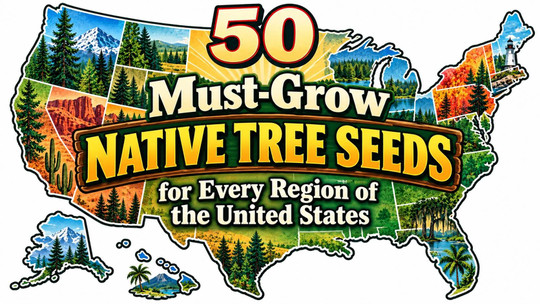
50 Must-Grow Native Tree Seeds for Every Region of the United States
Growing native trees from seed is an affordable and rewarding way to add shade, seasonal color, wildlife habitat, and lasting beauty to your property. Native trees are naturally suited to the climates and ecosystems where they evolved, making them valuable choices for supporting birds, pollinators, and other wildlife.
The United States includes many different growing regions, so a tree that thrives in Vermont may struggle in Arizona or Florida. Before planting, confirm that the species is native to your part of the country and suitable for your USDA growing zone, soil, moisture level, and available space.
Here are 50 native tree seeds worth growing across five major regions of the United States.
Northeast
The Northeast experiences cold winters, warm summers, dependable rainfall, and spectacular autumn color. Many native trees from this region require cold stratification before their seeds will germinate.
1. Sugar Maple
Sugar maple is famous for its brilliant orange, yellow, and red fall foliage. This long-lived shade tree grows best in fertile, well-drained soil and is native throughout much of the Northeast.
2. Red Maple
Red maple adapts to a wide variety of soils and moisture conditions. Its red flowers, winged seeds, and colorful fall foliage give it interest during several seasons.
3. Eastern White Pine
Eastern white pine is a fast-growing evergreen with soft, blue-green needles. It makes an impressive specimen tree and can also be planted as a windbreak or natural screen.
4. Paper Birch
Paper birch is recognized by its attractive white, peeling bark. It prefers cooler climates and grows especially well in sunny locations with moist, well-drained soil.
5. American Beech
American beech develops smooth gray bark and a broad, spreading crown. Its nuts provide an important source of food for birds, squirrels, and other woodland animals.
6. Northern Red Oak
Northern red oak is a strong, fast-growing shade tree with deeply lobed leaves. Its acorns support wildlife, while its foliage often turns deep red or reddish brown in fall.
7. Eastern Hemlock
Eastern hemlock is a graceful, shade-tolerant evergreen that prefers cool, moist conditions. It is an excellent choice for woodland gardens and protected locations.
8. American Basswood
American basswood produces fragrant, nectar-rich flowers that attract bees. Its large, heart-shaped leaves create dense summer shade.
9. Black Cherry
Black cherry produces white spring flowers followed by small dark fruits enjoyed by birds. Mature trees develop distinctive dark bark with a textured, flaky appearance.
10. Serviceberry
Serviceberry is a small native tree with white spring blossoms, edible summer berries, and colorful fall foliage. It is a particularly good choice for smaller yards.
Southeast
The Southeast has long, humid summers and generally mild winters. Trees in this region may need to tolerate heat, heavy rainfall, occasional drought, and intense sunlight.
11. Southern Live Oak
Southern live oak is an iconic tree with a massive spreading crown and evergreen or semi-evergreen foliage. It needs plenty of room to mature and performs best in warm climates.
12. Southern Magnolia
Southern magnolia produces large, fragrant white flowers and glossy evergreen leaves. Its red-coated seeds add another decorative feature during fall.
13. Bald Cypress
Bald cypress is a deciduous conifer that tolerates wet soil but can also grow in ordinary landscapes. Its soft foliage turns a warm copper color before dropping in autumn.
14. Longleaf Pine
Longleaf pine is an important native tree of the southeastern coastal plain. Young seedlings pass through a distinctive grass stage before beginning rapid upward growth.
15. Loblolly Pine
Loblolly pine grows quickly in sunny locations and adapts to several soil types. It is widely used for natural screens, wildlife habitat, and reforestation.
16. American Persimmon
American persimmon produces sweet orange fruit that becomes fully flavorful when ripe. It is an adaptable tree with attractive blocky bark and excellent wildlife value.
17. Sweetbay Magnolia
Sweetbay magnolia features creamy white, lemon-scented flowers and glossy leaves. It naturally grows in moist areas but can adapt to well-watered garden soil.
18. Eastern Redbud
Eastern redbud covers its bare branches with pink-purple flowers in early spring. Its compact size and heart-shaped leaves make it suitable for home landscapes.
19. Flowering Dogwood
Flowering dogwood is loved for its showy spring bracts, red berries, and reddish-purple fall foliage. It prefers rich, well-drained soil and protection from harsh afternoon sun.
20. Pecan
Pecan is a large native nut tree requiring abundant sunlight and considerable growing space. Although seedlings take time to mature, established trees can become impressive landscape features.
Midwest
The Midwest contains open prairies, woodlands, river valleys, and areas with severe winters and hot summers. Many native trees from this region tolerate temperature changes and exposed conditions.
21. Bur Oak
Bur oak is a rugged, long-lived tree that tolerates cold, heat, wind, and occasional drought. It produces large acorns with distinctive fringed caps.
22. White Oak
White oak develops into a magnificent shade tree with a broad crown and strong branches. Its acorns are an especially valuable food source for wildlife.
23. Shagbark Hickory
Shagbark hickory is easily identified by the long strips of bark that peel away from its trunk. The tree produces edible nuts and develops excellent golden fall color.
24. Black Walnut
Black walnut is prized for its valuable wood and flavorful nuts. Because its roots release juglone, it should be planted away from garden plants that may be sensitive to the substance.
25. Ohio Buckeye
Ohio buckeye produces clusters of yellow-green flowers followed by shiny brown seeds. It is best grown where falling seeds will not create a problem for people or pets.
26. Kentucky Coffeetree
Kentucky coffeetree has bold compound leaves, deeply textured bark, and large seedpods. Its open branching structure gives the tree a striking winter appearance.
27. Hackberry
Hackberry is a durable shade tree that tolerates wind, drought, urban conditions, and different soil types. Its small fruits provide winter food for many birds.
28. American Sycamore
American sycamore is a massive, fast-growing tree recognized by its pale, mottled bark. It naturally thrives near streams and rivers but requires ample room to spread.
29. River Birch
River birch grows well in moist soil and develops attractive peeling bark in shades of tan, cream, and cinnamon. It handles summer heat better than many other birches.
30. Northern Catalpa
Northern catalpa has enormous heart-shaped leaves and clusters of white flowers. Its long, narrow seedpods remain visible after the growing season ends.
Great Plains and Southwest
This broad region includes windy grasslands, dry plains, high deserts, and hot southwestern landscapes. Proper species selection is critical because rainfall, elevation, and winter temperatures vary considerably.
31. Eastern Red Cedar
Eastern red cedar is a hardy evergreen that tolerates drought, wind, cold, and poor soil. Its berry-like cones provide food for birds throughout winter.
32. Rocky Mountain Juniper
Rocky Mountain juniper is well adapted to dry conditions, alkaline soil, and exposed sites. Its evergreen foliage and blue cones provide year-round landscape interest.
33. Ponderosa Pine
Ponderosa pine develops long needles, thick bark, and a tall, open crown. It performs best in sunny locations with well-drained soil.
34. Colorado Blue Spruce
Colorado blue spruce is admired for its stiff, silvery-blue needles and symmetrical form. It favors cooler locations and may struggle in extremely hot, humid conditions.
35. Plains Cottonwood
Plains cottonwood grows rapidly and is often found along rivers and streams. Its mature size and extensive roots make it better suited to large rural properties than small yards.
36. Desert Willow
Desert willow produces trumpet-shaped flowers in shades of pink, lavender, and white. Despite its common name, it is not a true willow and is highly tolerant of heat and drought.
37. Honey Mesquite
Honey mesquite is a tough desert tree with feathery leaves and long seedpods. Its deep roots allow it to survive extended dry periods once established.
38. Blue Palo Verde
Blue palo verde has green photosynthetic bark and masses of yellow spring flowers. It is an outstanding small tree for hot, dry landscapes.
39. New Mexico Locust
New Mexico locust is a small tree or large shrub with clusters of fragrant pink flowers. It can spread by underground shoots and should be planted where it has room to form a colony.
40. Texas Mountain Laurel
Texas mountain laurel is an evergreen tree with fragrant purple flowers and bright red seeds. The seeds are poisonous if consumed, so they must be kept away from children and pets.
West Coast and Pacific Northwest
The western coastal region ranges from rainy temperate forests to dry California foothills. Selecting a tree adapted to your local rainfall pattern and summer temperatures is essential.
41. Coast Redwood
Coast redwood is one of the tallest tree species on Earth. It grows best in mild, humid climates with deep soil and dependable moisture.
42. Giant Sequoia
Giant sequoia develops an enormous trunk and thick, fire-resistant bark. Although it can be grown outside its natural range, it needs considerable space and suitable soil moisture.
43. Douglas Fir
Douglas fir is a tall evergreen with soft needles and distinctive cones featuring three-pointed bracts. It performs best in sunny, well-drained locations with adequate moisture.
44. Western Red Cedar
Western red cedar has aromatic foliage, fibrous bark, and a graceful pyramidal form. It favors moist soil and is especially impressive in Pacific Northwest landscapes.
45. Sitka Spruce
Sitka spruce is a towering coastal evergreen adapted to cool temperatures, abundant moisture, and ocean air. Its sharp needles and strong branches help it withstand exposed conditions.
46. Bigleaf Maple
Bigleaf maple produces some of the largest leaves of any maple species. It is a fast-growing shade tree with yellow fall foliage and excellent wildlife value.
47. Pacific Madrone
Pacific madrone is an evergreen tree with peeling reddish bark, white flowers, and colorful berries. It requires excellent drainage and usually performs best when planted young and left undisturbed.
48. California Sycamore
California sycamore has broad leaves, pale mottled bark, and an open spreading crown. It naturally grows along streams and in valleys where underground moisture is available.
49. California Black Oak
California black oak is a deciduous western oak with deeply lobed leaves and golden fall color. Its acorns have long served as an important source of food for wildlife.
50. Oregon White Oak
Oregon white oak is a drought-tolerant tree native to valleys and foothills of the Pacific Northwest. It grows slowly but can eventually develop a broad, impressive crown.
How to Prepare Native Tree Seeds
Tree seeds do not all germinate in the same way. Many temperate species naturally fall to the ground in autumn and remain exposed to cold, moist winter conditions before sprouting in spring. This process can be recreated through cold stratification.
Place seeds in a slightly damp growing medium inside a labeled bag or container, then refrigerate them for the recommended period. The medium should remain moist but never waterlogged. Acorns and other fresh seeds should be inspected regularly for mold, drying, or early root growth.
Some species may require warm stratification, scarification, soaking, or direct fall sowing. Always research the requirements of the individual species before beginning treatment.
Planting Tree Seeds in Containers
Use deep containers with drainage holes to give developing roots sufficient space. Fill each container with a clean, well-draining seed-starting mixture and plant the seeds at the depth recommended for that species.
Keep the soil evenly moist without saturating it. A humidity dome can help retain moisture during germination, but it should be ventilated regularly and removed once seedlings emerge.
Place newly sprouted seedlings in strong light. If natural sunlight is insufficient, a grow light can prevent weak, stretched growth.
Transplanting Native Tree Seedlings
Young trees should be gradually introduced to outdoor conditions before being permanently planted. Move the containers outside for a short period each day, beginning in a sheltered location and slowly increasing their exposure to sunlight and wind.
Choose a planting site based on the tree’s mature height and spread—not its size as a seedling. Avoid planting large trees beneath utility lines, close to foundations, or near underground pipes.
Keep the soil consistently moist during the first growing season. A layer of mulch can help preserve moisture and control weeds, but mulch should never be piled directly against the trunk.
Choose Trees Native to Your Local Area
A species may be native to the United States without being native to every state or county. Whenever possible, select trees grown from seed collected in your region. Locally sourced trees are more likely to be adapted to your seasonal temperatures, rainfall patterns, and growing conditions.
Choosing the right native tree is also important for protecting natural plant communities. Confirm local recommendations before planting near forests, parks, or other natural areas.
Start a Native Forest One Seed at a Time
Growing native trees from seed requires patience, but it provides an opportunity to watch an entire tree develop from its earliest stage. Whether you plant a flowering redbud, a colorful maple, a wildlife-friendly oak, or a towering evergreen, your seedlings can eventually provide decades of shade, beauty, and habitat.
Start with species suited to your region, follow their individual germination requirements, and give every seedling enough room to reach its full potential. A handful of seeds planted today can become a thriving native landscape for future generations.