
Posted by TJ Hopkins on Jun 12th 2026
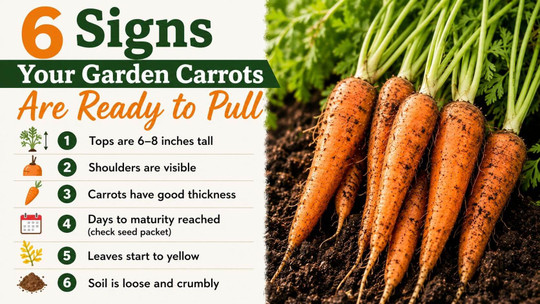
6 Signs Your Garden Carrots Are Ready to Pull
Carrots are one of the most rewarding vegetables to grow, but knowing exactly when to harvest them can make the difference between sweet, crisp roots and carrots that are too small or past their prime. While seed packets provide an estimated maturity date, there are several visual clues that can help you determine when your carrots are ready to come out of the ground.
Here are six reliable signs that your garden carrots are ready to harvest.
1. The Tops Are 6–8 Inches Tall
Healthy carrot foliage is often one of the first indicators that the roots below are developing properly. Most carrot varieties produce lush green tops that reach approximately 6 to 8 inches in height by harvest time.
While foliage size alone should not be your only guide, strong, upright tops suggest that the plant has had enough time to develop a mature root system.
2. The Shoulders Are Visible Above the Soil
One of the easiest ways to check carrot readiness is by looking at the top of the root, often called the shoulder. As carrots mature, the upper portion of the root begins to push above the soil surface.
If you can see the orange crown peeking through the soil, it's a good indication that the carrot is nearing harvest size.
3. The Carrots Have Good Thickness
Carrot diameter is often more important than length when determining maturity. Gently brush away a little soil around the top of a carrot and inspect its thickness.
Most standard carrot varieties are ready when they reach about ¾ to 1 inch in diameter, although some specialty varieties may be smaller or larger at maturity. Thick, well-formed roots usually indicate that the carrots have developed their full flavor and texture.
4. The Days to Maturity Have Been Reached
Every carrot variety has a recommended number of days to maturity listed on the seed packet. Depending on the variety, this can range from 50 to 80 days or more.
If your carrots have reached or exceeded their expected maturity date and show several of the other signs on this list, it's a good time to start harvesting.
5. The Leaves Begin to Yellow
While healthy carrot tops are typically bright green, older leaves may start to yellow slightly as the plant reaches maturity.
A small amount of yellowing, especially on the outer leaves, can indicate that the carrot is directing its energy into the root. However, extensive yellowing or dying foliage may signal that the carrots have been left in the ground too long.
6. The Soil Is Loose and Crumbly
Loose soil makes harvesting much easier and can also be a sign that conditions are ideal for pulling mature carrots. After a light rain or watering, the soil often softens enough to allow carrots to be removed without breaking.
If the soil crumbles easily around the roots and the carrots meet the other maturity indicators, they're likely ready for harvest.
How to Harvest Carrots
To harvest carrots successfully:
- Water the bed lightly a few hours before harvesting.
- Grasp the carrot tops close to the soil line.
- Pull upward gently while twisting slightly.
- Use a garden fork to loosen compacted soil if needed.
- Remove excess soil and trim tops to about 1 inch above the root.
Harvesting carefully helps prevent root damage and improves storage life.
Final Thoughts
Carrots don't always need to be harvested all at once. In many climates, you can pull larger roots as needed and allow smaller ones to continue growing. By watching for visible shoulders, checking root thickness, monitoring maturity dates, and observing foliage changes, you'll know exactly when your carrots are ready to pull for the best flavor and texture.
Freshly harvested carrots are sweeter, crunchier, and far more flavorful than store-bought roots, making the wait well worth it.