
Posted by TJ Hopkins on Jun 9th 2026
7 DIY Plant Food Recipes to Nourish Your Garden Naturally
Healthy plants don't always require expensive fertilizers. Many common household items contain nutrients that can help support plant growth, improve soil quality, and reduce waste. If you're looking for simple and budget-friendly ways to feed your garden, these seven DIY plant food recipes are easy to make and use.
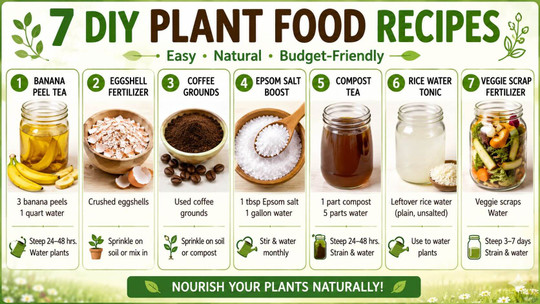
1. Banana Peel Tea
Banana peels are rich in potassium, an essential nutrient that helps plants develop strong roots, flowers, and fruits.
Ingredients
- 3 banana peels
- 1 quart of water
Directions
Place the banana peels in a jar of water and let them steep for 24 to 48 hours. Remove the peels and use the liquid to water your plants.
Best For
- Tomatoes
- Peppers
- Roses
- Flowering plants
2. Eggshell Fertilizer
Eggshells are an excellent source of calcium, which helps prevent blossom-end rot and supports healthy plant growth.
Ingredients
- Crushed eggshells
Directions
Rinse and dry the shells thoroughly. Crush them into small pieces and sprinkle them around the base of plants or mix them into the soil.
Best For
- Tomatoes
- Peppers
- Squash
- Cucumbers
3. Coffee Grounds
Used coffee grounds add organic matter to the soil and contain small amounts of nitrogen that can benefit many plants.
Ingredients
- Used coffee grounds
Directions
Allow grounds to cool and dry. Sprinkle lightly around plants or add them to your compost pile.
Best For
- Blueberries
- Hydrangeas
- Azaleas
- Compost bins
Tip
Use in moderation, as excessive amounts may compact the soil.
4. Epsom Salt Boost
Epsom salt contains magnesium and sulfur, two nutrients plants use for healthy growth and green foliage.
Ingredients
- 1 tablespoon Epsom salt
- 1 gallon water
Directions
Mix thoroughly and use once a month as a soil drench around plants.
Best For
- Tomatoes
- Peppers
- Roses
- Houseplants
5. Compost Tea
Compost tea provides beneficial microorganisms and nutrients that can help improve soil health.
Ingredients
- 1 part finished compost
- 5 parts water
Directions
Steep for 24 to 48 hours, stirring occasionally. Strain and use the liquid to water plants.
Best For
- Vegetable gardens
- Flower beds
- Container gardens
6. Rice Water Tonic
Leftover rice water contains trace minerals and starches that can support beneficial soil microbes.
Ingredients
- Plain, unsalted rice water
Directions
Allow the rice water to cool completely and use it to water plants.
Best For
- Houseplants
- Herbs
- Container gardens
Tip
Avoid using rice water that contains salt, oil, or seasonings.
7. Vegetable Scrap Fertilizer
Instead of throwing away vegetable scraps, turn them into a nutrient-rich garden tonic.
Ingredients
- Vegetable scraps
- Water
Directions
Place scraps in a container, cover with water, and let steep for 3 to 7 days. Strain the liquid before using it around plants.
Best For
- Garden vegetables
- Flower beds
- Raised beds
Tips for Using DIY Plant Foods
- Apply homemade fertilizers in moderation.
- Test on a few plants before widespread use.
- Water plants normally between feedings.
- Avoid using salty, oily, or heavily processed food scraps.
- Combine DIY fertilizers with compost for the best results.
Final Thoughts
Making your own plant food is an easy way to recycle kitchen scraps, save money, and provide your plants with supplemental nutrients. Whether you're using banana peels, eggshells, coffee grounds, or compost tea, these natural options can help support a thriving garden while reducing household waste.
With a few simple ingredients already found in most kitchens, you can give your plants a natural boost all season long.