
Posted by TJ Hopkins on Jul 1st 2026
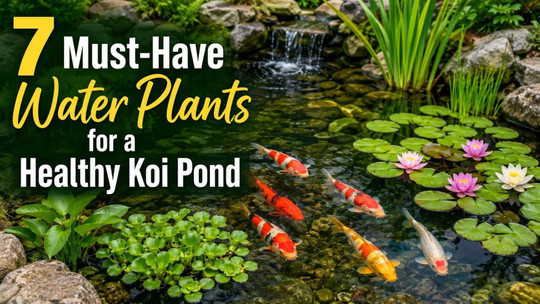
7 Must-Have Water Plants for a Healthy Koi Pond
A well-designed koi pond is more than just clear water and colorful fish. The right aquatic plants create a balanced ecosystem by improving water quality, providing shade, reducing algae growth, and giving koi a more natural environment. While koi are known for nibbling on some plants, choosing hardy varieties and placing them strategically can help your pond stay beautiful and healthy year-round.
Here are seven of the best water plants every koi pond owner should consider.
1. Water Lily (Nymphaea)
Water lilies are one of the most popular and attractive pond plants. Their broad floating leaves shade the water, helping to keep temperatures cooler during summer while limiting sunlight that fuels algae growth.
Benefits
- Provides shade for koi
- Reduces algae growth
- Produces stunning flowers throughout the season
- Offers fish protection from predators
Growing Tips
- Plant in aquatic baskets using heavy clay soil.
- Place in water 12–24 inches deep.
- Provide at least 5–6 hours of sunlight daily.
2. Water Lettuce (Pistia stratiotes)
Water lettuce is a floating plant with velvety green leaves that resemble a head of lettuce. Its dangling roots create excellent hiding places for young koi while absorbing excess nutrients from the water.
Benefits
- Natural water filtration
- Removes excess nitrogen and phosphates
- Creates shade
- Easy to grow
Growing Tips
- Allow plants to float freely.
- Thin regularly to prevent overcrowding.
- Best suited for warm climates or summer use.
3. Water Hyacinth (Eichhornia crassipes)
Known for its beautiful lavender flowers and rapid growth, water hyacinth is one of the best plants for improving water quality. Its extensive root system absorbs pollutants while providing shelter for beneficial microorganisms.
Benefits
- Excellent natural filter
- Fast nutrient uptake
- Provides fish cover
- Attractive blooms
Growing Tips
- Remove excess plants regularly.
- Use only where legally permitted, as it is considered invasive in many regions.
- Protect from frost.
4. Sweet Flag (Acorus calamus)
Sweet Flag is an upright marginal plant that adds height and texture around pond edges. Its sword-like foliage creates a natural appearance while helping stabilize pond banks.
Benefits
- Filters pond water
- Creates vertical interest
- Easy to maintain
- Hardy in many climates
Growing Tips
- Plant in shallow water 2–6 inches deep.
- Divide every few years to maintain vigorous growth.
- Thrives in full sun to partial shade.
5. Pickerel Weed (Pontederia cordata)
Pickerel Weed produces spikes of violet-blue flowers that attract butterflies, bees, and other pollinators while providing excellent filtration for the pond.
Benefits
- Beautiful summer blooms
- Attracts pollinators
- Excellent nutrient absorber
- Great for pond edges
Growing Tips
- Plant in 3–12 inches of water.
- Performs best in full sun.
- Remove dead foliage each fall.
6. Hornwort (Ceratophyllum demersum)
Hornwort is a submerged oxygenating plant that works beneath the surface to keep your pond healthy. Unlike many aquatic plants, it does not require planting in soil.
Benefits
- Produces oxygen
- Competes with algae
- Provides spawning habitat
- Improves water clarity
Growing Tips
- Let it float or anchor loosely.
- Trim occasionally to prevent excessive growth.
- Suitable for ponds of nearly any size.
7. Blue Iris (Iris versicolor)
Blue Iris adds vibrant color around pond edges while helping filter runoff before it enters the pond. Its striking blooms make it both functional and ornamental.
Benefits
- Natural filtration
- Eye-catching flowers
- Helps prevent erosion
- Cold hardy
Growing Tips
- Plant in shallow water or consistently moist soil.
- Divide every few years.
- Enjoys full sun to partial shade.
Tips for Protecting Plants from Koi
Koi are naturally curious and often dig around plant roots or nibble on tender leaves. To help your plants thrive:
- Use aquatic planting baskets.
- Cover soil with large river rocks.
- Place delicate plants in protected areas.
- Avoid overcrowding floating plants.
- Remove dead leaves regularly to maintain water quality.
Creating a Balanced Koi Pond
A healthy koi pond includes a combination of floating, submerged, and marginal plants. Floating plants provide shade, submerged plants oxygenate the water, and marginal plants naturally filter nutrients while creating a beautiful landscape around the pond.
By combining these seven aquatic plants, you'll create a pond that is not only visually stunning but also healthier for your koi. Cleaner water, reduced algae, improved oxygen levels, and natural shelter all contribute to happier, more vibrant fish that can thrive for years to come.
Frequently Asked Questions
What percentage of my koi pond should be covered with plants?
Aim to cover about 40–60% of the pond's surface with floating or shade-producing plants. This helps control algae while still allowing enough open water for koi to swim comfortably.
Will koi eat pond plants?
Yes. Koi often nibble on soft leaves and may dig up plant roots. Using planting baskets, protective rocks, and hardy plant species helps minimize damage.
Which pond plants are best for reducing algae?
Water lilies, hornwort, water lettuce, and water hyacinth are among the best choices because they compete with algae for nutrients and reduce sunlight reaching the water.
Do pond plants replace a filtration system?
No. Aquatic plants greatly improve water quality, but they should complement—not replace—a quality biological and mechanical filtration system.