
Posted by TJ Hopkins on Jul 6th 2026
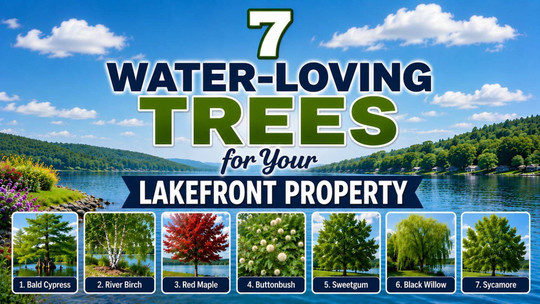
7 Water-Loving Trees for Your Lakefront Property
A lakefront property offers the perfect environment for trees that thrive in consistently moist soils. The right species can stabilize shorelines, reduce erosion, provide cooling shade, attract wildlife, and create a beautiful natural setting around your home. While not every tree tolerates wet feet, the seven trees below are well adapted to areas near lakes, ponds, streams, and other moisture-rich landscapes.
Why Plant Water-Loving Trees?
Planting trees that naturally grow in damp conditions offers several benefits:
- Helps prevent shoreline erosion by holding soil in place.
- Improves water quality by filtering runoff.
- Provides cooling shade during hot summer months.
- Creates habitat for birds, butterflies, and beneficial wildlife.
- Adds seasonal beauty with colorful foliage, flowers, or unique bark.
- Thrives in areas where many other landscape trees struggle.
1. Bald Cypress (Taxodium distichum)
Bald Cypress is one of the most iconic trees for wet landscapes. Native to swamps and riverbanks throughout the southeastern United States, it tolerates standing water better than almost any other tree.
Why You'll Love It
- Thrives in flooded or saturated soils.
- Develops impressive buttressed trunks with age.
- Produces brilliant orange-brown fall color.
- Long-lived and highly adaptable.
Mature Height: 50–70 feet (up to 100 feet in ideal conditions)
USDA Zones: 4–10
2. River Birch (Betula nigra)
River Birch is prized for its beautiful peeling bark and ability to handle consistently moist soils. Unlike many birch species, it is also resistant to bronze birch borer.
Benefits
- Attractive cinnamon-colored exfoliating bark.
- Fast-growing shade tree.
- Excellent erosion control near water.
- Tolerates occasional flooding.
Mature Height: 40–70 feet
USDA Zones: 4–9
3. Red Maple (Acer rubrum)
Red Maple is one of North America's most adaptable native trees. It naturally grows in swamps, wetlands, and along streambanks while also performing well in average landscapes.
Highlights
- Brilliant red fall foliage.
- Early spring flowers provide nectar for pollinators.
- Fast to moderate growth rate.
- Excellent shade tree.
Mature Height: 40–70 feet
USDA Zones: 3–9
4. Buttonbush (Cephalanthus occidentalis)
Buttonbush is technically a large shrub or small tree, but it's one of the best plants for shorelines. Its distinctive globe-shaped white flowers attract countless pollinators throughout summer.
Benefits
- Excellent for shoreline restoration.
- Loved by butterflies, bees, and hummingbirds.
- Thrives in standing water.
- Provides wildlife food and cover.
Mature Height: 6–15 feet
USDA Zones: 5–10
5. Sweetgum (Liquidambar styraciflua)
Sweetgum is known for its stunning autumn display featuring shades of red, orange, purple, and yellow. It naturally grows in moist bottomlands but adapts well to many landscape settings.
Advantages
- Spectacular fall color.
- Strong, upright growth.
- Excellent shade tree.
- Handles wet soils with ease.
Mature Height: 60–80 feet
USDA Zones: 5–9
6. Black Willow (Salix nigra)
Black Willow is one of the fastest-growing native trees for lakeshores and streambanks. Its extensive root system makes it one of the best trees for reducing erosion.
Features
- Extremely fast growth.
- Outstanding erosion control.
- Excellent wildlife habitat.
- Flexible branches withstand strong winds.
Mature Height: 35–60 feet
USDA Zones: 4–9
7. Sycamore (Platanus occidentalis)
American Sycamore is a massive shade tree famous for its mottled white, tan, and gray bark. It naturally grows along rivers and floodplains, making it ideal for large lakefront properties.
Why Choose Sycamore?
- Huge canopy provides exceptional shade.
- Distinctive ornamental bark.
- Tolerates flooding and saturated soils.
- Long lifespan with impressive size.
Mature Height: 75–100 feet
USDA Zones: 4–9
Tips for Planting Near a Lake
To help your trees establish successfully:
- Plant native species whenever possible.
- Leave a natural vegetation buffer along the shoreline.
- Avoid disturbing existing root systems near the water.
- Water regularly during the first growing season, even moisture-loving trees need help while becoming established.
- Apply 2–3 inches of mulch around the base, keeping it several inches away from the trunk.
- Space large trees far enough apart to allow mature canopies to develop naturally.
Choosing the Right Tree
When selecting trees for your lakefront property, consider the available space, desired shade, mature height, and whether erosion control is a priority. Fast-growing species like Black Willow and River Birch provide quick results, while Bald Cypress and Sycamore become magnificent long-term landscape investments. For smaller shoreline areas, Buttonbush offers exceptional wildlife value without overwhelming the landscape.
With thoughtful planning, these seven water-loving trees can transform your lakefront into a beautiful, healthy, and resilient landscape that provides shade, supports local wildlife, and enhances your property's natural beauty for decades to come.