
Posted by TJ Hopkins on May 1st 2026
8 Best Cover Crops to Attract Deer
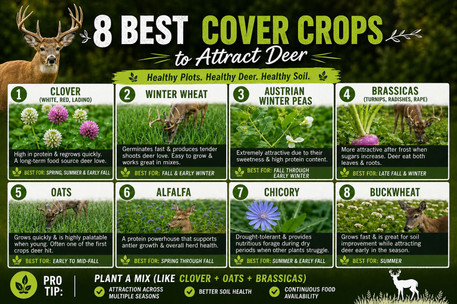
If you're looking to attract more deer to your property while improving your soil, planting the right cover crops is one of the smartest strategies you can use. The best cover crops provide high-protein forage, grow quickly, and offer seasonal nutrition that keeps deer coming back year-round. Below are eight of the most effective cover crops for attracting deer and building healthier plots.
1. Clover (White, Red, Ladino)
Clover is one of the most reliable and widely used deer forage crops. It’s high in protein, highly palatable, and regrows quickly after grazing. Clover also fixes nitrogen in the soil, improving fertility over time. It provides a consistent food source that deer return to throughout multiple seasons.
Best Time to Plant: Spring, summer, and early fall
2. Winter Wheat
Winter wheat germinates quickly and produces tender green shoots that deer love. It’s easy to grow and performs well in a variety of soil types. This crop is especially useful when mixed with other forages to extend attraction into cooler months.
Best Time to Plant: Fall and early winter
3. Austrian Winter Peas
These peas are extremely attractive to deer due to their sweetness and high protein content. They grow well in cooler temperatures and are often heavily grazed shortly after sprouting.
Best Time to Plant: Fall through early winter
4. Brassicas (Turnips, Radishes, Rape)
Brassicas become more attractive after the first frost, when their starches convert to sugars. Deer consume both the leafy tops and underground roots, making them a versatile late-season food source.
Best Time to Plant: Late fall and winter
5. Oats
Oats are fast-growing and highly palatable, especially when young. They’re often one of the first crops deer will hit in a newly planted plot. Oats are excellent for early attraction and quick forage.
Best Time to Plant: Early to mid-fall
6. Alfalfa
Alfalfa is a nutrient-dense perennial packed with protein, making it ideal for supporting antler growth and overall herd health. While it requires good soil and proper maintenance, it provides long-term benefits.
Best Time to Plant: Spring through fall
7. Chicory
Chicory is a drought-tolerant perennial that produces nutritious forage even during dry conditions. It’s often included in seed mixes because of its durability and ability to keep producing when other plants struggle.
Best Time to Plant: Summer and early fall
8. Buckwheat
Buckwheat grows extremely fast and is excellent for improving soil health. While it’s more of a short-term crop, it helps attract deer early in the season and prepares the soil for future plantings.
Best Time to Plant: Summer
Pro Tip: Plant a Mix for Maximum Results
Instead of relying on just one crop, planting a mix (like clover + oats + brassicas) gives you a major advantage. Blends provide:
- Attraction across multiple seasons
- Better soil health and nutrient cycling
- Continuous food availability for deer
This approach keeps your food plots productive and ensures deer always have something appealing to eat.
Final Thoughts
The key to attracting deer consistently is providing high-quality forage throughout the year. By choosing the right combination of cover crops and planting at the correct times, you can create a thriving habitat that supports both deer and soil health. Whether you're managing a hunting property or simply improving your land, these cover crops are proven performers.