
Posted by TJ Hopkins on Jun 18th 2026
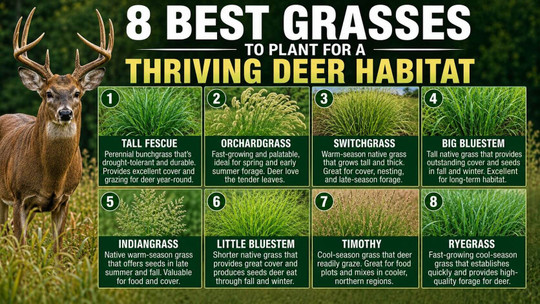
8 Best Grasses to Plant for a Thriving Deer Habitat
Creating an attractive deer habitat starts with providing the right food, cover, and bedding areas. While food plots often get the most attention, grasses play an equally important role in supporting healthy deer populations. The best grasses offer nutritious forage, shelter from predators, nesting cover for wildlife, and protection from harsh weather conditions throughout the year.
Whether you're managing hunting property, improving wildlife habitat, or simply attracting more deer to your land, these eight grasses can help create a thriving environment that deer will return to season after season.
1. Tall Fescue
Tall fescue is a hardy, cool-season perennial grass known for its durability and adaptability. It tolerates drought, heavy grazing, and a wide range of soil conditions, making it a dependable choice for deer habitat projects.
Benefits for Deer
- Provides year-round forage.
- Maintains green growth longer than many grasses.
- Offers excellent ground cover and erosion control.
- Handles heavy deer traffic well.
Tall fescue works particularly well in transition zones and mixed wildlife plantings where long-term vegetation is desired.
2. Orchardgrass
Orchardgrass is one of the most popular cool-season grasses for wildlife and livestock alike. It grows quickly and produces tender, highly palatable leaves that deer eagerly browse.
Benefits for Deer
- Excellent spring and early summer forage.
- High nutritional value.
- Establishes relatively quickly.
- Pairs well with clovers and other wildlife forage plants.
For best results, combine orchardgrass with legumes to create a diverse and nutritious food source.
3. Switchgrass
Switchgrass is a native warm-season grass prized for its exceptional wildlife value. It can reach heights of 4 to 8 feet, creating dense stands that provide outstanding cover.
Benefits for Deer
- Creates secure bedding areas.
- Offers winter protection from wind and snow.
- Provides nesting habitat for birds.
- Requires minimal maintenance once established.
Many land managers consider switchgrass one of the best grasses for creating deer bedding sanctuaries.
4. Big Bluestem
Often called the "King of the Prairie," Big Bluestem is a tall native grass that can grow over 6 feet high. Its dense growth provides excellent habitat structure and seasonal food resources.
Benefits for Deer
- Produces seeds utilized by wildlife.
- Creates excellent cover and travel corridors.
- Improves habitat diversity.
- Thrives in many soil types.
Big Bluestem is particularly valuable in large habitat restoration projects and native prairie plantings.
5. Indiangrass
Indiangrass is another native warm-season grass that provides both food and shelter for wildlife. Its golden seed heads add visual appeal while offering ecological benefits.
Benefits for Deer
- Produces seeds during late summer and fall.
- Provides cover throughout the growing season.
- Supports beneficial insects and pollinators.
- Works well in native grass mixtures.
When planted alongside Switchgrass and Big Bluestem, Indiangrass helps create a diverse and resilient habitat.
6. Little Bluestem
Little Bluestem is a shorter native prairie grass that offers excellent habitat value despite its smaller stature. Its attractive blue-green foliage turns copper-red in autumn.
Benefits for Deer
- Provides quality cover.
- Produces seeds consumed by wildlife.
- Excellent for smaller properties.
- Tolerates drought conditions.
This grass is ideal for adding diversity to wildlife plantings and improving habitat structure.
7. Timothy
Timothy grass is a cool-season perennial commonly used in hay production but also valued in deer habitat plantings. Deer readily graze its tender foliage during active growth periods.
Benefits for Deer
- Highly palatable forage.
- Performs well in northern climates.
- Mixes effectively with clovers.
- Provides quality nutrition during spring growth.
Timothy is especially useful in cooler regions where warm-season grasses may struggle.
8. Ryegrass
Ryegrass is known for its rapid germination and quick establishment. It provides fast forage production and is frequently used in wildlife food plots.
Benefits for Deer
- Establishes quickly.
- Produces lush, nutritious growth.
- Ideal for temporary food plots.
- Excellent companion grass in forage mixes.
Annual ryegrass can provide immediate results while slower-establishing perennial grasses become established.
Tips for Establishing Deer Habitat Grasses
To maximize success when planting grasses for deer habitat:
- Test your soil before planting.
- Select grasses suited to your climate and soil conditions.
- Include a mix of cool-season and warm-season species.
- Combine grasses with clovers and native forbs for added nutrition.
- Minimize mowing once grasses are established.
- Leave some areas undisturbed for bedding cover.
A diverse planting strategy often delivers the best results, providing deer with food, shelter, and security throughout the year.
Final Thoughts
The best deer habitats offer more than just food—they provide safety, cover, and year-round resources. By incorporating grasses such as Tall Fescue, Orchardgrass, Switchgrass, Big Bluestem, Indiangrass, Little Bluestem, Timothy, and Ryegrass, you can create a healthier, more attractive environment for deer and other wildlife.
Whether you're managing a hunting property, restoring native habitat, or simply encouraging wildlife on your land, these grasses are proven performers that can help transform your property into a thriving deer sanctuary.