
Posted by TJ Hopkins on Jun 13th 2026
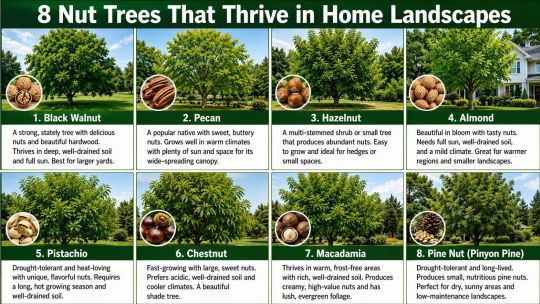
8 Nut Trees That Thrive in Home Landscapes
Growing nut trees is one of the best ways to create a beautiful, productive landscape. In addition to providing shade, privacy, and seasonal interest, nut trees can produce a valuable harvest for years or even decades. Whether you have a large rural property or a modest backyard, there are nut trees suited to a wide range of climates and growing conditions.
Here are eight excellent nut tree choices that thrive in home landscapes and offer both ornamental beauty and edible rewards.
1. Black Walnut (Juglans nigra)
Black walnut trees are prized for their rich-flavored nuts and highly valuable hardwood. These large, long-lived trees can reach heights of 50 to 75 feet or more, making them ideal for spacious landscapes. Their broad canopy provides excellent shade during the summer months.
Black walnuts produce a flavorful nut commonly used in baking, ice cream, and specialty recipes. Keep in mind that they release a natural compound called juglone, which can affect the growth of certain nearby plants.
Best for: Large properties, shade, and long-term value.
2. Pecan (Carya illinoinensis)
Pecan trees are among the most popular nut trees grown in North America. They produce delicious nuts that are rich in flavor and widely used in desserts, snacks, and cooking.
These trees thrive in warm climates and can grow into impressive specimens with wide-spreading crowns. Once established, pecans can provide abundant harvests for many years.
Best for: Southern and warm temperate regions.
3. Hazelnut (Corylus americana and Corylus avellana)
Hazelnuts are a fantastic choice for homeowners with limited space. Unlike many nut trees, hazelnuts often grow as large shrubs or small trees, making them easy to fit into smaller landscapes.
They produce sweet, flavorful nuts that are commonly used in candies, spreads, and baked goods. Hazelnut plants also make attractive hedges and windbreaks.
Best for: Smaller yards, edible hedges, and cold climates.
4. Almond (Prunus dulcis)
Almond trees are beautiful landscape additions that offer both ornamental appeal and edible nuts. In early spring, they produce stunning pink and white blossoms that rival ornamental flowering trees.
Almonds prefer full sun and well-drained soil. They perform best in regions with mild winters and warm, dry summers.
Best for: Mediterranean-style climates and ornamental landscapes.
5. Pistachio (Pistacia vera)
Pistachio trees are highly drought-tolerant once established, making them a good option for dry regions. They produce the familiar green nuts enjoyed around the world as a healthy snack.
Pistachios require long, hot summers and generally need both male and female trees for pollination and nut production.
Best for: Hot, arid climates and water-wise landscapes.
6. Chestnut (Castanea spp.)
Chestnut trees are fast-growing and produce large crops of sweet, nutritious nuts. They make excellent shade trees while also providing a dependable harvest.
Modern chestnut varieties are often bred for disease resistance and can thrive in a variety of growing conditions. Their attractive foliage and spreading canopy add beauty to any landscape.
Best for: Larger properties and productive food forests.
7. Macadamia (Macadamia integrifolia)
Macadamia trees are evergreen tropical trees known for producing some of the world's most valuable nuts. Their glossy leaves and dense growth habit make them attractive landscape specimens.
The rich, buttery nuts are highly prized for snacking and baking. Macadamias thrive in warm, frost-free environments and can become beautiful shade trees over time.
Best for: Tropical and subtropical regions.
8. Pine Nut (Pinyon Pine)
Pinyon pines produce edible pine nuts, a favorite ingredient in pesto, salads, and gourmet dishes. These rugged trees are well adapted to dry conditions and require minimal maintenance once established.
Their compact size and evergreen foliage make them useful for year-round landscape interest while also providing a unique edible crop.
Best for: Dry climates, low-maintenance landscapes, and native gardens.
Choosing the Right Nut Tree for Your Landscape
When selecting a nut tree, consider your local climate, available space, soil conditions, and patience level. Some trees, such as hazelnuts, begin producing relatively quickly, while larger trees like pecans and black walnuts may take several years before yielding significant harvests.
For smaller yards, hazelnuts and almonds are often the most practical choices. Homeowners with larger properties may enjoy the shade and productivity of black walnuts, chestnuts, or pecans. In warmer regions, pistachio and macadamia trees can provide unique and profitable harvests.
With proper care and planning, nut trees can become some of the most rewarding additions to your landscape, providing beauty, wildlife habitat, shade, and homegrown nuts for generations.