
Posted by TJ Hopkins on May 21st 2026
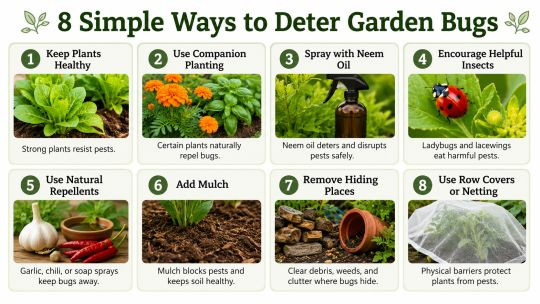
8 Simple Ways to Deter Garden Bugs
Garden bugs can quickly turn a healthy garden into a frustrating mess. From chewed leaves to damaged vegetables, pests are one of the biggest challenges gardeners face. The good news is that you don’t always need harsh chemicals to protect your plants. With a few simple gardening habits and natural methods, you can keep many common pests away while maintaining a healthy, thriving garden.
1. Keep Plants Healthy
Strong, healthy plants are naturally more resistant to pests and diseases. Weak or stressed plants attract insects more easily and recover slower from damage. Make sure your plants receive proper sunlight, water, and nutrients throughout the growing season. Healthy soil rich in organic matter also helps plants build strong root systems and natural defenses.
Regularly inspect your garden for signs of stress such as yellowing leaves, wilting, or stunted growth. Catching problems early can prevent pest infestations from getting worse.
2. Use Companion Planting
Companion planting is a natural way to reduce pests by growing beneficial plant combinations together. Certain flowers and herbs release scents that confuse or repel insects. Marigolds, basil, nasturtiums, and chives are popular companion plants that can help deter unwanted bugs.
For example, planting basil near tomatoes may help discourage hornworms and flies, while marigolds can repel nematodes and aphids. Companion planting also helps attract pollinators and beneficial insects to your garden.
3. Spray with Neem Oil
Neem oil is one of the most popular natural pest control options for home gardeners. Made from the neem tree, this organic spray disrupts the life cycle of many garden pests including aphids, spider mites, whiteflies, and beetles.
Apply neem oil early in the morning or late in the evening to avoid harming pollinators. Always follow label directions and avoid spraying during the hottest part of the day. Regular use can help keep infestations under control without harsh chemicals.
4. Encourage Helpful Insects
Not all insects are harmful. Beneficial insects such as ladybugs, lacewings, praying mantises, and parasitic wasps feed on common garden pests and help maintain balance in your garden ecosystem.
Planting flowers like dill, fennel, yarrow, and alyssum can attract these helpful insects naturally. Avoid broad-spectrum pesticides whenever possible since they may kill beneficial insects along with harmful pests.
5. Use Natural Repellents
Natural repellents can help discourage pests without damaging your plants. Garlic sprays, chili pepper mixtures, and mild soap sprays are commonly used by gardeners to repel insects naturally.
You can also sprinkle diatomaceous earth around plants to deter crawling insects such as slugs and beetles. Reapply natural repellents after heavy rain for the best results.
6. Add Mulch
Mulch does more than conserve moisture and suppress weeds. It can also help reduce certain pest problems by creating a protective barrier around plants. Organic mulches like straw, bark, or shredded leaves help regulate soil temperature and improve soil health over time.
Mulching can also reduce soil splashing, which helps prevent some fungal diseases from spreading to plant leaves.
7. Remove Hiding Places
Garden pests love cluttered areas where they can hide and reproduce. Remove piles of weeds, dead leaves, broken pots, and old plant debris from your garden regularly. Keeping the garden clean limits hiding spots for slugs, beetles, and other unwanted pests.
Trim overgrown areas and remove heavily infested plants quickly to stop pests from spreading throughout the garden.
8. Use Row Covers or Netting
Row covers and garden netting provide a physical barrier that prevents insects from reaching your plants. Lightweight covers work especially well for protecting lettuce, cabbage, broccoli, and other vegetables from caterpillars and beetles.
Netting can also protect berries and fruit plants from birds and larger pests. Be sure to secure covers properly so insects cannot crawl underneath.
Final Thoughts
Protecting your garden from bugs doesn’t have to involve strong chemicals or expensive treatments. By combining healthy gardening practices, natural repellents, beneficial insects, and physical barriers, you can create a balanced garden environment that naturally discourages pests.
A little prevention goes a long way. Start with a few of these simple methods and adjust your approach based on the types of pests common in your area. Over time, your garden will become healthier, stronger, and more resilient.